DaysofPal- Gaza’s Government Media Office has revealed that more than 1.3 million Palestinians, including at least 350,000 children, remain trapped in Gaza City and the northern governorates despite the Israeli relentless bombardment and repeated displacement orders.
The statement highlights the rapidly deteriorating situation in the north, where intensified airstrikes and ground incursions have left civilians with dwindling access to food, water, medicine, and safe shelter.
Humanitarian organizations warn that many families are unable or unwilling to leave their homes, pointing to overcrowded shelters in the south, the lack of safe passage, and growing fears of permanent displacement outside Gaza.
The UN’s Office for the Coordination of Humanitarian Affairs (OCHA) has already described conditions in southern Gaza as becoming “desperate by the day.”
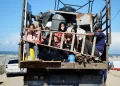
Tens of thousands of people continue to pour into the area only to discover that no shelter is available, forcing some to return north despite the ongoing bombardment.
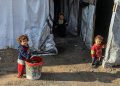
Hospitals across Gaza are overwhelmed, operating at up to 300 percent capacity, while makeshift tents for displaced families now stretch all the way to the coastline, where rising tides regularly flood their shelters, soaking bedding and food supplies.
Daily survival has become a test of endurance. Families are living on just one meal a day, often made from animal feed or a mixture of leaves and flour.
Clean drinking water is almost impossible to find, with many resorting to brackish or contaminated sources that have triggered outbreaks of diarrhea and waterborne illnesses, especially among children.
The shortage of fuel has crippled hospitals, preventing them from keeping life-saving machines running and forcing doctors into impossible decisions over which patients to save.
Inside Gaza’s collapsing health system, the suffering is acute. Hospitals are running at multiple times their capacity, with surgeries often carried out without anesthesia.
Thousands of injured civilians lie untreated in corridors and hallways for lack of medicine, equipment, and staff.
Meanwhile, overcrowded shelters have become breeding grounds for infectious diseases such as hepatitis and respiratory illnesses, further compounding the crisis.
Living conditions in shelters and displacement centers are dire, where entire families are crammed into classrooms, with as many as 80 to 100 people sharing a single room in UN schools.
Women and children face particular hardship, struggling without privacy, sanitary supplies, or protection from the harsh weather.
Along the coast, tents have been erected on the sand, where the sea often rises to swallow them whole.
The psychological toll is equally devastating. Children across Gaza show signs of deep trauma, including panic attacks at the sound of warplanes, mutism, and frequent bedwetting. Parents say their children ask them daily whether they will survive the night.
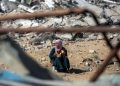
The bombing of residential neighborhoods has also trapped many under rubble for days. Families often hear the voices of loved ones calling for help from beneath collapsed buildings but lack the equipment to rescue them.
Ambulances are frequently targeted or blocked from reaching bomb sites, leaving victims to die where they lie.
In its statement, the Government Media Office accused Israel of deliberately targeting schools, refugee camps, and humanitarian centers as part of what it described as a “systematic policy of mass displacement” designed to force Palestinians out of Gaza altogether.
Human rights groups have echoed these concerns, warning that the escalating situation is driving Palestinians toward a humanitarian catastrophe of historic proportions.
Shortlink for this post: https://daysofpalestine.ps/?p=67418