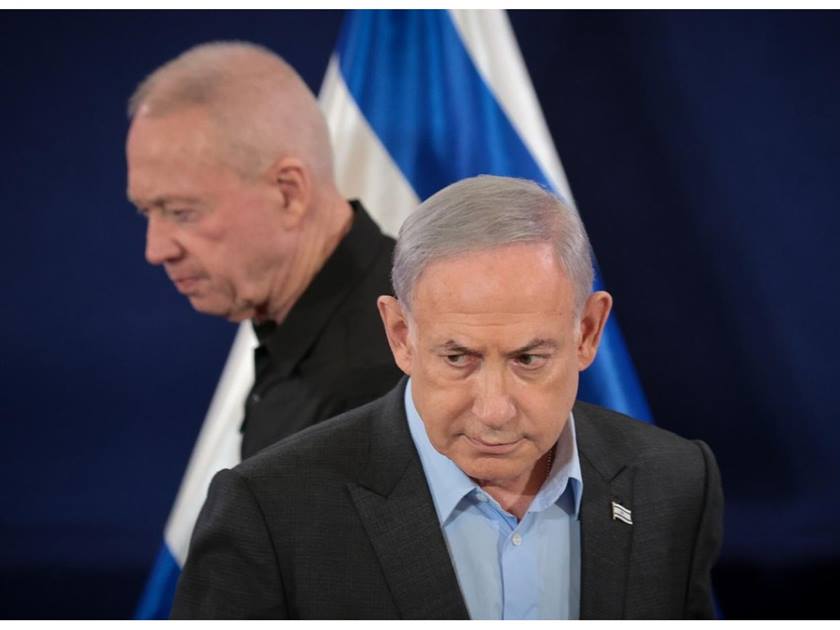
DaysofPal – The International Criminal Court’s (ICC) recent arrest warrants for Israeli Prime Minister Benjamin Netanyahu and former Defense Minister Yoav Gallant carry immense legal and political consequences.
Under the Rome Statute, the treaty that created the ICC, all 124 state parties are now legally obligated to arrest Netanyahu, Gallant, and Hamas military leader Mohammed Deif, who was also issued a warrant, despite Israeli claims that he was killed in Gaza.
However, a trial cannot proceed in absentia, and these states are required to surrender the accused to the ICC in The Hague. The court, lacking enforcement power, depends on the cooperation of member states to make arrests and execute extraditions.
Legal Obligations
Giulia Pinzauti, an international law professor at Leiden University, stated, “It’s an incredibly important step in the fight against impunity.” She emphasized, “State parties have an obligation to cooperate with the court and should do so. This is a critical moment for cooperation with the court.”
Among the signatories of the Rome Statute are all EU member states and the UK, as well as several Middle Eastern countries, including Jordan, Tunisia, and Palestine. However, key countries such as the U.S., China, India, and Russia, as well as many in the Middle East, including Turkey and Saudi Arabia, do not recognize the ICC.
Read more: ICC Issues Arrest Warrants Against Netanyahu, Gallant
International Reactions
Following the Pre-Trial Chamber I’s announcement, countries like the Netherlands, France, Jordan, Belgium, and Ireland have pledged to uphold the court’s decision. The UK, however, declined to comment when approached by Middle East Eye.
Given this development, Netanyahu and Gallant—who is no longer defense minister—are likely to limit their international travel, following the example set by Russian President Vladimir Putin, who restricted his movements after an ICC arrest warrant was issued against him.
Potential Impact
A future Israeli government may opt to surrender them to The Hague, while non-signatory states may choose to either bar the accused from entering their territories or prosecute them under their domestic laws.
Triestino Marinello, an international human rights lawyer representing Palestinian victims at the ICC, believes that Netanyahu is unlikely to be extradited by Israel while in office.
However, Marinello noted, “This will have a strong impact on his ability to act as prime minister, because he won’t be able to travel to 124 states, which have a legal obligation, not a political discretion, to arrest him and extradite him.”
Marinello, who described the warrants as “historic,” believes they could have a broader impact. “Anyone else involved in the commission of the crimes may be brought to justice at a domestic level but also at an international level,” he said, especially for Israeli citizens with dual nationality living in European countries.
The ICC’s Role
While the ICC has jurisdiction over genocide, the current charges against Israeli leaders do not include this crime. However, the International Court of Justice (ICJ) is currently examining genocide charges in a case filed by South Africa against Israel in December. The ICC prosecutor has acknowledged ongoing investigations into other crimes, including Israel’s bombing campaigns.
The ICJ and ICC have different roles. The ICJ settles legal disputes between states, while the ICC prosecutes individuals for international crimes such as genocide, war crimes, crimes against humanity, and aggression.
Shortlink for this post: https://daysofpalestine.ps/?p=58969