DaysofPal – The Gaza Human Rights Center has condemned the continued expansion of Israel’s “yellow zone” in eastern Gaza, saying the move reflects a systematic policy to impose new realities on the ground, consolidate military control over additional areas of the Strip, and pave the way for further forced displacement of civilians.
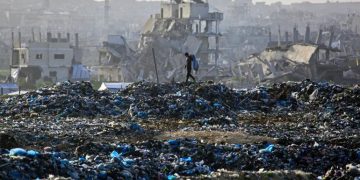
In a statement issued on Monday, the center said its field team documented Israeli forces extending the yellow zone in the Shuja’iyya neighborhood, east of Gaza City, to the Souq al-Bastat area by moving yellow concrete barriers farther into the city. The organization said the expansion represents a further extension of military restrictions imposed on residents.
The center also reported the presence of two Israeli bulldozers and a tank operating beyond the previously established yellow line in the Barbara (formerly)/Al-Shakoush area of Al-Mawasi, west of Rafah. According to the statement, the bulldozers began leveling agricultural land while Israeli forces intermittently opened fire toward tents sheltering displaced families.
The organization added that Israeli occupation forces and affiliated armed groups have repeatedly fired toward displacement camps in the area, apparently in an effort to pressure residents to leave.
The center expressed concern that these developments coincide with the announced launch of the first so-called humanitarian shelter centers in Rafah. It warned that such facilities could become a tool for reshaping Gaza’s demographic reality by concentrating civilians in designated areas, further dividing the territory geographically, and forcing displacement under the pressure of ongoing military operations, in violation of international humanitarian law.
Weaponizing Water Infrastructure
The rights group also condemned the repeated targeting of Gaza’s water infrastructure, accusing Israel of using thirst as a weapon of war.
It pointed to an Israeli airstrike on Sunday evening that hit a metal workshop in Gaza City used to prepare equipment for drilling water wells, killing four Palestinians and injuring several others. According to the center, Israeli warplanes struck the same location again a few hours later, causing extensive damage to nearby homes and shops and injuring additional civilians.
The organization said attacks on workshops and equipment used to drill water wells are part of a broader effort to prevent attempts to address Gaza’s worsening water crisis, as more than two million Palestinians face one of the most severe shortages of drinking water in the Strip’s history.
Less than half of Gaza’s population currently receives water through the public distribution network, and the region’s water production has decreased to roughly half of its pre-war level, according to data cited by the center. It added that around 65 percent of the water network has been rendered ineffective due to widespread destruction.
The center said the average daily water supply has dropped to approximately 25 liters per person, while many displaced people receive less than five liters a day, far below the minimum amount required to meet basic humanitarian needs.
The expansion of military zones, the destruction of vital civilian infrastructure, the targeting of water sources, and the establishment of shelter centers in areas under Israeli control, according to the Gaza Human Rights Center, are all part of a larger strategy to forcibly alter Gaza’s demographic and geographic landscape.
It said these actions amount to serious violations of international humanitarian law, including the prohibition on the forcible transfer of civilians and collective punishment.
The organization called on the international community to take urgent action to halt the expansion of military zones inside Gaza; ensure the protection of civilian infrastructure, particularly water facilities; and guarantee safe access for maintenance, drilling, and humanitarian teams.
It also urged international actors to reject any humanitarian arrangements that could be used to facilitate population transfers or reinforce the geographic division of the Gaza Strip, stressing that humanitarian assistance must remain guided by the principles of humanity, neutrality, and non-discrimination.
Shortlink for this post: https://daysofpalestine.ps/?p=76303