DaysofPal- The United Nations Relief and Works Agency for Palestine Refugees (UNRWA) has reported that roughly 660,000 children in the Gaza Strip are currently unable to attend school as a result of the ongoing Israeli Genocide.
This number highlights the devastating toll the Israeli genocide has taken on Gaza’s education system and raises deep concerns about the long-term impact on an entire generation’s future.
A Generation at Risk
According to UNRWA, the recent resurgence of Israeli genocide has halted all efforts to provide even temporary educational or recreational activities for children. Evacuation orders and constant bombardments have rendered it virtually impossible to deliver essential mental health support or structured learning environments.
These services are vital for young children already traumatized by prolonged violence and displacement.
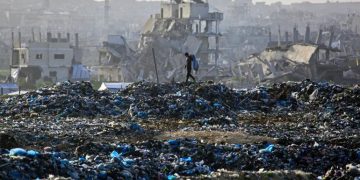
This marks the second year in a row that children in Gaza have been denied access to education due to the war. Hundreds of schools have been destroyed, and many of the surviving ones are now functioning as makeshift shelters for displaced families. UNRWA has previously stated that nearly 70% of its schools have been targeted and bombed, with the majority serving as civilian shelters at the time of the attacks.
Collapsing Educational Infrastructure
The Palestinian Ministry of Education has confirmed the gravity of the crisis, revealing that 85% of Gaza’s educational institutions are now non-operational. Many of these schools were deliberately targeted, resulting in widespread destruction and the loss of classrooms and personnel. Numerous teachers and education workers have lost their lives, further weakening an already crippled system.
This destruction goes far beyond immediate disruption. Education experts warn that the systematic targeting of schools robs children not only of learning but also of their sense of safety, development, and prospects. As one UNRWA official stated, “These children are being stripped not only of education, but of hope itself.”
Deepening Psychological Trauma
Beyond the physical damage, the psychological impact on Gaza’s youth is immense. Years of living under siege, now compounded by intense and continuous warfare, have left deep emotional wounds. Children lack access to safe spaces, structured activities, and professional psychological care. The suspension of recreational and psychosocial programs further deprives them of the tools needed to cope and heal.
UNRWA warned that without an educational structure and emotional support, children are more vulnerable to feelings of despair, fear, and instability. “Restoring education is about more than just books—it’s about restoring childhood,” said a UNRWA spokesperson.
Global Urgency and Responsibility
Human rights advocates are demanding accountability for what they describe as the intentional targeting of schools, acts that constitute violations of international humanitarian law. They are calling on the global community to pressure the Israeli occupation to halt attacks on civilian infrastructure and allow humanitarian access to resume educational services.
As Gaza’s children face an uncertain and bleak future, the world is being urged to act. Without swift international intervention, a generation may be lost—not only to war but to a future stripped of opportunity, dignity, and peace.
Shortlink for this post: https://daysofpalestine.ps/?p=62547