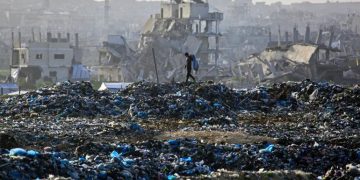
DaysofPal- Gaza has entered the 60th day of a complete Israeli blockade, marking the longest closure in the enclave’s history. Since March 2, no food, water, medicine, or essential supplies have been allowed into Gaza.
This has intensified an already severe humanitarian crisis and pushed the region closer to full-scale famine. The International Court of Justice (ICJ) is currently conducting hearings to assess Israeli legal obligations to provide humanitarian aid to Palestinians in Gaza and the occupied West Bank.
The effects of the blockade are devastating. Community kitchens, once a lifeline for many, are rapidly closing due to a lack of resources.
From about 170 functioning kitchens before the closure, only 70 to 80 remain, and many could shut down within days without renewed aid. Just on a recent Monday, 15 additional kitchens ceased operations.
The human cost since the start of the war in October 2023 has been catastrophic. Over 52,000 Palestinians have been killed and more than 118,000 wounded. On March 18, Israeli Occupation forces resumed airstrikes, breaking a ceasefire agreement made in January. Attacks have targeted civilian structures, including tents, hospitals, and schools turned shelters. On one recent day alone, 30 Palestinians were killed.
With food supplies depleted, famine looms. The World Food Program (WFP) announced earlier this month that it has no food stocks left in Gaza. All bakeries have been shut due to a lack of flour and fuel.
Many families survive on less than one meal a day and are resorting to consuming unsafe and inedible items out of desperation. A food security assessment led by the Integrated Food Security Phase Classification (IPC) system began on April 28, involving over 50 analysts from various UN agencies and humanitarian groups.
Medical conditions are equally dire. Hospitals are overwhelmed, lacking even basic painkillers. Emergency rooms are filled with patients who often die quietly due to the unavailability of essential medicines and equipment.
Younis al-Khatib, president of the Palestine Red Crescent Society, condemned the situation, urging international sanctions against Israeli occupation for creating unlivable conditions.
At the ICJ in The Hague, the United States defended the Israeli decision to ban the United Nations Relief and Works Agency (UNRWA), claiming the Israeli occupation is not obligated to cooperate with specific aid groups if it compromises its security.
This came after allegations that 19 UNRWA employees were involved in the Hamas attack on October 7. The U.S. suggested other organizations could replace UNRWA, though many argue no viable alternatives exist. Russia and other nations like Turkey, France, and Indonesia criticized Israeli crimes, emphasizing the scale of the suffering.
As Gaza’s humanitarian situation deteriorates, global calls for urgent action grow louder. Critics accuse the Israeli occupation, supported by allies like the U.S., of enabling mass suffering and potential genocide.
With famine setting in, medical services collapsing, and over two million Palestinians in despair, the world faces a moral and humanitarian crossroads. Whether decisive intervention occurs remains uncertain, but time is running out to prevent an even greater tragedy.
Shortlink for this post: https://daysofpalestine.ps/?p=62543