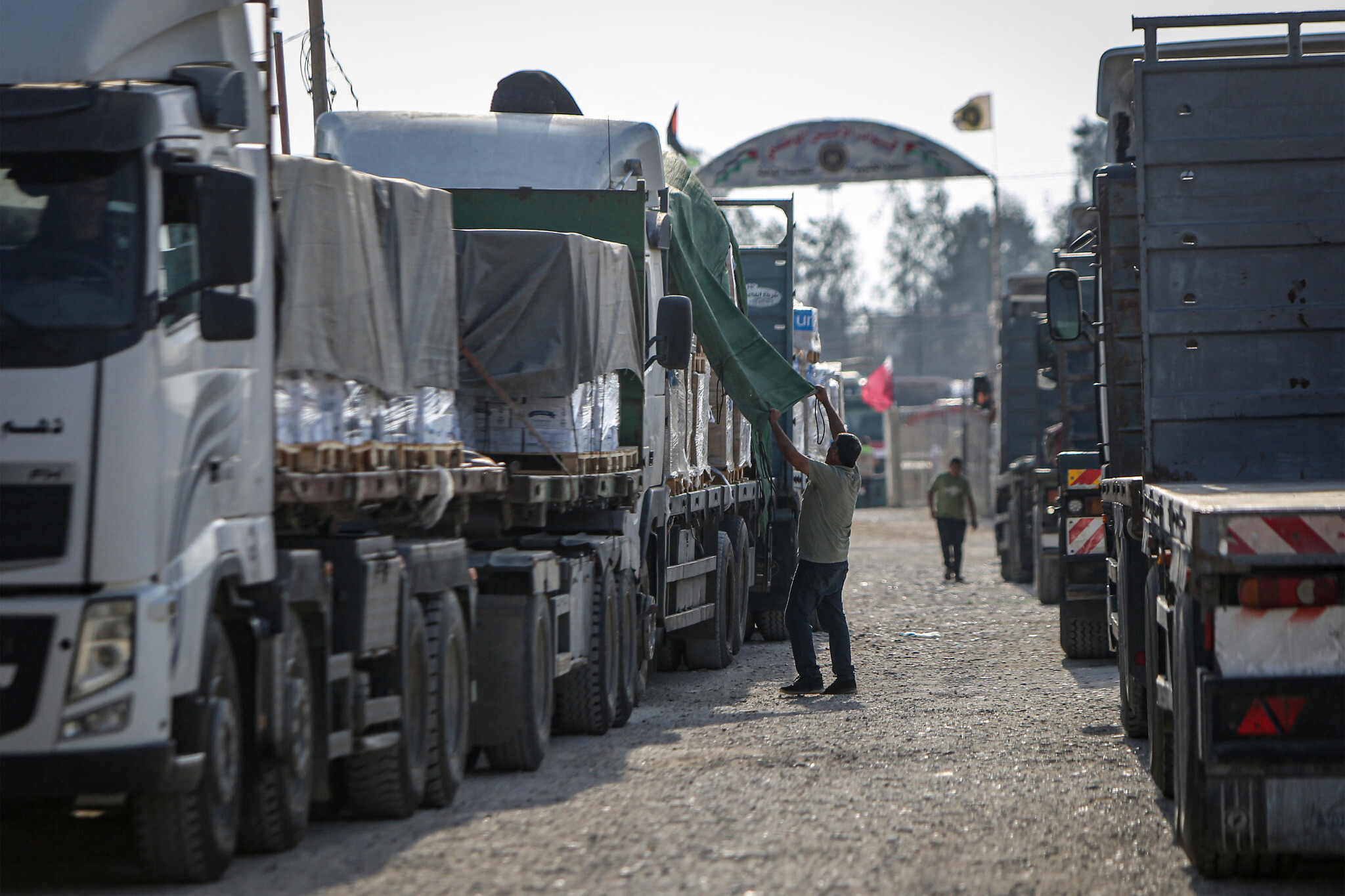
More than 100 humanitarian organisations, including Doctors Without Borders (MSF) and Save the Children, have accused Israel of deliberately blocking life-saving aid to the Gaza Strip, leaving millions of dollars’ worth of food, medicine, water, and shelter materials stranded in warehouses across Jordan and Egypt.
In a joint statement, the groups said Israel had rejected requests from “dozens” of NGOs to deliver aid, claiming the organisations were “not authorised to deliver aid” — despite many of them having operated in Gaza for decades. The restrictions, they said, are worsening an already catastrophic humanitarian crisis, where Israeli-imposed starvation has killed more than 200 Palestinians so far, half of them children.
In July alone, Israel reportedly denied around 60 aid delivery requests. Sean Carroll, president and CEO of the US-based NGO Anera, said his organisation has over $7 million worth of supplies ready to enter Gaza — including 744 tons of rice, enough for six million meals — but it remains blocked just kilometres away at the Israeli port of Ashdod.
New restrictions and data demands
The statement attributes the obstruction to new rules imposed by Israel in March, requiring international NGOs to undergo a registration process that allows authorities to reject applicants based on broad and politically charged allegations such as “delegitimising Israel.” Groups can also be barred if any staff member, partner, board member, or founder has expressed public support for the boycott of Israel in the past seven years.
The process further requires NGOs to hand over sensitive details, including donor information and lists of Palestinian staff. Some organisations were given a seven-day ultimatum to comply, under threat of being banned from operating in Gaza and the occupied West Bank, including East Jerusalem.
Humanitarian groups say these demands violate data protection laws and put Palestinian staff at risk. The statement highlighted that 88 percent of aid workers killed by Israeli strikes in Gaza since the war began were Palestinian.
‘Our mandate is to save lives’
Jolien Veldwijk, country director of Care, said her organisation has been barred from delivering $1.5 million worth of essential items — including food parcels, medical supplies, hygiene kits, and maternal care items — since Israel’s total siege began on March 2. Oxfam’s policy lead, Bushra Khalidi, reported $2.5 million worth of aid blocked from entering Gaza.
The statement accuses Israel of seeking to “block impartial aid, exclude Palestinian actors, and replace humanitarian organisations” with the militarised Gaza Humanitarian Foundation (GHF), a body criticised for its lack of neutrality.
“At this point, everyone knows what the correct, humane answer is — and it’s not a floating pier, airdrops, or the GHF,” said Carroll. “The answer is to open all the borders, at all hours, to the thousands of trucks, millions of meals, and medical supplies ready and waiting nearby.”
The NGOs urged governments and donors to challenge Israeli demands for sensitive personnel information, end what they called the “weaponisation of aid,” and press for the immediate and unconditional reopening of all land crossings into Gaza.
Since October 2023, Israel has imposed tight restrictions on aid entering Gaza, following Hamas’s deadly attack inside Israel on October 7. The blockade — combined with large-scale military operations — has devastated Gaza’s infrastructure, displaced the majority of its 2.3 million residents, and pushed the territory to the brink of famine.
UN agencies warn that at least half a million people in Gaza are facing catastrophic levels of hunger, and that without the large-scale entry of aid by land, famine is inevitable. Land crossings remain the only viable way to deliver the volume of food and supplies needed to avert mass starvation, as air and sea routes can handle only a fraction of the demand.
Shortlink for this post: https://daysofpalestine.ps/?p=66640