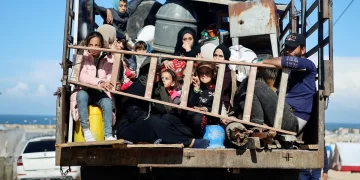
DayofPal—Displaced Palestinians in Gaza are bracing for a severe winter without adequate shelter, as restrictions on humanitarian aid continue despite a ceasefire agreement that was meant to ease conditions in the enclave.
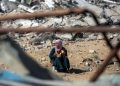
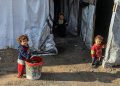
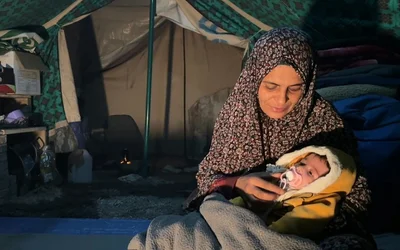
After months of the war that have devastated Gaza’s infrastructure, many families are living in makeshift tents or temporary shelters that are ill-equipped to withstand cold temperatures and heavy rain.
Flooding and mud are now common in displacement camps, where children struggle to stay dry and families lack basic supplies.
“It’s as if people are sleeping on a flowing river of rainwater,” said Hamza Al-Mutawwaq, a father of 13 living in Nuseirat refugee camp. “These old, worn-out tents will not protect us from the cold and rain.”
Ceasefire Violations
Under the terms of the ceasefire between Israel and Hamas, Israel was expected to permit the entry of tents, mobile homes, and other humanitarian supplies into Gaza to provide temporary housing for hundreds of thousands of displaced residents.
However, local authorities say those provisions have not been fulfilled.
According to Gaza’s Government Media Office, Israel has allowed an average of 155 trucks carrying aid, fuel, and commercial goods into the territory each day, far below the 600 daily trucks stipulated in the ceasefire agreement.
Amjad Al-Shawa, head of the Palestinian NGOs Network, described the situation as “catastrophic.” He said the small amount of aid entering Gaza meets less than five percent of residents’ basic needs.
“There must be swift action to bring in all the necessary supplies to save people’s lives,” Al-Shawa said. “People have endured two years of war and now face the threat of a harsh winter without shelter or protection.”
Officials and aid workers have warned that children, pregnant women, and the elderly are at particular risk as temperatures drop.
Ismail Al-Thawabta, spokesperson for Gaza’s media office, said that about half a million children and nearly 100,000 pregnant women could face severe health risks due to exposure and the lack of heating, blankets, and adequate clothing.
“We are facing a winter that may prove to be the harshest and most difficult in many years,” al-Thawabta said, noting that last winter’s cold claimed at least 17 lives, most of them children.
Families Struggling to Cope
With limited aid reaching Gaza, many families are turning to the black market for basic necessities such as tents, tarpaulins, and winter clothing. Prices, however, are far beyond what most displaced families can afford.
“Everyone needs shelter materials and warm clothes, but very little enters the Strip,” Al-Mutawwaq said. “It is sold at high prices that people without jobs or income simply cannot pay.”
For many residents, the coming months bring renewed anxiety.
“My children and I have come to hate the winter season,” said Amal Mehanna, a widow and mother of three who lost her home in Gaza City. “Last year, we shared one blanket to keep warm. Now winter is here again, and we have no clothes or supplies to protect us.”
Nearly 83 percent of Gaza’s structures have been damaged or destroyed since Israeli military operations began in October 2023, leaving most of the 2.2 million residents displaced.
Despite the ceasefire, humanitarian organizations say the blockade continues to prevent the entry of vital materials needed to prepare for the winter.
“The war has exhausted people and their ability to endure,” al-Thawabta said. “Without urgent international intervention, thousands may not survive the cold.”
Shortlink for this post: https://daysofpalestine.ps/?p=69168