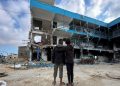
DaysofPal —As Gaza continues to endure deep instability and the long-term consequences of Israel’s military campaign, debates around the proposed international security framework have become increasingly tense. Regional powers fear being pushed into roles that undermine Palestinian sovereignty or force them into confrontations that primarily serve Israel’s interests. The latest draft UN resolution touching on Gaza’s future has only amplified these concerns.
Egypt and Turkey Reject Forced Disarmament Framework
Arab and Muslim countries, the United States hopes to be involved in an international stabilization force in Gaza is raising serious alarms, warning they may be “cornered” into forcibly disarming Hamas under terms they never agreed to. A circulating draft UN resolution indicates that the proposed force would be tasked with “demilitarizing the Gaza Strip,” including dismantling and preventing the rebuilding of military or offensive capabilities.
Egyptian officials say Cairo prefers the term “decommissioning” and believes the issue must be handled gradually and through negotiation, not confrontation. The officials stress that Egypt intends to coordinate a weapons handover with Hamas leadership, not clash with them. “Egypt will not do the job that Israel itself failed to accomplish,” one senior official emphasized, adding that priority should be given to offering amnesty to fighters who willingly turn in their weapons.
A Turkish official familiar with Ankara’s stance said the draft seems to assign Arab and Muslim nations the task of carrying out Israel’s security agenda. The official warned that the language transforms an international force into a domestic security arm rather than a peacekeeping mission. Ankara believes the force should focus on preventing renewed clashes, protecting borders, and training personnel for a future Palestinian governing authority, not enforcing an occupation through force.
UN Oversight Disputes and Palestinian Concerns
Polling among Palestinians shows substantial support for resistance groups retaining their arms, though some political pressure from regional states has influenced internal discussions. Earlier statements from Hamas figures like Mohammed Nazzal suggested the group is not ready to commit to disarmament without further negotiations. More recently, Mousa Abu Marzouk signaled that discussions could occur regarding weapons with long-range capabilities, provided they pose potential risks to areas beyond Gaza.
The deployment of a stabilization force is tied to President Donald Trump’s 20-point plan for Gaza’s future. Yet Israel’s continued violations of the ceasefire, and its ongoing occupation of nearly half the Strip behind the so-called “yellow line” , have weakened trust in the process. Reports suggest some Hamas fighters remain trapped in tunnels behind that line.
Meanwhile, both Turkish and Egyptian officials say they were not consulted by U.S. drafters of the resolution. “Washington isn’t sharing key details,” one Egyptian official said, while a Turkish source noted the United States appears unwilling to negotiate the terms transparently.
Questions Over Legitimacy and International Control
The irony is difficult to ignore: a U.S. administration that has often criticized the United Nations now needs its cover to advance a security plan for Gaza. For Arab and Muslim states, this marks a diplomatic win, since they refuse to be perceived as occupying Gaza on behalf of Israel. Former UN peacekeeping chief Jean Marie Guéhenno has warned that any force must avoid looking like it operates under Israeli contract if it hopes to gain Palestinian trust.
The draft resolution reportedly places the stabilization force under a “board of peace” chaired by Donald Trump, with a U.S.-run coordination center already active in Israel. While many peacekeeping missions are UN-directed, such as those in Bosnia, Mali, or southern Lebanon, the model being discussed for Gaza resembles the Haiti mission, which holds a UN mandate but does not answer to the UN secretary-general.
A Turkish official said Ankara wants a stronger UN supervisory role, arguing that the current proposal gives the appearance of being UN-backed while sidelining the UN from real oversight.
As Gaza struggles through destruction, displacement, and the uncertainty of what governance will look like after the war, regional powers insist on avoiding any plan that reinforces Israeli control or pressures them into policing Palestinians. The future of Gaza’s security cannot be built on coercive frameworks dictated from abroad. For the people of Gaza, any sustainable path forward must prioritize sovereignty, legitimacy, and genuine partnership, not externally imposed agendas.
Shortlink for this post: https://daysofpalestine.ps/?p=69172