DaysofPal- In a grim announcement highlighting the dire state of the humanitarian catastrophe in Gaza, the United Nations Relief and Works Agency for Palestine Refugees (UNRWA) confirmed on Sunday that its flour supplies in the Gaza Strip have been entirely depleted.
The agency took to its X (formerly Twitter) account to convey the devastating news: “The World Food Program announced on April 25 that its food stocks in Gaza were completely depleted. UNRWA flour supplies also ran out earlier this week.”
This unprecedented depletion of essential food resources underscores the severity of Israeli ongoing blockade, which has choked off all humanitarian aid since March 2, when crossings into Gaza were sealed shut. With approximately 2.4 million Palestinians almost entirely reliant on external assistance for survival, the absence of food aid has plunged the enclave into what experts describe as one of the worst famines of modern times.
A Lifeline Cut Off
UNRWA revealed that it has approximately 3,000 trucks loaded with life-saving aid—including flour, rice, lentils, and other staples—ready to enter Gaza. However, Israeli occupation forces continue to block these convoys from crossing into the Strip. This deliberate obstruction leaves millions of civilians without access to even the most basic necessities.
“The blockade that Israeli occupation has imposed on Gaza for years must be lifted,” the agency stressed in its statement. “Hunger is worsening in Gaza. Children, women, and men are clinging to hope through warm meals distributed sporadically by charitable organizations—but this is far from enough.”
Worsening Hunger and Desperation
On Friday, the World Food Program (WFP) echoed UNRWA’s warnings, declaring that its own food stocks had been “completely depleted” after seven weeks of no aid entering Gaza. This marks the longest closure of crossings in the Strip’s history, exacerbating an already fragile market system teetering on collapse. Families in Gaza now face impossible choices between starvation and consuming unsafe or contaminated food, as chronic shortages drive prices to unaffordable levels.
Charitable organizations and community groups have attempted to fill the void left by international agencies, distributing warm meals to desperate families. Yet, their efforts are woefully insufficient given the scale of need. For many children, elderly individuals, and those with medical conditions, the lack of proper nutrition poses immediate and long-term health risks, including malnutrition, stunted growth, and weakened immune systems.
The current crisis stems from Israel’s decision on March 18 to renege on the ceasefire and prisoner exchange agreement brokered in January—a move widely condemned as a violation of international law. Despite Hamas’s adherence to the terms of the deal, Israel resumed its genocidal campaign against Gaza, intensifying airstrikes, ground invasions, and economic strangulation.
Since October 7, 2023, Israel’s brutal genocide against Gaza—with full U.S. backing—has resulted in catastrophic loss of life. Over 168,000 Palestinians have been killed or wounded, the majority being children and women.
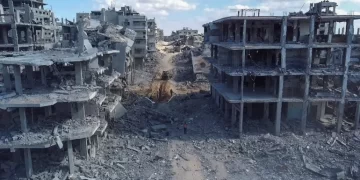
More than 11,000 remain missing, presumed buried under rubble or dead. Entire neighborhoods lie in ruins, hospitals operate beyond capacity without electricity or supplies, and clean water is virtually nonexistent.
Global Silence Amid Genocide
Human rights advocates and humanitarian organizations accuse the Israeli occupation of using hunger as a weapon of war, systematically depriving Palestinians of access to food, water, medicine, and fuel. They argue that such actions constitute crimes against humanity under international law.
Yet, despite mounting evidence of atrocities, global powers—including the United States—have largely remained silent or complicit, shielding Israeli occupation from accountability at forums like the United Nations Security Council. Critics warn that this inaction not only enables further suffering but also sets a dangerous precedent for future conflicts worldwide.
Call to Action
As famine tightens its grip on Gaza, UNRWA and other humanitarian agencies are pleading for urgent intervention. They demand the immediate reopening of crossings to allow aid convoys to reach those in need. Additionally, they call for an end to the blockade and sustained pressure on the Israeli occupation to comply with international humanitarian law.
Shortlink for this post: https://daysofpalestine.ps/?p=62406