DaysofPal- In the Al-Sahaba Market, east of Gaza City, Ahmed Dalloul’s desperate search for flour ended in frustration. After purchasing a $110 bag—cheaper than most available in the market—he discovered it was teeming with weevils and worms.
When he returned to the vendor, hoping for a refund or exchange, his request was met with refusal. “The smell is unbearable, and the taste after baking is even worse,” Dalloul told the Palestine newspaper. “I ate this kind of flour during past famines, but I won’t let my children suffer through that again.”
Dalloul’s story is not unique. Across the Gaza Strip, families are grappling with a severe shortage of clean, edible flour as the Israeli suffocating blockade intensifies and humanitarian aid remains blocked since March.
What little flour does make it to market shelves often comes at exorbitant prices and is frequently infested with pests or mold, forcing people into impossible choices between starvation and consuming unsafe food.
A Daily Struggle for Survival
Jihan Aslim, 50, recently purchased saj bread from a local baker only to find its taste overwhelmingly moldy. “It wasn’t the first time I bought bread from this baker, but it was the first time it tasted like this,” she recounted. On another occasion, she bought three loaves of fino bread from a street vendor, only to throw them away after discovering they too were spoiled.
“Most of the flour in the markets tastes moldy,” Aslim explained. “But people buy it anyway because there’s no other option.” Her neighbor, who had stored some flour months earlier, shared a portion with her, but it turned out to be infested with worms.
The neighbor admitted she had been sifting the flour and adding vanilla, black cumin, and vinegar to mask the foul taste and smell. “She said she paid a fortune for it, just like everyone else,” Aslim added.
For Yusra Hamada, 60, the situation has become so dire that she resorts to dark humor to cope. “Today, we have to choose between flour full of weevils and flour full of worms,” she quipped bitterly. “At least the one with weevils tastes better than the one with worms.”
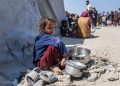
Hamada emphasized that many families feel trapped, unable to find alternatives to contaminated flour as famine looms over Gaza. With fruits, meat, chicken, and vegetables becoming increasingly scarce, families are forced to feed their children whatever they can find—even if it means risking illness.
Skyrocketing Prices and Worsening Conditions
Since March 2, when Israeli occupation closed Gaza’s crossings to humanitarian aid and essential supplies, the cost of basic staples has skyrocketed. A 25-kilogram bag of flour, which previously cost around $7, now fetches more than $130—a price far beyond the reach of most Gazans struggling under catastrophic living conditions.
For those displaced by conflict, the financial burden is especially crushing.
The blockade coincides with Israel’s resumption of genocide in Gaza on March 18, violating the ceasefire agreement reached in January. This renewed aggression has left nearly 2.4 million Palestinians without access to life-saving resources, including food, water, medicine, and fuel. Humanitarian organizations warn that the ongoing siege is pushing Gaza toward mass starvation.
No End in Sight
The scarcity of clean flour is emblematic of the broader humanitarian catastrophe unfolding in Gaza. Families are being pushed to extremes, forced to consume unsafe food while watching their children grow weaker each day.
Even those who manage to store supplies face disappointment when pests or mold render their stockpiles unusable.
“I stored three bags of flour five months ago, thinking I could avoid the shortages,” Dalloul said. “But it got infested with weevils, so I sold it cheaply to bird breeders. Now, I regret it because finding flour is nearly impossible, and the prices are insane.”
A Call for Accountability
Human rights advocates and humanitarian groups continue to sound the alarm about the deliberate targeting of civilian infrastructure and the collective punishment of Gaza’s population.
They accuse Israeli occupation forces of using hunger as a weapon of war, systematically depriving Palestinians of access to basic necessities.
“The world must wake up to what is happening here,” said one activist working in Gaza. “This isn’t just a humanitarian crisis—it’s a moral failure on a global scale. We need immediate action to reopen crossings, deliver aid, and hold perpetrators accountable for crimes against humanity.”
As Gaza teeters on the brink of famine, stories like those of Ahmed Dalloul, Jihan Aslim, and Yusra Hamada highlight the human toll of prolonged conflict and blockade. Each family faces an agonizing dilemma: risk consuming unsafe food or go hungry altogether.
Without urgent intervention, the specter of starvation will claim countless lives, leaving yet another generation scarred by deprivation and despair.
Shortlink for this post: https://daysofpalestine.ps/?p=62402