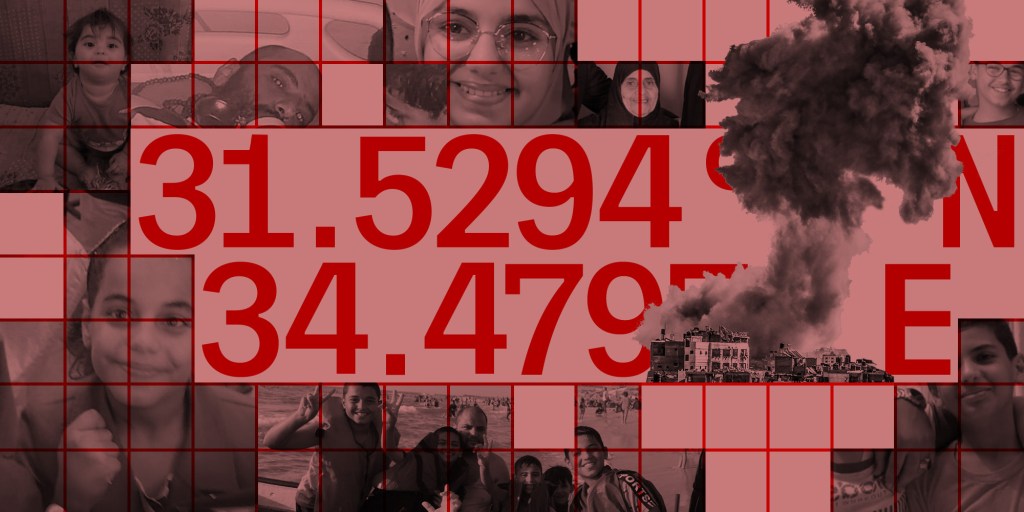
DayofPal– An investigation by The Intercept website has revealed that a U.S. citizen, Ayman Alsayed, had provided the White House and State Department with coordinates of his family’s home in Gaza to request safe passage amid Israeli bombardments.
Despite this, the home was deliberately targeted in two airstrikes, killing 13 family members, including six children. Alsayed and activists criticized the U.S. for relaying the coordinates to Israel, arguing it failed to ensure protection or hold Israel accountable for its actions.
On October 14, 2024 Ayman Alsayed in the U.S. received a call from his brother Diaa in Gaza City. Their family’s house in Jabalia had been hit by an airstrike, killing their mother and other relatives. Some survivors, including Ayman’s brother Ashraf, were trapped in the wreckage.
Diaa pleaded for help, describing Ashraf’s wounds and asking Ayman to do whatever he could from the U.S. Ayman felt powerless but sought any possible avenue to help, eventually connecting with a D.C. nonprofit that had a contact at the White House.
“He told me about my brother: ‘He can’t move and he’s wounded,’” Ayman recalled of Diaa’s desperate pleas for their injured brother Ashraf. “He told me, ‘Please, please — if you can do anything from America to help the family.”
Ayman did not have many options. “I didn’t know what to do,” he said. “We know it’s impossible to find somebody to help from here. But we did our best.”
Ayman provided the coordinates and address of his family’s home, hoping it would ensure safe passage for an ambulance. In Gaza, the situation was dire as some survivors had been bleeding for hours. A doctor managed to rescue the children, but tragedy struck again.
“We sent this so they can pass it to the Israelis to let the ambulance take the people,” Ayman said.
Just 15 minutes later, Diaa received devastating news: the doctor and most of the children had been killed in a second attack. Only one of his brothers and a nephew survived. Ayman and his wife Rachel were devastated to learn that the second airstrike had hit the very house they’d tried to protect.
The news of the attack quickly made its way around the globe to Ayman Alsayed and his wife Rachel. On a group chat with the nonprofit official who had passed their family’s location to the White House, Rachel wrote, “Did you give them the coordinates?? They just hit the house again!”
This was part of a larger pattern: Israel has repeatedly attacked aid workers and civilians whose locations were provided for safe passage. Even when coordinates are shared, emergency teams are often targeted, leaving Palestinians with no safety.
Likewise, the Intercept report mentioned the case of Hind Rajab, a 6-year-old girl, revealing it became a symbol of the Israeli horrors. Despite receiving Israeli approval for rescue, an ambulance heading to the girl was attacked. Similarly, in April, seven aid workers with World Central Kitchen were killed despite having had coordination with the Israeli military.
Despite efforts from the White House, the Alsayed family’s attempt to secure help ended in tragedy. The attack on their home, after coordinates were given to Israeli authorities, exemplifies the repeated failure to protect civilians in Gaza, even with U.S. involvement.
For Ayman, this failure left him with profound guilt. He felt his attempt to help had led to further harm for his family, as the information passed to the Israelis contributed to the second attack. His emotional toll reflects the impossibility of saving loved ones amid ongoing violence.
Diaa had already faced immense loss months earlier when his wife and six children were killed in an Israeli airstrike. On the night of the October 14 attack, Diaa was in Gaza City with his daughter Tala when he received the tragic news from his sister-in-law Sumaya.
Emergency services were overwhelmed and unable to reach the survivors due to the ongoing siege and attacks on aid workers. Even after contacting journalists and aid organizations like the Red Crescent, no help could reach the trapped family members.
The Alsayeds’ story is part of a much larger pattern in Gaza, where civilians, aid workers, and emergency services are regularly targeted, despite efforts to coordinate safe passage for those in need of help. This systemic failure has left families like the Alsayed with no recourse.
Ayman’s experience illustrates the harsh reality for Palestinians, especially in north Gaza, which has been facing ethnic cleansing for over 60 days in a row. Even when international bodies and governments try to intervene, the lack of accountability and persistent violence leaves civilians vulnerable. The tragic loss of Ayman’s family underscores the ongoing crisis in the Gaza Strip.
Nihad Awad, the executive director of the Council on American-Islamic Relations, said that “They [Israeli forces] knew that they could do all of this without any serious pressure by the White House. The White House — by this very action that they gave the information to the Israelis, they’re showing that they’re incompetent. They don’t have the resolve to hold Israel to account.”
For Ayman Alsayed, in the U.S., the idea that his attempts to help his loved ones ended this way has left him with a profound guilt.
“It’s difficult to express how I felt,” Ayman said. “This is what I believe: that I hurt my family, not helped them, by giving all this information to the embassy who passed the information to the Israelis. And instead of bringing safe passage for the ambulance to come, they attacked the house again using the coordinates we gave them.”
Shortlink for this post: https://daysofpalestine.ps/?p=59257