Physical violence isn’t the only way Israel tries to deny Palestinian existence. Museums are tools of terror, too.
Erasing Palestine and Palestinians is a vocation of the Israeli state.
After all, the myth of Palestinian non-existence is part of its founding ethos. During the Nakba of 1948, this vocation was on full display when Palestinian communities were erased from the land in a systematic military campaign.
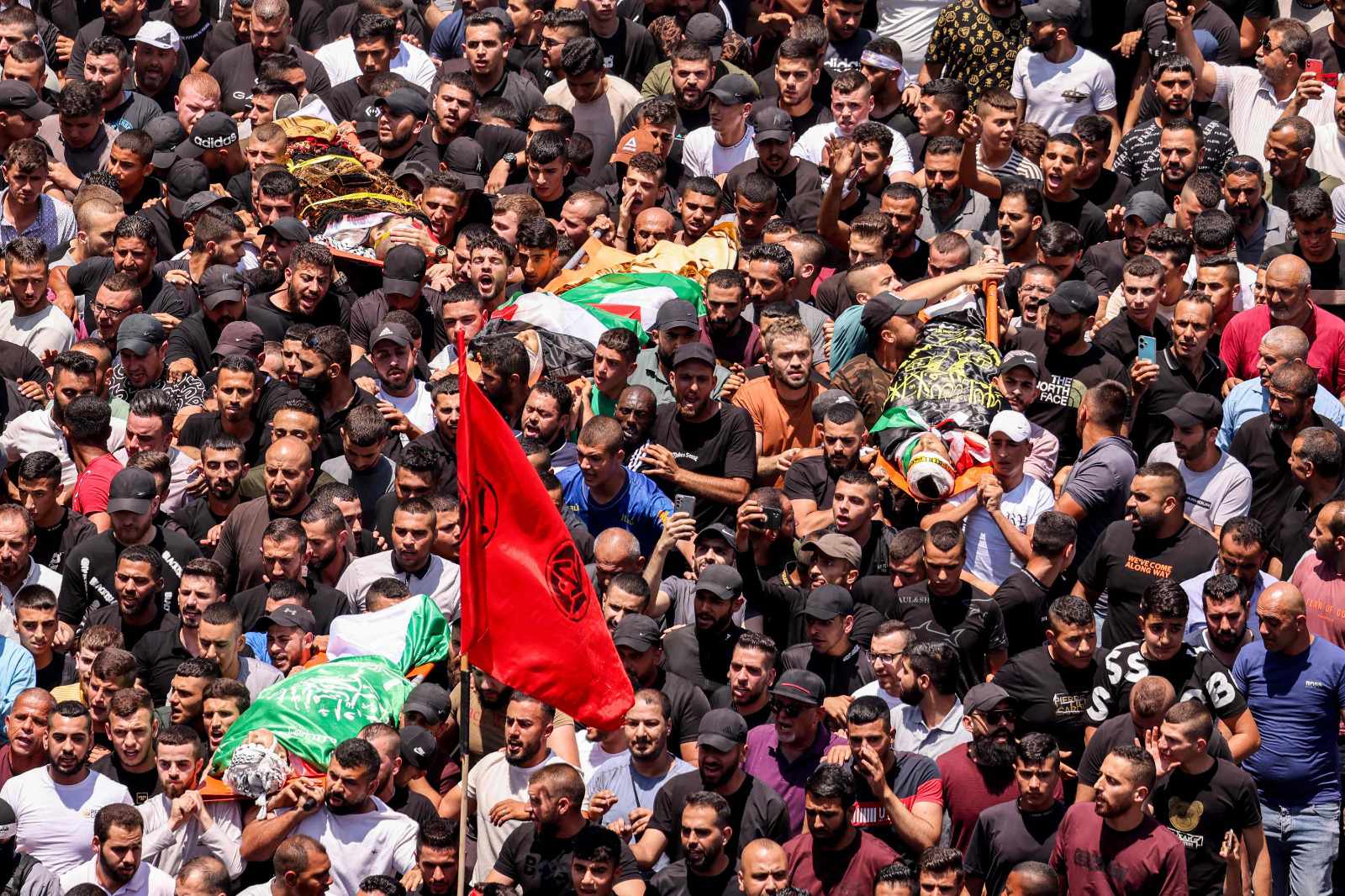
The ongoing settler violence inflicted with impunity on Palestinian communities in the occupied West Bank is further evidence that this urge to erase Palestine and Palestinians persists in the present day.
But this erasure is not just a matter of physically or materially making Palestinians invisible. It is equally done through the stories that are told of the past.
Israeli museums play an important role, as active participants in this colonial effort.
The terror of Israeli museums
I noticed this while conducting fieldwork at the Mount Scopus campus of the Hebrew University of Jerusalem in 2015.
The campus today looks like a museum celebrating Jewish history heritage, as it is lined with archaeological artefacts – like a marble statue of a ruler from the Temple of Augustus in Samaria built by King Herod and a stone from the Third Wall of the Second Temple that adorns the façade of The Institute of Archaeology.
The idea is to exhibit the Israeli-ness of the land – while wilfully perpetuating ignorance about the fact that the university was built on stolen Palestinian lands.
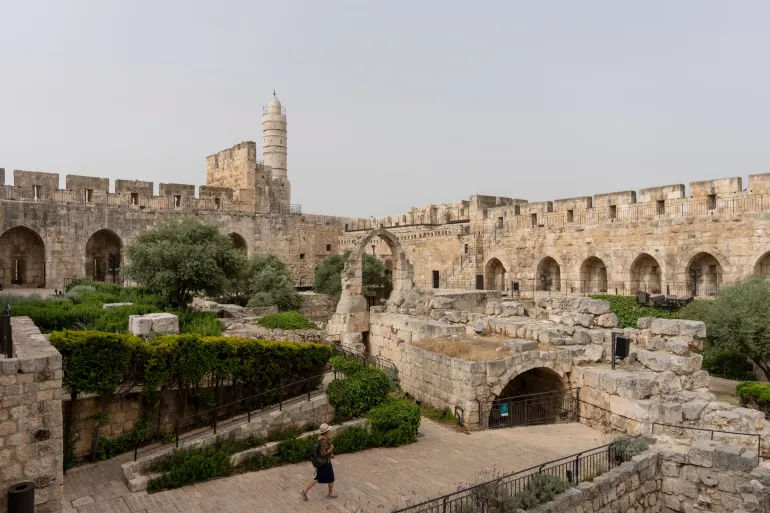
The Tower of David Museum does something similar. Officially, the museum’s website notes that the Citadel of Jerusalem is the “meeting point of ancient and modern, east and west, history and innovation, experience and creation” and that the museum exhibits the history of Jerusalem as intertwined with the citadel’s importance to Judaism, Christianity, and Islam.
Yet, the museum has long been accused of systematically effacing its Islamic and Palestinian heritage. After Israel captured the site, authorities prevented prayers at the mosques. The Israeli Antiquities Authority also removed the dome and crescent at the citadel. And labels identifying artifacts clearly stress the city’s Jewish-ness and Israeli “national perspectives”.
The Museum on the Seam claims to relay the divided history of Jerusalem and its exhibits are meant to “raise diverse social issues for public discussion and bridge the gaps”. Yet, in practice, they do little to acknowledge that the building that houses the museum was once owned by the Palestinian Barkami family, which was forced out of Jerusalem in the Nakba.
Museums celebrating the role of Jewish paramilitary organizations during the creation of Israel also work to keep up the myth of Palestinian non-existence. These organizations authored much of the violence in places like Jaffa, Haifa, Acre and Tiberias during the Nakba. The paramilitary organization Palmach, for instance, established new Israeli settlements and was active in “cleansing operations” in rural Palestinian communities.
When I visited Beit HaPalmach, or the Palmach Museum, in Tel Aviv in 2013, this politics of erasure seemed to be ongoing. At the time of my visit, the exhibition at the museum was three-dimensional, and visitors walked through a film re-enactment of the life of young Palmach recruits during the Israeli “War of Independence”.
While the targets of the Palmach’s violence were Palestinian communities, Palestine and Palestinians were absent from the story. In fact, the terms “Palestine” and “Palestinian” were never used in the film.
Instead, Palestinians were simply referred to as “Arabs”. This, in and of itself, symbolized a manner of nonrecognition of Palestinians as a national community distinct from others in the Arab world.
But even when the Palestinian (or “Arab”) presence was addressed, it was swiftly pushed to the margins of the narrative. Specifically, there were only two instances when “Arabs” were mentioned.
The first was when the characters in the film refer to Palestinian fighters as simply “marauding Arab gangs.” The second was during a discussion between two Palmach recruits where they are seen momentarily agonising over the “problem” of Palestinian refugees. One-character asks, “What should we do with the refugees?” The other, in a nonchalant tone, responds “Do what you think is best.” It was as if both characters were unaware of how these refugees became refugees and seem to simply not care about the tragedy that was the mass expulsion of Palestinians from a place, they consider their national home.
A similar erasure of Palestinians seemed evident during my visit in 2015 to the Haganah Museum in Tel Aviv, especially in the exhibit on the Great Revolt of 1936-39 against the British Mandate and its policy of open-ended encouragement to Jewish immigration.
The historian Rosemary Sayigh has described the revolt as one of the first significant nationalist outbursts by Palestinian peasants in the long trajectory of the Palestinian liberation struggle. The violent response from paramilitary factions like the Haganah was a prelude to the Nakba. The revolt also had regional significance as the longest-lasting “militant anti-imperialist struggle in the Arab world” until the onset of the Algerian War of Independence.
But the exhibit at the museum does not recognize the historical significance of the revolt or the existence of the Palestinian people and their national cause. Instead, it describes the Great Revolt as simply “riots” and “bloody disturbances” that were led by “Arabs” in Palestine and targeted Jews as well as the British.
The museum visitor is left with the impression that the violence was conducted without cause or reason other than to harm the Jewish population.
Museums and colonialism
Of course, museums in general have long been used as a medium for displaying and celebrating colonial power and the exploits of empire-building. In fact, the historian Robert Aldrich has argued, “Empire-building and museum-building went hand in hand”.
Flora and fauna specimens, statues and precious stones, mummies and skulls – collected or stolen – displayed in museums often help establish hegemonic, metropolitan narratives about “primitive” peoples and cultures in faraway exotic lands.
The Royal Museum of Central Africa in Brussels was established in 1898 by Leopold II to celebrate the Belgian “civilizing exercise” in Congo, ward off critics of his brutally repressive policies there and proclaim the civilizational superiority of Belgians compared with the “uncivilized Congolese tribes”.
In Hawaii, at the Honolulu Academy of Arts or the Bishop Museum, the exhibits only tangentially refer to colonialism. And this omission is meant to perpetuate ignorance about the overthrow of the Hawaiian Kingdom by white businessmen and the United States military and the violent process through which Hawaii became a settler colony.
The British Museum in Bloomsbury, London, is one of the grandest examples of how empire-building and museum-building went hand in hand. The expansiveness of the exhibits hailing from all corners of the world is a metaphor for the limitlessness of the power of the British Empire. Historians have also described its catalogue of exhibits as an “imperial war chest”.
Resisting through museums
As Palestinians face Israel’s incessant military terror, the violence of museums may seem inconsequential. But it reminds us how history and heritage can be weaponized.
That is why using the same tools of history and heritage is vital to resist Israeli oppression. In the United States, the Museum of the Palestinian People in Washington, DC, strives to preserve and celebrate Palestinian history, arts and culture. It has witnessed a spike in monthly average attendance from 132 people in 2022 to 277 people in 2023, amid shifting public perception in favor of Palestine.
In 2016, the Palestine Museum was inaugurated in Birzeit in the occupied West Bank. The first exhibit was titled “Jerusalem Lives” which showcased the “living aspect” of a city plagued by Israeli militarization, closure and “exclusionary policies” targeting Palestinians.
The settler may weaponize historical narratives and heritage to erase the signature of Palestinian existence in the Holy Land. But these Palestinian efforts show how it’s possible to challenge those efforts with a bold retort: “We are here, and we exist”.
Source: Al-Jazeera
Shortlink for this post: https://daysofpalestine.ps/?p=44776