DaysofPal- Israeli settlement expansion in the occupied West Bank and East Jerusalem has shifted from gradual growth to a coordinated sovereignty project, facilitated by a lack of meaningful international deterrence, most notably silence from the United States.
Analysts say Washington’s absence from recent diplomatic responses can no longer be explained by distraction or declining interest.
Instead, they argue it reflects a political decision that has allowed settlement activity to move from being framed as a disputed policy issue to an accepted reality managed through inaction.
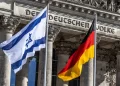
The assessment comes as 14 Western countries issued a joint statement condemning the Israeli Security Cabinet’s approval of 19 new settlements in the occupied West Bank.
The statement, signed by countries including the United Kingdom, Germany, France, Canada, Japan, and Norway, reaffirmed that settlements are illegal under international law and called for an immediate halt to expansion.
The United States did not join the statement and has remained silent on the settlement decision itself, a move experts say sent a powerful political signal.
While European capitals voiced opposition, Washington’s lack of response left those objections isolated and largely symbolic.
In recent weeks, the Israeli occupation has advanced what observers describe as one of the largest settlement drives in years.
The plan includes the establishment and legalization of 19 settlements across the West Bank, encompassing both newly designated locations and previously unauthorized outposts granted official recognition.
In occupied East Jerusalem, Israeli occupation has also announced plans for a new settlement aimed at tightening control over the city’s eastern areas, a step analysts say further undermines prospects for Jerusalem to serve as a future Palestinian capital.
The expansion is being driven by far-right Finance Minister Bezalel Smotrich, who has publicly stated that accelerating settlement construction is intended to make a two-state solution impossible.
Under his leadership, increased funding has been allocated to expand infrastructure, services, and road networks linking settlements into permanent blocs.
Maher Abdul Qader, an expert on U.S. affairs, said Washington’s position has long been marked by contradiction.
“The U.S. opposed settlements in words while shielding the Israeli occupation from any real consequences,” he said, adding that even rhetorical opposition has now given way to calculated silence.
Political analyst Dr. Hassan Al-Deek linked the shift to changes in U.S. domestic politics and the growing influence of right-wing currents that frame settlements as a historical right.
He noted that U.S. recognition of Jerusalem as the Israeli capital emboldened settlement activity and sidelined serious discussion of halting construction.
Palestinian land defense groups warn that settlement expansion now functions as a comprehensive strategy to impose Israeli sovereignty, accelerating the creeping annexation, particularly in Area C of the West Bank.
Experts caution that without effective U.S. pressure, ongoing expansion will further fragment Palestinian territory, leaving the two-state solution increasingly disconnected from realities on the ground.
Shortlink for this post: https://daysofpalestine.ps/?p=70746