DaysofPal – The widespread presence of rodents among displacement tents, homes, and streets buried under the rubble left by Israel’s war on Gaza has raised serious public health concerns, as symptoms consistent with leptospirosis, a bacterial disease transmitted from animals such as rodents to humans through contaminated water, have appeared among a number of children in the Gaza Strip.
Although laboratory samples sent by the Palestinian Ministry of Health for external testing have not confirmed cases of the disease, warnings are intensifying over the potential outbreak of dangerous illnesses due to the severe environmental collapse caused by the war and Israel’s continued ban on the entry of rodent control materials into Gaza.
Displaced families living in tents have reported repeated incursions by rats into their makeshift shelters, where the rodents consume food and bread that are already difficult to store safely amid the absence of basic living conditions and the widespread accumulation of debris.
With the drop in temperatures, harsh weather conditions, rodents, rainwater, and sewage have combined to further exacerbate the suffering of residents.
Symptoms and Health Risks
In recent weeks, a number of residents have experienced worsening symptoms, including sudden fever accompanied by severe headaches, muscle pain, chills, nausea, and eye redness. In some cases, symptoms progressed to yellowing of the skin and eyes, requiring admission to intensive care units for close medical monitoring.
Dr. Rami Al-Salout, a consultant in internal medicine, explained that Gaza’s environment, marked by the accumulation of waste, animal-contaminated water, and untreated sewage, creates ideal conditions for the spread of viral diseases, respiratory infections, gastrointestinal illnesses, and hepatitis A.
He warned that the risk of disease transmission increases significantly due to overcrowding in displacement camps and the onset of winter, facilitating the rapid spread of infections among displaced populations. Al-Salout noted that many upper respiratory infections present with similar symptoms, and if complications develop, patients may suffer lung and bronchial infections or inflammation affecting the brain’s membranes. Such cases often require antibiotics, oxygen support, and, in some instances, hospitalization in intensive care units.
He added that weakened immunity, particularly among individuals with chronic illnesses, combined with the toxicity of bacteria or viruses, increases the severity of complications in Gaza’s disease-prone environment. Al-Salout urged residents to clean the surroundings of their tents of waste and sewage whenever possible.
Absence of Disease Control Measures
Environmental expert Saeed Al-Aklouk, who oversees water and sanitation monitoring at the Ministry of Health, warned of rising risks of disease transmission from rodents to Gaza’s population due to an environment rendered fertile for rodent proliferation by the war. He stressed that the threat of outbreaks remains imminent as long as deteriorating environmental conditions persist.
Al-Aklouk explained that Gaza lacks advanced laboratory capabilities to detect newly emerging diseases, particularly DNA-based testing, with existing laboratories limited to basic examinations. He emphasized that the problem extends beyond the massive volume of rubble, now exceeding 60 million tons, to Israel’s continued refusal to allow the entry of disease vector control materials.
According to Al-Aklouk, Israeli authorities have consistently blocked the entry of rodent, mosquito, and fly control supplies, depriving relevant institutions of any effective means to contain these pests.
He noted that, despite over a month of coordinated efforts by local bodies and UN programs to secure such materials, all attempts have failed. Stocks of pest control substances inside Gaza, including insecticides and flea treatments that spread widely last summer, are now completely depleted.
He warned that the continuation of this situation leaves Gaza’s environment primed for the spread of multiple epidemics, not just a single disease, and that every day of delay increases the danger of outbreaks among the population.
Al-Aklouk also pointed to a noticeable change in the behavior of rodents and stray animals, which have become increasingly aggressive, with reported cases of biting inside displacement tents. He attributed this to residents living within the animals’ own habitats, including the establishment of tents atop waste dumps.
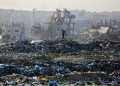
He explained that rubble has effectively become an informal dumping ground for waste, with nearly one million tons of garbage piled in unsuitable locations. Meanwhile, Gaza generates approximately 1,300 tons of waste daily, which is discarded in non-designated areas within neighborhoods, markets, and residential zones, further fueling the spread of rodents and insects.
Widespread Crisis in Northern Gaza
Alaa Al-Attar, head of the Beit Lahia municipality, described dire conditions faced by residents while inspecting makeshift shelters erected atop the ruins of destroyed homes. Speaking to Al Jazeera Net, Al-Attar said municipal teams have warned of an alarming surge in rodent populations due to extensive rubble and overflowing sewage in streets and between tents.
He explained that many destroyed homes still contain food remnants, providing an ideal environment for rodent breeding. Rodents have become a visible presence in streets and living areas, leaving droppings throughout neighborhoods. When mixed with rainwater or sewage, these droppings generate dangerous bacteria that can cause severe skin diseases.
Al-Attar confirmed that Beit Lahia, like other municipalities across Gaza, currently lacks any effective means to combat rodents. Specialized pesticides and poisons have been unavailable for nearly two years, after previously being supplied through international organizations. Despite repeated appeals to relevant authorities, no response has been received to date.
Environmental Collapse and Forced Displacement
Al-Attar stressed that the crisis is worsened by Gaza’s inability to conduct laboratory testing locally, forcing authorities to send samples outside the Strip, an option that is currently unavailable.
He highlighted the worsening sewage crisis, with wastewater recycled through makeshift pumps and discharged into random ponds within residential areas, streets, and alleys. These stagnant waters emit foul odors, attract insects and mosquitoes, and serve as a key food source for rodents.
He warned that Beit Lahia, along with the rest of Gaza, is experiencing a dangerous environmental collapse that threatens the widespread spread of infectious and skin diseases amid the absence of control tools and essential health resources.
Israel, he concluded, continues to refuse measures that would improve the living conditions of more than two million Palestinians affected by the war in Gaza, insisting instead on maintaining their suffering without basic services and rendering the territory unlivable, pushing its population toward forced displacement under the weight of daily hardship.
Shortlink for this post: https://daysofpalestine.ps/?p=71007