DayofPal—Amid one of the darkest periods in modern Palestinian history, the national football team’s success in the Arab Cup has created a rare moment of joy, unity and defiance across Palestinian communities worldwide.
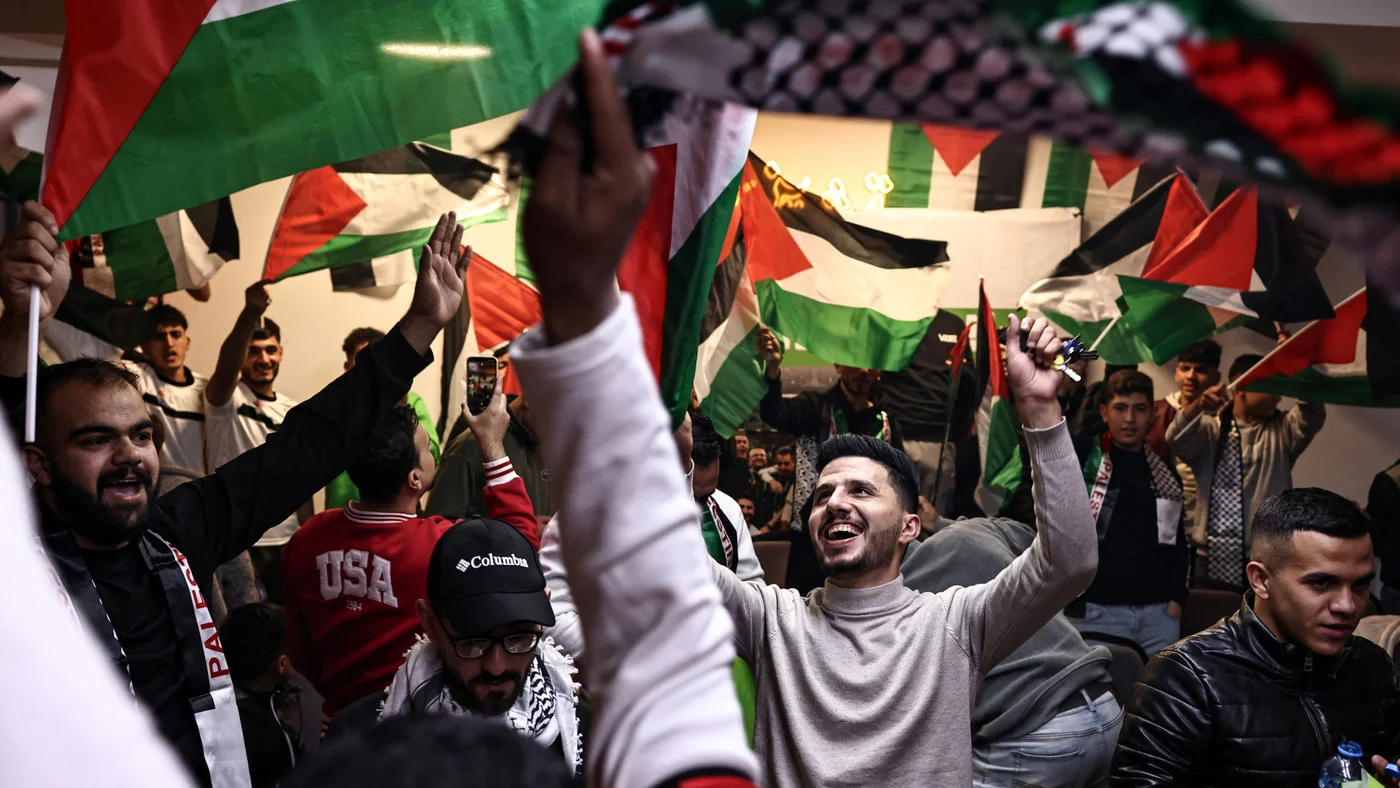
As the tournament unfolds in Qatar, celebrations have echoed from Gaza’s displacement camps to the streets of Ramallah, from refugee camps in Lebanon and Jordan to Palestinian communities in the diaspora.
Fans have packed cafes, living rooms, and stadiums, cheering with a passion that transcends politics and geography.
The team’s coach, Ihab Abu Jazar from Rafah, has become a symbol of resilience. His home was destroyed in Israel’s bombardment, and his mother now lives in a tent in Mawasi Khan Younis..
Yet his squad has pushed forward, dedicating their victories first to Gaza, then to Palestinians everywhere.
Known as Fida’i, “the fighter”, the team has taken on a symbolic role far beyond sport. Each goal is celebrated not only as an athletic achievement, but as a message of Palestinian endurance during a devastating war on Gaza.
In a moment when Palestinian political life remains fragmented and beset by despair, football has offered an unexpected bridge across internal divisions.
The Palestinian team’s performance has also sparked a renewed wave of solidarity across the Arab world. Fans and players from the region have embraced Fida’i with enthusiasm reminiscent of the 2022 World Cup in Qatar.
In one match, a Tunisian player hugged the Palestinian coach after scoring, and crowds across the region waved Palestinian flags alongside their own.
For many, stadiums have become one of the few public spaces where expressions of support for Palestine flow without restriction.
The team’s achievements are all the more remarkable given the challenges it faces. Domestic football in Palestine has been largely suspended, stadiums and training facilities have been destroyed, and players have struggled with scarce resources and limited training opportunities.
Yet their determination has carried them through, with performances that feel, as many fans have said, almost like the result of years of preparation.
Sociologists and cultural experts have long argued that Palestinian identity is held together not by politics, but by culture, literature, art, music, embroidery, cuisine, and now, increasingly, sports.
As Israel targets cultural and physical spaces alike, football has emerged as a new pillar reinforcing a shared national identity.
In the eyes of millions watching, the players are more than athletes. They are fida’iyyin, fighters carrying history, pride and unity onto the field.
Shortlink for this post: https://daysofpalestine.ps/?p=70185