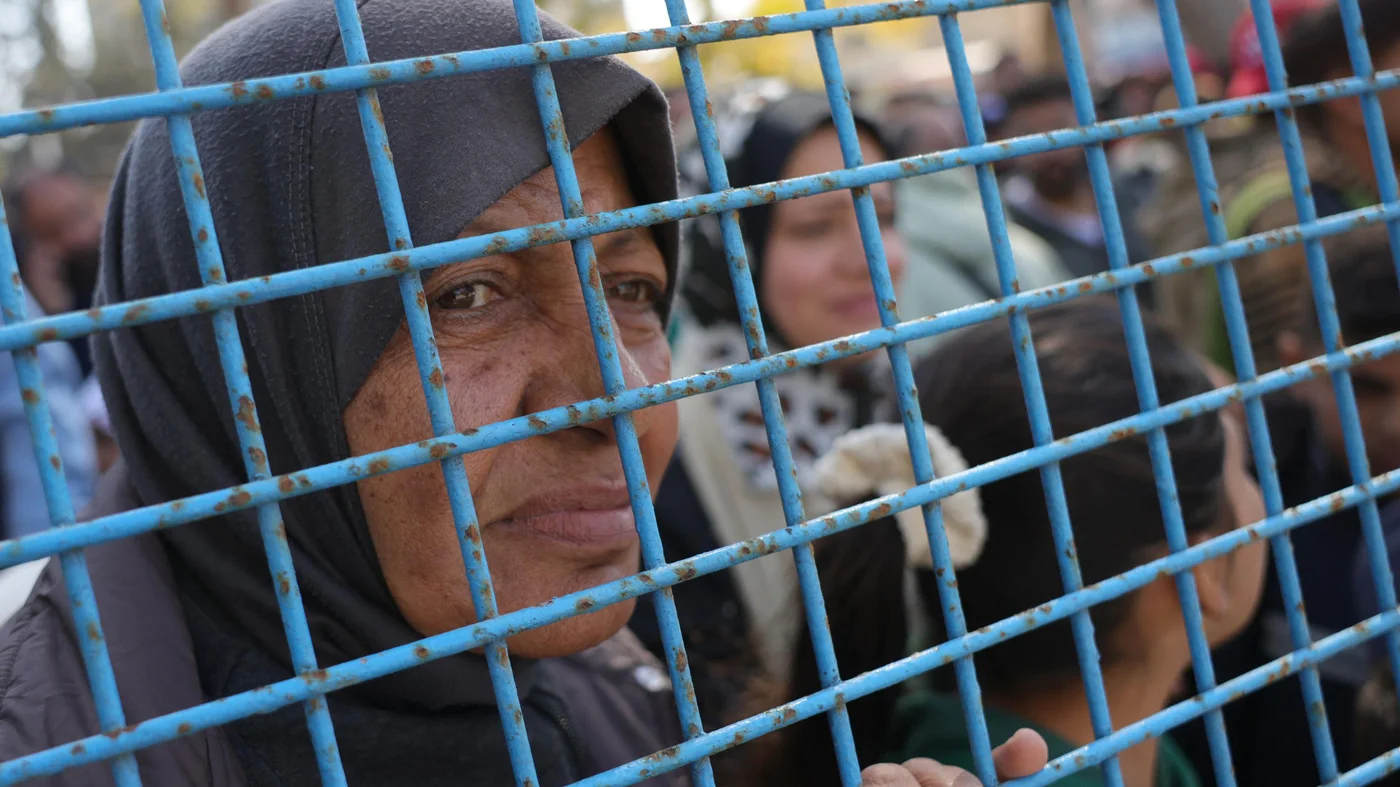
DayofPal—Israel is deporting hundreds of released Palestinian prisoners abroad while simultaneously preventing their families in the occupied West Bank from travelling to reunite with them.
Families and rights groups say the sweeping travel bans amount to a form of collective punishment.
For 24 years, 78-year-old Intisar Bayyoud travelled regularly to Israeli prisons to visit her son Habis. When he was finally released in October under a ceasefire and prisoner-exchange deal, she believed the moment she has long prayed for had come.
Instead, she learned her son was being deported to Egypt, and that her entire family would be banned from leaving the West Bank.
“All of us tried to travel,” his brother Jamal said, adding that “Every single one of us was turned back. This is revenge.”
The Bayyoud family had never faced travel restrictions before. Now, Habis, freed after more than two decades behind bars, lives alone in Egypt, comforted only by the families of other deported prisoners. His mother sends messages through them: “Embrace him for me.”
According to the Palestinian Prisoners’ Society, dozens of families are facing similar bans imposed shortly after Israel deported 383 Palestinian detainees under two recent exchange deals.
Only around 10% of families have managed to reunite with their released relatives, the group says.
Rights advocates argue the restrictions have no legal basis and serve only punitive aims. Many families who attempted to travel were simply told they were barred for unspecified “security reasons.”
Among those affected is the family of writer and long-time political prisoner Basem Al-Khandaqji, freed in the most recent exchange. His mother and siblings rushed to the Jordan crossing when his name appeared on the list, but Israeli officers blocked everyone except his youngest sister, who holds Jordanian citizenship. His mother, who recently recovered from cancer, now sees her son only through a screen.
“There is no logic in preventing a mother from seeing her son,” his sister Amani said.
The wife of Nael Al-Barghouthi, the world’s longest-serving Palestinian prisoner, is also barred from travel.
Barghouthi, 68, deported to Egypt and later Turkey, now lives alone. His wife, Iman Nafi’, says Israel’s refusal to allow even a single relative to join him deepens the cruelty of his forced exile.
“Israel denied Nael the right to remain in his homeland,” she said. “Now they deny him family beside him.”
Some deported prisoners are in extremely fragile health. Abdel-Rahman Salah, 72, was transferred by ambulance from Ramleh prison clinic to Egypt after suffering a brain haemorrhage caused by beatings in prison.
His family’s repeated appeals for travel permission have been rejected, despite his need for constant medical care. Fellow former prisoners now attend to him in Cairo.
“We fear he will die abroad without any of us at his side,” his daughter Rasha said.
Despite the families’ petitions and outreach to international organizations, rights groups say no progress has been made. The Palestinian Prisoners’ Society describes the travel bans as part of a broader escalation in punitive measures targeting released detainees and their relatives.
For many families, hope now rests not on travel permits but on pushing for the cancellation of deportation orders themselves.
“I will keep fighting for Nael to come home,” said Nafi’. “There is no justification for his exile, none at all.”
Shortlink for this post: https://daysofpalestine.ps/?p=70181