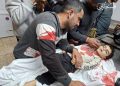
Eighteen months into Israel’s war on Gaza, the devastating toll on Palestinian lives has grown beyond the mounting death toll to include a dramatic collapse in life expectancy, a deepening famine, and systemic destruction of food production, according to recent studies and humanitarian reports.
Since the war began in October 2023, Israeli assaults have killed over 51,000 Palestinians and injured more than 100,000 from a population of just 2.2 million. An estimated 10,000 more are missing, presumed dead beneath the rubble.
The war has displaced 90 percent of Gaza’s population, often multiple times. Israel’s blockade of aid, in place since March 2, has further compounded the crisis.
The heavy civilian toll has devastated Gaza’s demographics, with women, children, and the elderly making up 56 percent of those killed.
A study published in The Lancet revealed a staggering drop in life expectancy: for Palestinian men, it fell by 51.6 percent to 40.5 years, a loss of 34.9 years; for women, life expectancy dropped by 38.6 percent to 47.5 years, a 29.9-year loss.
The study’s authors warned that “our approach to estimating life expectancy losses in this study is conservative as it ignores the indirect effect of the war on mortality… Actual losses are likely to be higher.”
This aligns with a separate February 2025 study, which found that official figures from the Palestinian Ministry of Health underestimated the death toll by 41 percent between October 2023 and June 2024.
The revised estimate put the actual number of deaths at 64,620, compared to the ministry’s reported 37,877. According to the study, the discrepancy stemmed largely from data collection challenges and the exclusion of secondary causes of death, such as starvation and lack of sanitation.
Food System Collapse
Before the war, agriculture was a vital part of Gaza’s economy, supporting over 560,000 people through farming, herding, and fishing.
But as Israeli bombardments destroyed fishing fleets, fields, greenhouses, and livestock infrastructure, Gaza’s ability to feed itself collapsed.
Food prices skyrocketed. In central Gaza’s Deir al-Balah Governorate, the price of flour rose 1,058 percent between October 2023 and December 2024. Tomatoes soared 956 percent, cucumbers 752 percent, lentils 360 percent, and rice 142 percent.
By April 2025, the Gaza bakery owners’ association announced a complete shutdown due to a shortage of flour and fuel, driven by the blockade. Livestock losses have also been devastating. Northern Gaza farmer Faraj Jarudat told The Guardian in November 2024:
“Some died of starvation, some were eaten by people who were hungry, some just disappeared. There is not a single one left.”
His entire farm and home, he said, had been bulldozed by Israeli forces.
A Hunger Catastrophe
Widespread hunger has triggered acute malnutrition, especially among children. In April 2024, Oxfam reported that Palestinians in northern Gaza were surviving on just 245 calories per day—less than 12 percent of the recommended daily intake.
Rania, a mother from Gaza City, told Middle East Eye in June:
“There are no vegetables, fruits, or milk in the markets. Nothing that has any nutritional value… I’ve been rationing [aid] because if I run out I will have nothing to eat. I feel dizzy and weak. My face is pale and I’ve lost a lot of weight.”
Desperation has driven many to eat grass, which is indigestible and causes vomiting and diarrhea, or animal fodder ground into makeshift bread.
According to February 2025 estimates, at least 60,000 children in Gaza will require treatment for acute malnutrition in the coming year. Some have already died, including Yazan al-Kafarna, a child with cerebral palsy who depended on a special diet. His father recounted:
“Before the war he was healthy, he had access to all the food and medical care he needed. When the war started, everything was cut off… this happened to him from the lack of nutrition and him not having important foods.”
Failing Global Response
Despite the scale of the disaster, international efforts to deliver aid have been hamstrung by the ongoing Israeli blockade, collapsed infrastructure, and repeated ceasefire violations—most recently in March, when Israel resumed strikes after a brief truce.
As Gaza enters its nineteenth month of war, the humanitarian catastrophe continues to deepen. Beyond the tens of thousands killed, an entire population is being starved, displaced, and stripped of its future—its very lifespan decimated.
Source: Middle East Eye
Shortlink for this post: https://daysofpalestine.ps/?p=62489