DaysofPal- More than 7,000 Palestinians living in 46 Bedouin communities around Jerusalem are facing an unprecedented wave of forced displacement, as Israeli occupation accelerates work on the long-disputed E1 settlement project.
Palestinian authorities and rights groups say the plan will permanently alter the geography of the region and sever the northern and southern parts of the occupied West Bank.
Revived after years of political stagnation, the E1 plan seeks to link the large settlement of Ma’ale Adumim with Jerusalem. If completed, it would carve the West Bank into disconnected enclaves and encircle East Jerusalem with a ring of settlements.
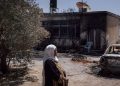
The targeted communities, many of them living in the area since 1967, now face escalating pressure designed to push them out through land seizures, demolitions, and the destruction of traditional livelihoods.
According to the Jerusalem Governorate, Israeli occupation is carrying out a “systematic campaign of uprooting” aimed at emptying the eastern approaches to Jerusalem. Residents say harassment and attacks by Israeli forces and settlers have intensified sharply.
Reports include physical assaults, the destruction of water lines, theft of livestock, and the torching of wheat and barley fields crucial to Bedouin survival.
Around 21 settler-run grazing outposts have been established near these communities, blocking shepherds from their natural grazing areas.
Water shortages have grown severe, with families in places such as Wadi Sanisel and al-Wad al-A’waj forced to buy water at double the price paid in other parts of the West Bank.
Local officials describe the situation as a strategy of “slow, silent displacement,” where unbearable living conditions compel families to leave in the absence of direct eviction orders.
The 33 most vulnerable communities lie directly in the path of the broader “Greater Jerusalem” plan, which aims to sever Jerusalem from its Palestinian hinterland.
Hassan Mleihat, general coordinator of the Bediar Organization for Bedouin Rights, says the threatened communities stretch across Jerusalem’s northern, eastern, and southwestern peripheries, including Jabal al-Baba, Wadi Abu Hindi, Abu Nuwar, Khan al-Ahmar, and villages near Hizma, Beit Hanina, Bir Nabala, and al-Jib. Several have already received new evacuation notices.
Legal avenues offer little protection, Mleihat adds, as Israeli occupation continues to classify the land as “state land,” despite its internationally recognized status as occupied territory. Since October 2023, more than ten communities, including al-Baqa’a, have been emptied amid a surge in settler attacks.
A recent Bediar report warns that the region is approaching a “point of no return.” By annexing the Bedouin areas east of Jerusalem, the E1 plan would fragment the West Bank into isolated cantons and extinguish the possibility of a contiguous Palestinian state.
Both the Jerusalem Governorate and Bediar are calling for urgent international intervention, including freezing settlement construction, enforcing the 2024 International Court of Justice advisory opinion, and imposing sanctions on entities involved in settlement expansion.
Local authorities are also appealing for emergency support to help families survive the mounting pressures, before entire communities are erased from their land.
Shortlink for this post: https://daysofpalestine.ps/?p=70273