DaysofPal — After nearly 1,000 days of Israeli genocidal war, famine in the Gaza Strip has shifted from a humanitarian consequence into a tool of warfare used by the Israeli occupation, placing millions of civilians at risk.
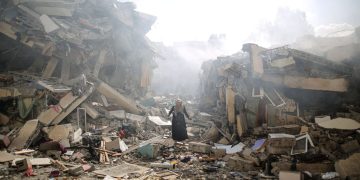
With food, water, and medicine now scarce due to the Israeli suffocating siege, the 2.4 million residents of Gaza face worsening conditions amid ongoing restrictions on humanitarian aid and widespread destruction of infrastructure.
Since the Israeli genocidal war began in October 2023, a near-total blockade has severely limited access to basic necessities, raising concerns that essential supplies are being used as leverage in the conflict.
According to Gaza’s Government Media Office, border crossings have remained closed for extended periods, preventing the entry of hundreds of thousands of aid trucks carrying food, fuel, and medical supplies, where Israeli occupation still uses food as a weapon of war against the people.
Officials warn that hundreds of thousands of children are now at risk of severe malnutrition, with dozens of deaths already attributed to hunger, including many children.
International organizations, including the United Nations and humanitarian groups, have pointed to several indicators of starvation being used as a method of warfare.
These include restrictions on aid deliveries, destruction of farmland and food production systems, and delays or obstruction of relief convoys.
Save the Children estimates that approximately 245,000 children in Gaza are either suffering from or at risk of malnutrition.
The limited food available often lacks essential nutrients, further endangering children’s health and development.
Rami Abdu, head of the Euro-Mediterranean Human Rights Monitor, described the situation as a systematic policy aimed at weakening the civilian population.
He cited the Israeli closure of crossings, targeting of food infrastructure, and disruption of water and sanitation systems as key elements contributing to the crisis.
Despite a slight improvement in classification after Gaza was previously declared to be under famine conditions in 2025, the humanitarian situation remains critical.
Around 1.6 million people continue to face severe food insecurity and famine.
The famine has also caused broader social and economic collapse. Much of Gaza’s infrastructure has been destroyed, unemployment is widespread, and repeated displacement has fragmented families.
Vulnerable groups, including children, the elderly, and the sick, are particularly at risk.
Under international law, the use of starvation as a method of warfare is prohibited.
Human rights organizations warn that the ongoing conditions in Gaza constitute serious violations, calling for urgent international action to address the crisis and ensure accountability.
Shortlink for this post: https://daysofpalestine.ps/?p=76069