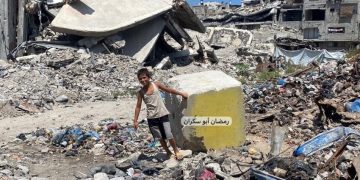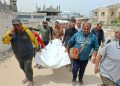

An Israeli airstrike has leveled a five-storey residential building in Beit Lahiya, northern Gaza, killing at least 93 Palestinians and wounding dozens. The building, which had become a temporary shelter for displaced families from the Jabalia refugee camp, is now a mound of rubble, with only fragmented remains of the lives once lived there. Local residents, in shock, are working with limited equipment to dig through the debris, hoping to recover those who may still be trapped.
Al-Awda Hospital, one of the few facilities still operational in the northern Gaza Strip, has been overwhelmed with casualties, struggling to provide adequate care for those severely injured in the attack. Medical personnel report that many of the wounded were crushed by falling concrete or are suffering from massive blood loss. The hospital’s resources are stretched thin, unable to keep up with the number and severity of injuries flooding in from Beit Lahiya.
“Some of the people who were inside are still missing,” says a local resident and volunteer at the scene. “Families are looking for loved ones who seem to have been completely lost, pulverized by the force of the explosion.” Volunteers continue to pull bodies from the wreckage, although hopes are fading for the approximately 40 people believed still trapped under the collapsed structure. Without proper excavation equipment, local residents and first responders face an almost impossible task of removing the massive slabs of concrete.
The destroyed building housed multiple families, including its owner, relatives, and in-laws who had sought shelter from the Israeli invasion in their own neighborhoods. These individuals were among many displaced by recent military operations in the Jabalia area and were seeking refuge when tragedy struck.
This latest incident adds to the mounting toll of destruction and loss in Gaza caused by the Israeli relentless killing machines, where residential areas have increasingly become the focal points of Israeli strikes, leaving civilians—especially women and children—most vulnerable.
Shortlink for this post: https://daysofpalestine.ps/?p=58411