DaysofPal- Israeli violations of the fragile Gaza ceasefire have continued since the agreement took effect on 11 October 2025. The occupation forces have also announced the closure of all crossings with the enclave, including the Rafah border crossing.
On Saturday, Israeli military vehicles and aircraft targeted several areas across the Gaza Strip. Residents face catastrophic humanitarian conditions that have grown more severe during the month of Ramadan.
Israeli vehicles opened heavy fire toward the northeastern neighborhoods of Al-Bureij refugee camp in central Gaza. Artillery shelling and intense gunfire also struck the northwestern areas of the Strip. In Khan Younis, Israeli artillery bombarded the eastern neighborhoods of the city in southern Gaza.
Under the terms and stages of the ceasefire agreement, reached based on a plan proposed by US President Donald Trump, Israeli forces withdrew behind what is known as the “Yellow Line.” Despite that redeployment, they continue to control more than half of Gaza’s territory.
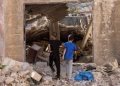
Since the agreement entered into force, daily bombardment and gunfire attributed to Israeli violations have killed about 618 people and wounded 1,663 others. The broader war has left more than 72,000 dead and over 171,000 injured, most of them women and children. Destruction has affected 90 percent of civilian infrastructure across the Strip.
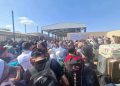
On the humanitarian front, Israeli authorities declared the closure of all crossings with Gaza, including Rafah. The decision followed a ruling by Israel’s Supreme Court that temporarily froze a government ban on 37 foreign humanitarian organizations operating in Gaza and the occupied West Bank, pending a final decision.
The court acted in response to a petition submitted by aid groups seeking to overturn the ban after the Israeli government revoked their work permits. Among the organizations that filed the petition are Médecins Sans Frontières and Oxfam.
On 30 December 2025, 37 international organizations were informed that their registration with Israeli authorities had expired. They were given 60 days to renew it by submitting lists of their Palestinian employees.
International agencies have repeatedly warned of the continued deterioration of humanitarian conditions in Gaza. UNRWA has stressed that the scale of needs far exceeds the assistance currently permitted to enter the territory. The agency has faced growing challenges in securing humanitarian access and bringing in essential supplies, including fuel and medical supplies, due to restrictions on crossings and truck movements.
Earlier in February, Israel reopened the Rafah crossing, allowing wounded and sick Palestinians to leave the enclave for treatment. Some Palestinians were also permitted to return to Gaza under Israeli conditions and following security approvals. The step was part of the implementation of the second phase of the ceasefire agreement that entered into force last October.
Rafah is considered the only land gateway connecting Gaza to the outside world without passing through Israel. The crossing lies in an area that has remained under Israeli military control since May 2024. It was previously reopened for a brief period at the beginning of 2025 before being shut again.
Shortlink for this post: https://daysofpalestine.ps/?p=72600