DaysofPal- The humanitarian situation in the Gaza Strip is rapidly worsening as international attention shifts toward the escalating Israeli-US war on Iran, according to a leading human rights monitor.
Dr. Rami Abdu, head of the Euro-Med Human Rights Monitor, warned that strict Israeli restrictions on border crossings into Gaza are worsening living conditions for more than two million Palestinians.
Speaking in an interview with a Palestinian newspaper, Abdu said Israeli occupation continues to limit the entry of essential supplies, including food, medicine, fuel, and other basic goods, into the enclave, creating increasingly severe humanitarian conditions.
He also said that the Israeli occupation is obstructing the work of the national committee tasked with administering Gaza, preventing its members from entering the territory and carrying out their duties.
According to Abdu, this has left the enclave in a state of administrative vacuum while humanitarian conditions continue to deteriorate.
“With more than two million Palestinians living under these restrictions, daily life has become extremely difficult,” Abdu said, noting that the majority of Gaza’s population now relies heavily on humanitarian aid to survive.
Human rights monitors warn that reduced flows of supplies through border crossings are raising fears of a renewed famine and widespread malnutrition, particularly among children, women, and the elderly.
Field teams from the Euro-Med Monitor have also documented an increasing collapse in health services across Gaza.
Several hospitals have been forced to suspend operations due to shortages of fuel and medical supplies, while many patients are unable to travel abroad for treatment or access necessary medications.
Abdu said the current international focus on tensions with Iran has allowed the Israeli occupation to expand its policies in Gaza with reduced global scrutiny.
According to the rights group, Israeli occupation has delayed implementation of the second phase of the ceasefire agreement reached in October 2025. The measures include tighter restrictions on the movement of people and goods, intensified military strikes, artillery shelling, and the continued expansion of a “buffer zone” in parts of Gaza.
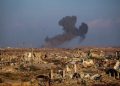
He added that Israeli forces have also continued demolitions of remaining residential buildings, further worsening conditions in an area where large portions of infrastructure have already been destroyed.
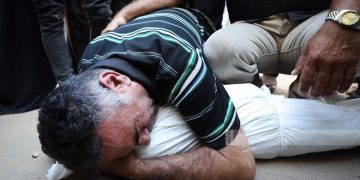
Despite the ceasefire agreement, Abdu said at least 636 Palestinians have been killed since the truce took effect, suggesting that the cessation of hostilities has not translated into meaningful protection for civilians.
“Israel continues to carry out killings, bombardment, and military attacks,” he said, noting that field documentation indicates most victims are civilians, including women and children.
Abdu argued that the ongoing airstrikes and systematic demolition of homes and civilian facilities represent serious violations of international humanitarian law.
He said the destruction has targeted residential neighborhoods and critical infrastructure, including water networks, electricity systems, healthcare facilities, and schools.
According to the monitor, roughly 90 percent of Gaza’s buildings have been damaged or destroyed since the start of the war in October 2023.
Abdu warned that such widespread devastation appears aimed at making life in Gaza unsustainable and forcing residents to leave the territory, describing it as a policy that could amount to “coercive displacement.”
He further argued that imposing living conditions that threaten the survival of a civilian population could fall under the legal definition of genocide under international law.
Abdu criticized the international response to the crisis as inadequate, saying that statements of concern from governments and international institutions have failed to match the scale of the humanitarian disaster.
“Statements alone are not enough, without concrete measures to stop violations and ensure accountability, these crimes will continue.” He said.
He called for urgent international action to protect civilians, open Gaza’s crossings fully for humanitarian aid, and support international legal efforts to hold those responsible for alleged war crimes accountable.
The warning comes as the United States and the Israeli occupation have recently launched a war on Iran, while Israeli occupation temporarily closed Gaza’s border crossings before reopening them partially, without allowing sufficient humanitarian supplies into the territory.
Shortlink for this post: https://daysofpalestine.ps/?p=72878