DaysofPal– The Government Media Office in Gaza has warned of a rapidly deteriorating humanitarian situation in the Gaza Strip, citing ongoing restrictions on the entry of essential supplies, severe damage to infrastructure, and disruptions to vital services.
In a statement issued on Thursday, the office said the crisis threatens more than 2.4 million Palestinians, raising the risk of serious health, environmental, and humanitarian consequences.
The statement reaffirmed that government authorities are fully prepared to transfer administrative control to a national committee for managing Gaza, noting that their continued operations aim to ensure the delivery of basic services, maintain public order, and protect citizens’ interests and public property.
Despite limited resources and extensive damage to facilities, ministries and public institutions continue to provide essential services, the office said.
However, ongoing restrictions on goods and border crossings are preventing sufficient humanitarian aid and basic supplies from entering the territory.
According to the statement, hundreds of critical items needed to restore services and rebuild infrastructure remain barred from entry, worsening the crisis and limiting the ability of both local and international organizations to meet growing needs.
International organizations operating in Gaza have also reported significant obstacles to implementing humanitarian interventions and early recovery programs due to restrictions on equipment and materials required for infrastructure rehabilitation.
The office further warned of misleading media campaigns circulating on various platforms, which it said aim to spread confusion, undermine trust in institutions, and create social instability.
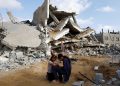
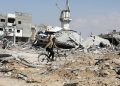
The sanitation sector is facing one of its most severe crises in years due to extensive damage to sewage networks and pumping stations, along with continued restrictions on materials needed for repairs.
More than one million displaced people are currently living in hundreds of emergency shelters lacking basic infrastructure, including proper sewage systems.
The presence of over 200,000 cesspits poses a growing threat to public health and the environment, increasing the risk of groundwater contamination and the spread of infectious diseases.
Authorities warned that the continued ban on necessary materials is preventing essential maintenance work and raising the likelihood of a large-scale health disaster.
The water sector has also been severely impacted, with more than one million meters of water networks destroyed, cutting off supplies to large areas.
Water lines supplied by the Israeli company Mekorot are reportedly non-operational and require urgent repairs to restore water access.
Ongoing shortages of fuel, generators, lubricants, and spare parts are further limiting municipalities’ ability to operate wells and pumping stations.
The statement emphasized that fuel shortages are making it extremely difficult to provide water to Gaza’s population, posing a direct threat to lives.
Municipalities have urgently called for the entry of new generators, spare parts, fuel, and construction materials necessary to rebuild damaged water networks.
The office also warned of increasing infestations of rodents and insects, including rats, mosquitoes, flies, and fleas, particularly in displacement camps, due to the lack of pest control materials.
In the shelter sector, hundreds of displacement camps house tens of thousands of tents that have been severely damaged by prolonged use and harsh weather conditions, rendering them inadequate for basic protection.
Authorities said the situation requires the urgent entry of hundreds of thousands of tents, temporary housing units, and shelter materials, warning that shortages are exacerbating the suffering of displaced families.
The statement listed numerous restricted items, including water and sewage pipes, construction materials such as cement, sanitation equipment, solar panels and their components, batteries, generators, oils, mechanical and electrical spare parts, fuel, cooking gas, vehicle tires, plumbing and electrical tools, wood, glass, iron, aluminum, and many other materials essential for restoring services and infrastructure.
The Government Media Office called on the international community to take immediate action to ensure the unhindered entry of essential supplies.
It urged support for humanitarian organizations, municipalities, and service providers to carry out their work, rehabilitate water and sanitation networks, improve shelter conditions, and secure fuel and operational resources.
The statement also appealed to mediators and sponsors of the ceasefire agreement to intensify efforts to ensure the implementation of humanitarian provisions, alleviate civilian suffering, and prevent further deterioration in health, environmental, and living conditions.
It concluded by warning that current indicators and humanitarian reports point to a potential escalation of the crisis if urgent measures are not taken to restore essential services and mitigate growing health and environmental risks across the Gaza Strip.
Shortlink for this post: https://daysofpalestine.ps/?p=75688