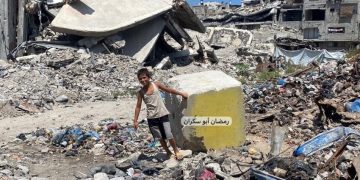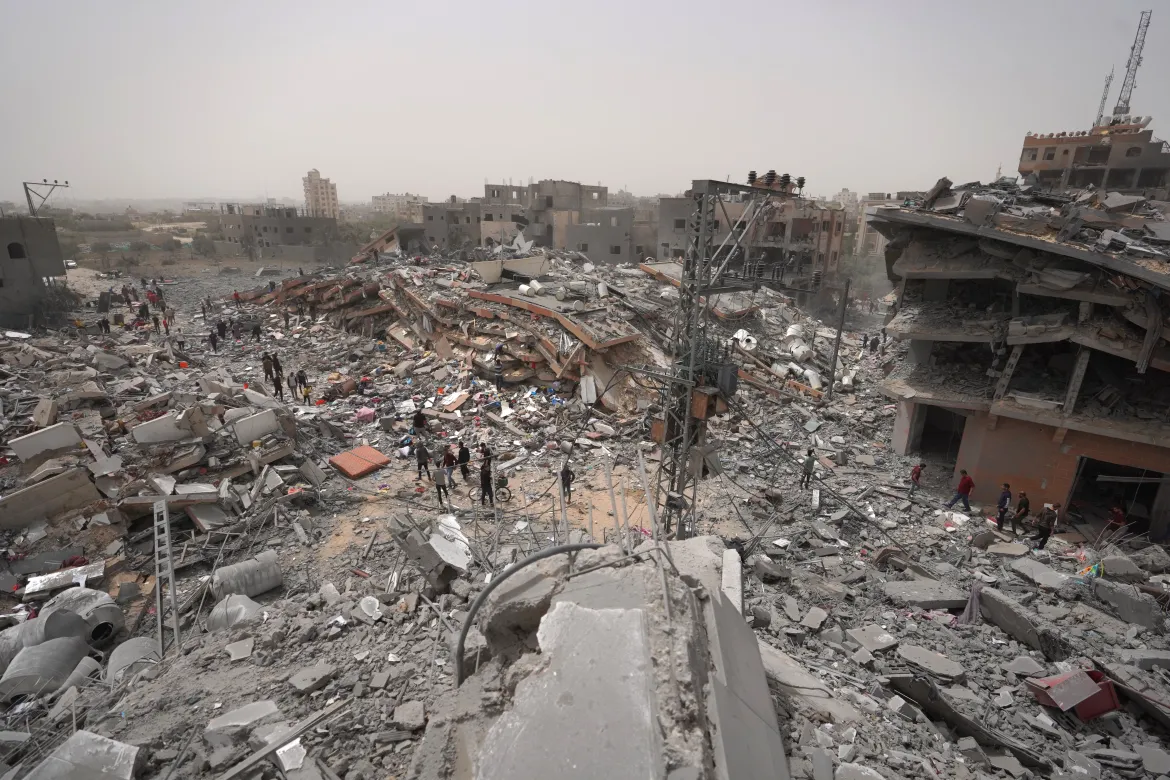
Beneath the ruins of Al-Muhandisin Tower in Al-Nuseirat refugee camp, where Israeli airstrikes killed more than 250 Palestinians on October 31, 2023, many victims are still buried under the debris. Over time, their bodies have decomposed, their remains now mixed with the shattered concrete of what was once their homes.
For their families, the tragedy did not end with their deaths. It continues every day.
They were denied the chance to recover the bodies, to bury them, or even to say goodbye. With no heavy machinery allowed into Gaza and rescue efforts severely restricted, many of the dead were left beneath the rubble—slowly fading into unrecognizable remains.
“I Just Want to Bury Them”
Islam Darwish, 25, lost her husband and two children in that strike. More than two years later, they are still beneath the ruins.
“Every day, the pain grows,” she says. “They are still there… but after all this time, what is left of them?”
Her greatest fear is that they may never be found.
“I’m afraid the rubble will be taken away… that they’ll be lost forever, or mixed into something else,” she says. “I don’t want them to disappear without a grave. I just want to bury them with dignity.”
Families Left Without Answers
Shaher Abu Odeh carries a similar loss. Fourteen members of his family were killed when their home in Rafah was bombed in June 2024. He was the only one who survived.
He fled under fire, leaving his family behind beneath the rubble. Later, the area was bulldozed, and the remains were removed, taking with it any trace of those buried underneath.
“Our home was destroyed, my family was left under the rubble, and then everything was taken away,” he says. “We don’t even know where they are.”
When Even the Dead Are Not Recovered
Across Gaza, many families share this pain.
In Beit Lahia, 150 members of the Abu Al-Nasr family were killed in a single attack. Some remain trapped beneath the ruins, their bodies decomposed and impossible to identify.
“The missiles destroyed everything,” says survivor Aya Abu Al-Nasr. “The bodies were torn apart and mixed with the rubble. There is nothing left to recognize.”
For families like hers, grief is suspended—there is no closure, no burial, no farewell.
“All we want is to bury them,” she says.
Thousands Still Missing
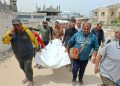
Civil defense teams report that thousands of victims remain buried under destroyed homes across Gaza. Many have decomposed beyond recognition. Others may never be recovered at all.
Even when rescue teams manage to reach some sites, they often find little left.
Still, for families, even the smallest remains matter. It is the difference between a long wait for closure and the ability to grieve.
A Fear That Deepens the Pain
What adds to the suffering is the growing fear that rubble—possibly containing human remains—has been removed, discarded, or reused without any regard for those buried within it.
For families, this is not just about loss. It is about dignity.
To lose a loved one is one kind of pain.
To lose even their final resting place is another.
An Open Wound
In Gaza, death does not bring closure. It leaves behind unanswered questions, unfinished grief, and a deep, unhealed wound.
Tens of thousands have been killed. Thousands more remain missing beneath the rubble.
And for the families still waiting, one question remains:
Where are our loved ones—and will we ever be able to lay them to rest?
Shortlink for this post: https://daysofpalestine.ps/?p=73818