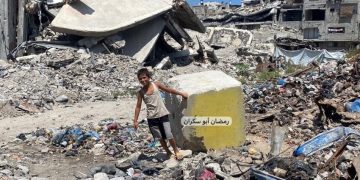
Gaza is no longer just a war zone or a humanitarian crisis spiraling out of control. It has become a stark model of how punishment is being reshaped in today’s international system—where the Israeli occupation combines blockade, economic strangulation, and military aggression into one integrated system targeting every aspect of Palestinian life.
For nearly two decades, the siege on Gaza has not been a temporary “security measure,” as Israel claims, but a sustained policy of collective punishment imposed on more than two million Palestinians. Today, with the ongoing genocide, it is no longer possible to separate the blockade from the assault itself. Starvation, destruction of infrastructure, and restrictions on movement and aid all function together within a single framework aimed at controlling and exhausting an entire population.
Beyond a “Conflict”
Describing what is happening in Gaza as a “conflict” has become a political oversimplification that obscures reality. What Palestinians in Gaza are facing goes beyond conventional warfare—it reflects a systematic effort by the Israeli occupation to reshape the conditions of life itself.
This reality raises urgent legal and moral questions about the role of the international community. Are these actions legitimate “security measures,” or do they amount to an organized system of collective punishment and domination that violates the most basic principles of international law?
Legal Accountability in Question
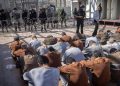
At the heart of this debate is the issue of international accountability. Policies targeting Palestinians—including prisoners’ rights and practices that threaten the right to life—cannot be viewed as isolated internal matters. When carried out as part of a broader, systematic approach, they point to institutional intent and coordinated decision-making.
Such patterns may fall under the jurisdiction of the International Criminal Court, particularly in relation to war crimes and grave violations of international humanitarian law. Documenting these violations and linking them to the broader political and military context is essential—not only to expose the reality on the ground, but to build a legal case that can support future accountability.
Sanctions as Tools of Control
Globally, sanctions and coercive measures are increasingly being used not just as political pressure, but as structural tools to manage conflicts—often imposed according to power dynamics rather than legal standards.
In this context, the appointment of Palestinian expert Zeina Jallad as a UN Special Rapporteur on the impact of such measures highlights growing concern over their humanitarian consequences. While these UN mechanisms are formally independent, they still operate within a global system shaped by political interests and power imbalances.
Gaza as the Ultimate Test
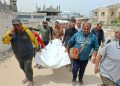
Gaza today represents one of the clearest tests of the international legal system. The prolonged blockade, combined with ongoing military attacks, has created a reality where siege, war, and humanitarian collapse are inseparable.
This raises a deeper question: what remains of international law when tools like blockade and collective punishment become permanent mechanisms of control over an occupied population?
Limits of International Action
UN mechanisms, including special rapporteurs, do not have enforcement power. Their influence lies in documenting violations, shaping legal narratives, and increasing political pressure over time.
Here, the work of Francesca Albanese intersects with broader efforts to expose both the structure of Israeli occupation and the tools used to sustain it, including siege and economic pressure.
Together, these efforts can help build a more complete legal and political picture—but their effectiveness ultimately depends on how they are used.
The Missing Piece
The key challenge remains the lack of a unified and effective Palestinian strategy to turn these international mechanisms into real pressure.
Without systematic documentation, coordinated advocacy, and sustained political engagement, these tools risk remaining symbolic, despite their importance.
As wars expand and global standards continue to erode, Gaza stands as a painful question to the world:
Is human life still at the center of international politics—or has the system come to operate at the expense of justice and the rights of oppressed peoples, particularly Palestinians under Israeli occupation?
Shortlink for this post: https://daysofpalestine.ps/?p=73689