Israel’s Supreme Court has ordered the removal of about 1,200 Palestinians from their villages in the occupied West Bank. Some head underground to survive
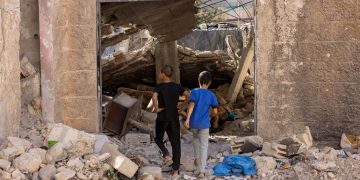
Faced with expulsion from their villages and the demolition of their homes by Israeli authorities, hundreds of Palestinians are trying to stay by reverting to an older form of shelter: living in underground caves.
“We have no home to live in and no tent — we have no option but to live in the cave,” said Wadha Ayoub Abu Sabha, 65, a resident of the village of Khirbet al-Fakheit, in a rural area of the Israeli-occupied West Bank that the military is planning to seize. “The beginning of my life was in the cave, and the end of my life will be in the cave.”
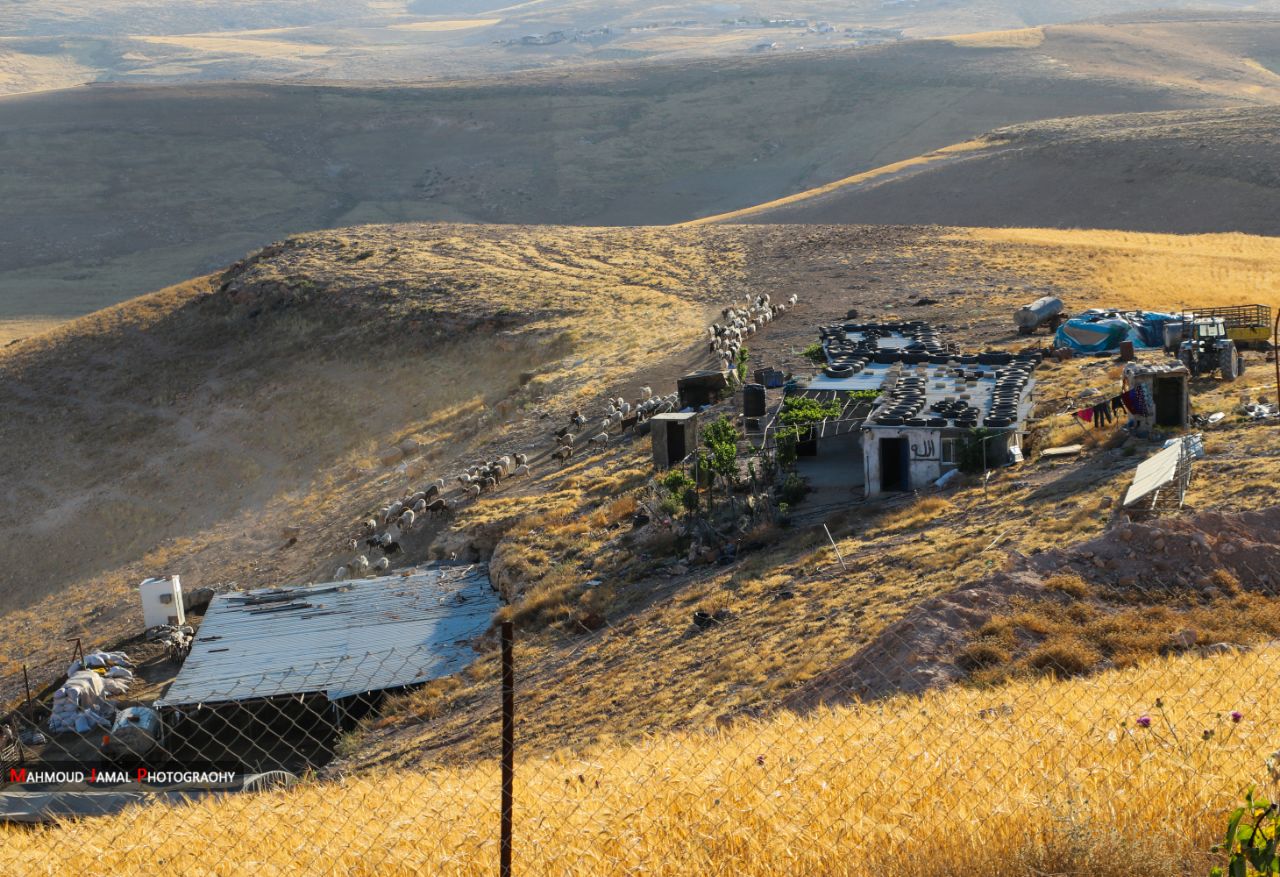
The residents of Abu Sabha’s village and surrounding herding communities, whose forbears long lived in the caves that dot the area, have been fighting efforts to displace them from homes where their families have lived for decades. Some have deeds to their land from before the modern establishment of Israel in 1948.
Faced with expulsion from their villages and the demolition of their homes by Israeli authorities, hundreds of Palestinians are trying to stay by reverting to an older form of shelter: living in underground caves.
“We have no home to live in and no tent — we have no option but to live in the cave,” said Wadha Ayoub Abu Sabha, 65, a resident of the village of Khirbet al-Fakheit, in a rural area of the Israeli-occupied West Bank that the military is planning to seize. “The beginning of my life was in the cave, and the end of my life will be in the cave.”
The residents of Abu Sabha’s village and surrounding herding communities, whose forbears long lived in the caves that dot the area, have been fighting efforts to displace them from homes where their families have lived for decades. Some have deeds to their land from before the modern establishment of Israel in 1948.
Israeli authorities have long demolished homes and other structures in the area, citing violations such as a lack of building permits, which the Israeli government rarely gives to Palestinians. The residents have always rebuilt.
But after the third time Abu Sabha’s home was demolished, her family moved temporarily into an unused clinic and began readying a cave under their village to live in.
Access to the cave is through a pen where the family keeps their sheep, and down slippery stone steps made smooth by the passage of time and feet.
Abu Sabha’s cousin, Inshiraah Ahmad Abu Sabha, 58, walked into the cave recently, seemingly upbeat, as if she were playing the part of interior decorator on a reality TV home makeover show.
“This needs work,” she said, waving toward the stone walls and suggesting the addition of a row of shelves. Looking up at the low, cobwebbed ceiling, from which an electric light hung, she said, “It needs a vent up there.”
Sitting on a boulder and wearing a purple robe and a red and white kaffiyeh as a hijab, the cousin looked over at a nook, the smallest of the three areas of the cave.
“That’ll be a room for Zainab,” she said, turning to Abu Sabha’s 3-year-old granddaughter, who was playing on the dirt floor. “What do you think, Zainab? A room for you?”
Ahmad Abu Sabha remembers what the caves used to look like in her adolescent years when her family last lived in them. In the 1980s, residents moved above ground, first erecting tents and then, in the 2000s, building homes.
“They say we weren’t here before the ’80s, but I was born here in 1964 in another cave,” she said.
The Israeli military declared much of Masafer Yatta a restricted firing zone in the early 1980s, saying it had unique characteristics that no other area had, according to a court decision in the army’s favour. Israel has long maintained that the Palestinians in the area were not permanent residents before that designation.
Beyond the demolitions, Israel has engaged in what the United Nations calls “coercive measures” to make life difficult for Palestinians in the area, confiscating vehicles, restricting access by aid groups, and setting up checkpoints between villages that can make it difficult for children and teachers to reach schools, local leaders and aid groups said.
“Forcible transfer is contrary to the Geneva Conventions, and transfer does not always mean packing people up in trucks and taking them away,” said Noa Sattath, executive director of the Association for Civil Rights in Israel. “A slow mistreatment of the population in order to motivate them to leave is also considered forced transfer.”
The Palestinian Authority has said that evicting residents of the area would amount to ethnic cleansing, a charge often levelled by Palestinians and their advocates in the occupied West Bank, including East Jerusalem, as land and building laws push them out in favor of Jewish settlers and settlements.
Two years ago, community leaders decided the caves could be the only option for villagers to stay in Masafer Yatta. While they would still be under expulsion orders, it would be harder for the Israeli military to remove them.
Work to renovate the caves has been slow and expensive for most families. Many caves lack access to electricity or spaces with vents for cooking. Aid groups have helped, pouring concrete over dirt floors, covering stone walls and dividing caves into rooms.
The villagers say Masafer Yatta is Palestinian land, a claim they say is backed by property deeds some residents have that date back to before the state of Israel was established in 1948.
Lawyers for the residents submitted aerial imagery to Israeli courts that they said showed continuous settlement of the villages over the past 45 years, including vehicle tracks leading to the caves.
But the Israeli Defense Ministry said the pictures did not show that the Palestinians were there permanently before 1980, saying they lived in the area only seasonally. The court agreed.
“Over the years, the closure order was violated by Palestinians, who began building illegally in the area,” the Israeli military said in response to questions sent by The New York Times.
“The court ruled that the petitioners acted in bad faith and illegally built in the area while an interim order was issued, and rejected any attempted compromise offered to them.”
The Defense Ministry has said that declaring the area a firing zone is consistent with international law governing military occupation.
However, the UN humanitarian coordinator, Samer Abdel Jaber, said during a visit to Masafer Yatta in May that “as the occupying power, the Israeli authorities’ responsibility is to protect Palestinian civilians.”
He added, “Forcing 13 communities out to make room for military trainings is contradictory to that imperative, and simply inhumane and illegal.”
The US government is watching developments in Masafer Yatta closely, according to the US Office of Palestinian Affairs, and has raised its concerns about evictions of Palestinians and demolitions of their homes with the Israeli government.
Under the Oslo Accords, the 1990s peace agreement that was supposed to lay the path for Palestinian statehood, two-thirds of the West Bank fell under what was supposed to be temporary Israeli control.
Israel was meant to gradually withdraw from most of that area and transfer control to the Palestinians.
Instead, Israel has maintained its military occupation and allowed the building and expansion of settlements, illegal under international law, in the area it controls while pushing Palestinians out. Palestinians say this represents a creeping annexation of the West Bank.
“This is a clear plan to make people flee the area,” said Jaber Ali Dababseh, standing on the concrete foundation on which he built and rebuilt his home five times in the Masafer Yatta village of Khalet al-Dabe. “But we won’t be cowed.”
Around him was a small orchard of almond and apricot trees and olive vines. Mr Dababseh, who lays tiles for a living and is a father of five, said his family has Ottoman-era deeds proving its ownership of the land.
In July, the Israeli military carried out military training with live fire and explosions in the valley below Mr Dababseh’s orchard.
During the drills, a large bullet from a heavy machine gun hit the roof of a home while the family was inside, according to B’Tselem, an Israeli human rights group. The Israeli association leading the legal battle petitioned the court for an emergency injunction to stop the training. It was rejected.
Lawyers say that with all legal avenues exhausted, they hope diplomatic pressure will help.
Now even as village residents continue to prepare caves for habitation, they keep a watchful eye on the roads for approaching bulldozers.
“If we don’t do the caves, where will we live?” Mr Dababseh said. “They can demolish a home and they can confiscate a tent. Those sons of bitches have returned us to how our ancestors lived.”
Source: The New York Times
Shortlink for this post: https://daysofpalestine.ps/?p=29875