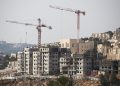
DaysofPal— Israeli occupation authorities have advanced nine settlement plans across the occupied West Bank since the beginning of July, according to a report by the Palestinian Information Center, as part of a broader push to expand and consolidate existing settlements.
The plans, which are at various stages of approval and review, cover more than 1,069 dunams of land and include the construction of 1,024 new housing units.
Of these, 455 units have been approved, while 569 remain in earlier stages pending final authorization.
A significant share of the expansion is concentrated in the northern West Bank. Israeli occupation authorities approved a plan to expand the settlement of Mevo Dotan by adding 455 housing units on approximately 539 dunams of land belonging to the town of Arraba, near Jenin.
Analysts say the move reflects a growing strategic focus on the northern West Bank, where Israeli military operations and infrastructure development have intensified in recent months.
In the southern West Bank, the Hebron Governorate has emerged as another focal point. Two major plans have been submitted for the settlements of Beit Hagai and Asael, proposing a combined total of 567 housing units across more than 519 dunams.
Observers say the projects are part of broader Israeli efforts to strengthen settlement blocs and improve connectivity through roads and other infrastructure, developments that could further undermine the territorial continuity of nearby Palestinian communities.
The report also points to a parallel strategy focused on modifying existing settlement plans.
These changes include revisions to zoning regulations, the conversion of commercial land for residential use, and adjustments to building regulations and land allocation frameworks.
While largely technical, analysts say such measures can increase population density within existing settlements and optimize land use without requiring additional land allocations.
The scale and structure of the plans indicate an increasingly systematic Israeli settlement policy aimed at reshaping the geographic and demographic landscape of the occupied West Bank through expansion and infrastructure integration, analysts said.
The report also highlights continued Israeli restrictions on Palestinian construction and urban planning, which limit development opportunities and deepen disparities in land use across the occupied West Bank.
Shortlink for this post: https://daysofpalestine.ps/?p=76435