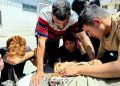
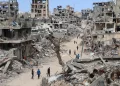
DaysofPal— The plight of displaced Palestinians in Gaza is no longer a distant humanitarian concern but an urgent, daily struggle for survival, as conditions continue to deteriorate under ongoing Israeli bombardment and suffocating blockade by Israeli occupation.
Hundreds of thousands of civilians living in shelters and makeshift camps are facing rapidly changing and increasingly dire circumstances.
With each new evacuation order, airstrike, and reduction in access to food, water, and medical care, the basic conditions necessary for life are steadily eroding.
Displacement in Gaza is no longer a temporary phase marked by a single departure from home. For many families, it has become a cycle of repeated uprooting.
Some have been forced to flee multiple times, transforming displacement into a continuous state of instability rather than a short-term emergency.
As military operations expand across northern, central, and southern Gaza, the already limited safe areas have significantly diminished.
What was once perceived as movement from danger to safety has become a shift from one form of risk to another.
Recent estimates indicate that large portions of Gaza are under military control, leaving displaced civilians confined to a fraction of the territory.
Human rights groups warn that the available living space for more than two million residents has shrunk dramatically, creating conditions described as “unlivable.”
This reality has forced families to make increasingly difficult choices. Rather than seeking better shelter or services, many now prioritize locations that are slightly less crowded or marginally farther from active conflict zones—even if those places lack basic necessities.
Each new wave of displacement brings a noticeable decline in living conditions. Initially, families seek refuge in schools, with relatives, or in organized shelters. However, as numbers swell, these locations become severely overcrowded.
Classrooms designed for students now house dozens of people. Hallways and courtyards have been converted into sleeping areas. Privacy has all but disappeared, and daily life has become increasingly difficult, particularly for women and children.
In many cases, overcrowding has given way to near-total exposure. With shelters overwhelmed, families are forced to erect basic tents, use plastic sheeting, or sleep in open areas. Weather conditions—whether heat, cold, or rain—have become an additional burden alongside hunger and insecurity.
The lack of food and clean water is not a separate issue but central to the survival of displaced populations. Even in areas less affected by direct strikes, access to essentials remains critically limited.
Repeated displacement has stripped families of their resources, leaving many with nothing but the clothes they are wearing. Long waits for minimal food supplies have become routine, and malnutrition is increasingly evident, particularly among children, the elderly, and the sick.
Humanitarian efforts have struggled to keep pace with the scale of need. Aid deliveries are inconsistent, and the targeting of relief operations and personnel has further complicated distribution efforts, raising concerns about a growing risk of famine.
Health conditions are worsening on multiple fronts. Overcrowding, poor sanitation, and limited clean water have increased the spread of infectious diseases, including respiratory and skin conditions.
At the same time, access to healthcare remains severely restricted. Patients with chronic illnesses face interruptions in treatment, while pregnant women often lack adequate medical support.
The psychological impact is equally severe. Displaced individuals are enduring repeated trauma—loss of homes, fear of ongoing attacks, and the constant uncertainty of survival. Children, in particular, are experiencing long-term emotional distress as education, routine, and a sense of safety disappear from their lives.
Displacement has also disrupted Gaza’s social structure. Communities have been fragmented, families separated, and traditional support systems weakened.
Beyond material loss, many displaced individuals face a profound loss of dignity. Those who once maintained stable households now find themselves dependent on aid, waiting for basic necessities like water, food, or a place to sleep.
Despite these hardships, acts of solidarity persist. Families share limited resources, volunteers assist with shelter and transport, and local initiatives attempt to fill gaps left by overwhelmed institutions.
While humanitarian assistance remains critical, aid alone is insufficient to address the scale of the crisis. Continued military operations and restrictions on essential supplies have limited the effectiveness of relief efforts.
International calls for increased aid have yet to translate into sustained improvements on the ground. For displaced residents, survival remains tied not only to humanitarian support but also to broader political decisions that shape access, security, and mobility.
Conditions for Gaza’s displaced population are expected to worsen if current patterns persist. Ongoing evacuations, combined with widespread destruction of housing, continue to push families into increasingly precarious situations.
Seasonal changes further complicate the crisis, with extreme weather amplifying already harsh living conditions. Vulnerable groups, including children, the elderly, and those with medical conditions, face the highest risks.
As the situation evolves, the focus is shifting from counting the number of displaced to understanding how they endure each day. For many in Gaza, the question is no longer where to go, but how to survive the next day under conditions that continue to deteriorate.
Shortlink for this post: https://daysofpalestine.ps/?p=74907