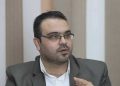
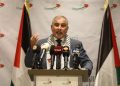
DaysofPal- Two years after the death of Palestinian orthopedic surgeon Adnan Al-Bursh, his loss continues to resonate far beyond the medical community, symbolizing a profound legacy of dedication, sacrifice, and humanitarian commitment.
Al-Bursh, described by his family as a doctor who refused to abandon his patients, remained at his post in Gaza’s largest medical facility, Al-Shifa Hospital, despite intense bombardment and severe shortages of resources.
He later continued his work at Al-Awda Hospital, where he was arrested by Israeli forces while treating the wounded.
According to his wife, Yasmin Hamada, he was subsequently transferred to Ofer Prison, where he died following the harsh period of interrogation and torture.
In an interview marking the second anniversary of his death, Hamada recounted the life and values of her husband, portraying him as more than a skilled physician.
“He left behind a legacy beyond wealth or possessions,” she said.
“It is a legacy of sincerity, duty, love for his homeland, and devotion to serving others. He believed medicine was not just a profession but a humanitarian and national mission.” Headed.
She added that Al-Bursh’s commitment left a lasting impression on their six children, who now see him as a role model.
“He worked day and night under bombardment, with no electricity and minimal resources, yet insisted on staying with his patients,” she said.
Hamada also spoke of the personal toll following his arrest, describing a period marked by displacement, loss of their home, and severe shortages of food, water, and electricity.
“We lived in constant fear for his fate,” she said.
“The news of his death under torture was shocking and deeply painful, especially as his body remains withheld.” She added.
Despite his demanding work, she described him as a devoted father who prioritized time with his children.
“He never raised his hand against them. He loved them deeply and dedicated Fridays to them, preparing breakfast himself and taking them on outings,” she said.
Hamada recalled that from the first day of the war, Al-Bursh rushed to the hospital upon hearing the sound of airstrikes and refused to leave.
“He always said, ‘I am a doctor, and my family and patients are here,’” she noted.
She also shared an anecdote illustrating his lasting impact: during displacement, an elderly man offered shelter to her and her children after recognizing her as Al-Bursh’s wife.
She later learned that her husband had previously treated the man’s son after a serious accident.
“That’s when I realized that the good he planted came back to us,” she said.
According to accounts from released Palestinian detainees, Al-Bursh was reportedly asked by prison authorities to provide medical consultations during his detention.
He was also visited by an academic delegation from Tel Aviv University, seeking to benefit from his expertise as one of the leading orthopedic surgeons in Palestine.
Hamada alleged that despite this, he was ultimately killed “in cold blood” inside detention, describing it as part of a broader pattern of exploiting Palestinian expertise and later targeting it, in an attempt to weaken Palestinian society and push forced displacement.
Beyond medicine, Al-Bursh was also active in sports. He was a professional swimmer, an advocate for physical fitness among his patients, and held leadership roles within Palestinian sports institutions, including serving as head of the medical committee for the Palestinian Football Association and as a medical advisor to the national team.
Hamada concluded by recalling one of his favorite sayings: “Do not exercise just to lose weight or build muscle, exercise so that you won’t need a cane when you grow older.”
Shortlink for this post: https://daysofpalestine.ps/?p=74139