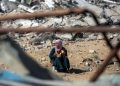
DaysofPal- Efforts to address the dangers posed by damaged buildings in the Gaza Strip remain severely constrained, as a lack of equipment and construction materials continues to hinder large-scale intervention despite widespread destruction.
The reality is so harsh in light of the suffocating Israeli siege on Gaza as no equipment is allowed to enter for reconstruction or rubble removal.
For Abu Samir, a resident of the Al-Zeitoun neighborhood in eastern Gaza City, the removal of heavy concrete slabs and damaged ceilings from the upper floor of his home brought long-awaited relief.
After months of fear that the unstable structure could collapse at any moment, he no longer worries about the immediate safety of his family.
His home, once a three-story building, was heavily damaged during the war, leaving only the ground floor and part of the first floor intact.
Forced to return, Abu Samir repaired what he could to shelter his family, even as dangerous concrete blocks and ceilings remained at risk of collapse.
His situation reflects that of thousands of families across Gaza who have chosen to return to damaged homes rather than live in tents that offer little protection from extreme weather conditions.
However, this choice comes with constant danger, as debris and parts of buildings frequently fall, posing serious risks, especially to children.
Abu Samir’s home was later included in a program to remove hazardous concrete debris, implemented in cooperation between local municipalities and reconstruction bodies.
While this improved his situation, officials say thousands of other buildings still pose significant threats to residents.
Recent months have seen multiple incidents of weakened structures collapsing on inhabitants, particularly during periods of severe weather, underscoring the fragility of damaged buildings.
Engineer Mohammed Aboud, Director of Reconstruction at Gaza’s Ministry of Public Works and Housing, said current efforts fall far short of the scale of destruction. He stressed the urgent need for comprehensive programs to secure unsafe housing.
Among the major challenges, Aboud cited restrictions on the entry of essential construction materials such as cement and steel, as well as limitations on importing heavy machinery needed to clear debris and stabilize buildings.
These constraints, he said, directly impede rapid response efforts.
According to ministry estimates, around 3,000 cases require urgent intervention to remove dangerous concrete structures.
However, only about 300 buildings have been addressed so far, in cooperation with civil defense teams, municipalities, and various regional and international organizations.
Aboud called for increased support from international institutions and the provision of necessary equipment and materials, noting that current efforts amount to only preliminary measures given the vast scale of destruction.
In an effort to improve coordination, the ministry announced a new mechanism for receiving reports from residents, including a dedicated WhatsApp contact number to be published on its official platforms.
This replaces earlier reliance on civil defense reports, media appeals, and field inspections conducted with organizations such as the Arab Authority for Reconstruction of Palestine, the Palestinian Housing Council, and the United Nations Development Program.
Meanwhile, debris removal and road-clearing projects continue despite limited resources. Work has been carried out along Al-Wehda Street, with ongoing efforts on Palestine Street in central Gaza City, stretching from the destroyed Palestine Tower site to Al-Saraya intersection.
Additional projects are underway, including cooperation with the Egyptian Committee for Gaza Relief to clear rubble near the destroyed Al-Andalus Tower at the western end of Al-Nasr Street.
Heavy machinery is being used to break apart concrete blocks and reopen surrounding roads.
Infrastructure rehabilitation has also begun on the coastal Al-Rashid Street, where crews are repairing storm damage, filling gaps, and repaving sections of the road from the Chalets area to the former Netzarim settlement.
However, the project remains in its early stages and requires significant funding, with similar plans proposed for Salah al-Din Street.
Rubble management remains another major challenge. Debris is being transported to temporary sites before being moved to crushing facilities supervised by the United Nations Development Program, where it is recycled and reused in road construction projects as part of efforts to maximize limited resources.
Shortlink for this post: https://daysofpalestine.ps/?p=74141