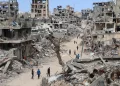

DaysofPal- Since the ceasefire in the Gaza Strip took effect on October 10, 2025, Israeli occupation forces have carried out near-daily attacks, raising serious questions about the durability of the agreement and its implementation on the ground.
Widespread Violations Undermine Ceasefire Agreement
According to the Gaza Government Media Office, Israel committed at least 2,073 violations of the ceasefire between October 10, 2025, and March 18, 2026. These included repeated air strikes, artillery shelling, and direct gunfire. The office reported 750 incidents of shooting at civilians, 87 incursions into residential areas beyond the designated “yellow line,” 973 bombardments, and 263 cases of property destruction. It also said that 50 Palestinians from Gaza were detained during this period.
The ceasefire had been introduced following a 20-point proposal unveiled by the United States on September 29. The plan aimed to end the war, secure the release of captives, allow the full entry of humanitarian aid, and outline a phased withdrawal of Israeli forces.
Key provisions included halting hostilities, lifting restrictions on aid, exchanging detainees, and repositioning Israeli troops. A signing ceremony was held on October 13 with participation from dozens of countries, facilitated by regional mediators such as Egypt, Qatar, and Turkiye. However, the absence of both Israel and Hamas cast doubt on the effectiveness of the agreement from the outset.
Near-Daily Attacks Continue Across Gaza
Despite the ceasefire, violence has continued at a steady pace. Analysis by Al Jazeera found that attacks occurred on 152 out of 174 days following the truce, leaving only 22 days without reported violence, deaths, or injuries. The United States has continued to describe the ceasefire as holding, even with ongoing military activity.
Casualty figures reflect the continued impact of these operations. According to Palestinian health authorities, at least 713 Palestinians have been killed and 1,940 injured since the ceasefire began. Two of the deadliest days occurred on October 19 and October 29, when Israeli strikes killed a combined total of 154 people. Widespread air raids following an incident involving Israeli soldiers in Rafah on October 19 resulted in the deaths of 45 people. Another escalation in the same area on October 29 resulted in the deaths of 109 people, including 52 children. Later, on November 22, a series of drone and missile strikes across northern and central Gaza killed at least 21 Palestinians.
Since the start of the genocide in October 2023, the overall toll has reached at least 72,289 deaths, including more than 20,000 children, with over 172,000 people injured.
Humanitarian Aid Falls Far Below Agreed Levels
The humanitarian situation has also remained critical. The ceasefire terms included provisions for the immediate and unrestricted entry of aid, yet delivery levels have fallen far short. Between October 2025 and mid-March 2026, only about 38,000 aid trucks entered Gaza out of nearly 95,000 planned, representing roughly 40 percent of the expected total. Aid workers and drivers report significant delays due to prolonged inspection procedures, while essential food items such as meat, dairy, and vegetables have been restricted. Less nutritious goods have been allowed in their place, raising concerns about worsening malnutrition.
While Hamas fulfilled its obligations by releasing all 20 remaining living Israeli captives and returning the bodies of 28 others by late December, the cessation of hostilities remains elusive. International legal experts note that while a ceasefire is intended to freeze a conflict, the resumption of military operations often constitutes a breach of political agreements. Without the enforcement of a binding treaty or a United Nations Security Council resolution, the suspension of active military operations in Gaza appears increasingly fragile.
Shortlink for this post: https://daysofpalestine.ps/?p=73594