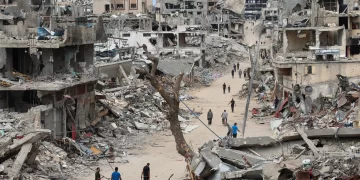
DayofPal—Poverty and unemployment have reached unprecedented levels in the Gaza Strip following more than two years of devastating war.
The local economy is shrinking dramatically and hundreds of thousands of residents left without income or basic means of survival.
According to economic assessments, Gaza’s economy has contracted by nearly 87 percent over the past two years, pushing vast segments of the population into extreme poverty.
Entire industries have collapsed, while access to jobs, food, and essential services remains severely limited under continued restrictions.
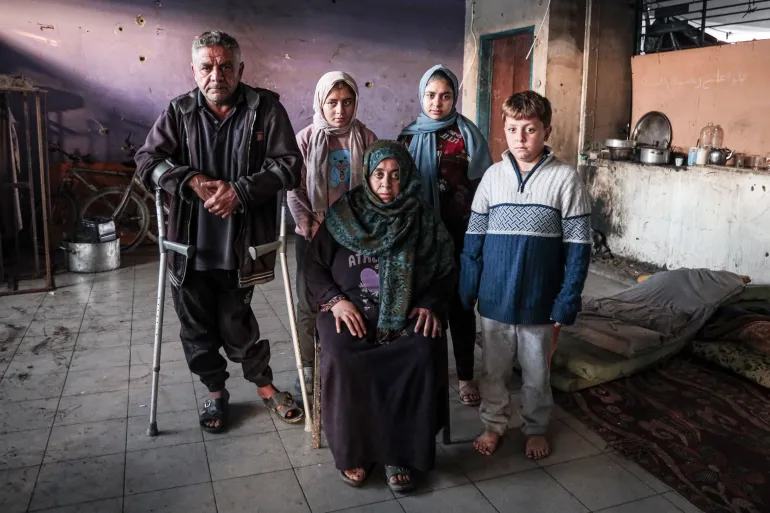
In central Gaza City, displaced families are sheltering in overcrowded tents and classrooms at United Nations-run schools. Many were forced to flee multiple times after their homes were destroyed during military operations.
Alaa Alzanin, a 41-year-old father of five from Beit Hanoon, is one of hundreds of thousands now unemployed. Once a daily labourer in agriculture and infrastructure, he says work opportunities have completely disappeared.
“I can no longer provide for my family,” Alzanin said, explaining that he once earned a modest daily wage planting crops and maintaining farmland.
Today, he struggles to protect his family from cold winter weather inside a small tent, where they survive on food aid alone.
The situation is equally dire for families with health challenges. Majed Hamouda, 53, displaced from Jabalia, suffers from polio and relies on charity after government assistance stopped following the outbreak of war.
With no income, his family frequently goes without food, forcing his young son to collect plastic waste from the streets to sell.
“What hurts the most is watching my child lose his future,” Hamouda said, recalling how his son once excelled in school and won a science competition before being pushed into survival labour.
United Nations agencies warn that humanitarian aid entering Gaza is far below what is required to meet basic nutritional needs. Only limited crossings are open, restricting the flow of food, medicine, and fuel into the besieged territory.
Official figures show unemployment in Gaza has reached approximately 80 percent, while poverty now affects the majority of residents.
The Palestinian Central Bureau of Statistics estimates that more than half a million people across Palestine are currently unemployed.
Economic experts say Gaza’s gross domestic product has fallen back to levels last seen more than a decade ago, effectively erasing years of development. Once-driven by small businesses, agriculture, and trade, the private sector has been largely destroyed.
Local sources say recovery plans depend on reopening border crossings, restoring key industries, and supporting small and medium-sized enterprises to generate jobs.
However, with ceasefire arrangements still fragile and restrictions ongoing, prospects for economic recovery remain uncertain.
For families like Alzanin’s, survival remains the immediate concern. His wife, Mariam, who is pregnant, says food aid fills hungry stomachs but lacks proper nutrition.
“We see food in the markets, but we can’t afford it,” she said. “Even eating fruit has become a dream.”
As Gaza faces another harsh winter amid widespread destruction, residents say without meaningful economic revival and unrestricted humanitarian access, the humanitarian crisis will continue to deepen.
Shortlink for this post: https://daysofpalestine.ps/?p=70994