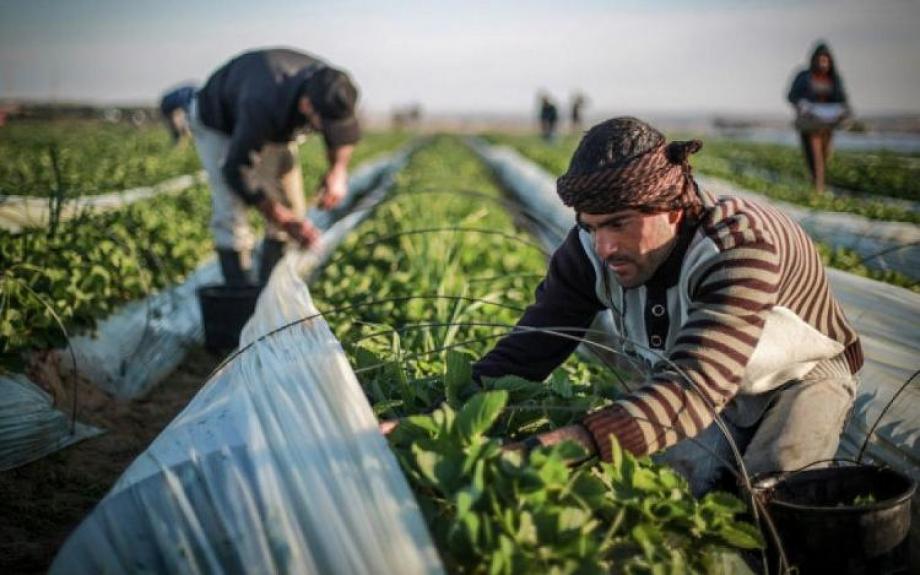
DayofPal– Farming in Khan Younis was never just a profession; it was a way of life. For generations, this southern Gaza city was known as the “breadbasket” of the Strip, feeding its people with fresh vegetables, fruits, and poultry. But today, that legacy lies in ruins.
Since the start of Israel’s ongoing military assault in late 2023, Khan Younis has been reduced to rubble. Fertile lands have become craters, greenhouses lie in twisted heaps of metal, and the farmers who once cultivated the land now live as displaced refugees.
The city has been all but erased from Gaza’s agricultural map, a devastating blow to the Strip’s already fragile food security.
According to data from the United Nations and the Food and Agriculture Organization (FAO) as of July 2025, over 61.5% of Khan Younis’s farmland has been either destroyed or rendered unusable.
For Khalil Abu Hamed, a farmer from New Abasan, the loss is deeply personal. “I used to grow tomatoes, eggplants, and zucchini on five dunams,” he told Palestine Newspaper.
“It was my only source of income. Now I’m living in a tent with my family in the Mawasi area. My house is gone. My land is gone. The Israelis destroyed everything, I couldn’t even save my irrigation system or farming tools.”
Abu Salim Al-Najjar, another farmer, lost his poultry farm, one of the largest in the Mawasi region.
“More than 15,000 birds died in just two weeks,” he said. “The bombing destroyed the shelters. We ran out of feed and water. We used to supply half of Gaza’s poultry. Now I don’t even have a place to live.”
Their stories reflect a far grimmer and more widespread reality of the current war. According to the FAO, more than 80% of Gaza’s farmland has suffered direct damage.
Over 71% of greenhouses have been destroyed, and nearly 83% of irrigation wells are no longer operational. In Khan Younis alone, approximately 2,600 hectares of cultivated land have been obliterated. Access to what remains is nearly impossible, blocked by military zones, rubble, or the threat of attack.
Agricultural and environmental expert Nizar Al-Wahidi says Khan Younis is no longer Gaza’s agricultural heartland, but a “critical weak point” in the food security system.
“The eastern part of the governorate, where most open fields and greenhouses were located, has been systematically bulldozed,” Al-Wahidi told Palestine Newspaper.
“The western part has been paralyzed by mass displacement. Even the Mawasi area, once the largest poultry hub in Gaza, has been devastated, causing a dangerous shortage of animal protein.”
The impact of this destruction, Al-Wahidi warns, will be felt for months, if not years. “Gaza’s agricultural sector is on the brink of total collapse,” he said. “Without immediate recovery efforts, the consequences will be catastrophic.”
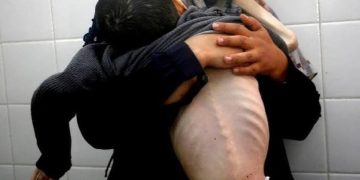
The numbers back up his warning. According to the Integrated Food Security Phase Classification (IPC), 93% of Gaza’s population is currently facing some level of food insecurity. Of those, 44% are classified as being in an “emergency” state, while 12% are in outright “catastrophe.”
These levels are directly linked to the destruction of Gaza’s food production and the collapse of supply chains, the result of sustained Israeli military actions.
Shortlink for this post: https://daysofpalestine.ps/?p=65519