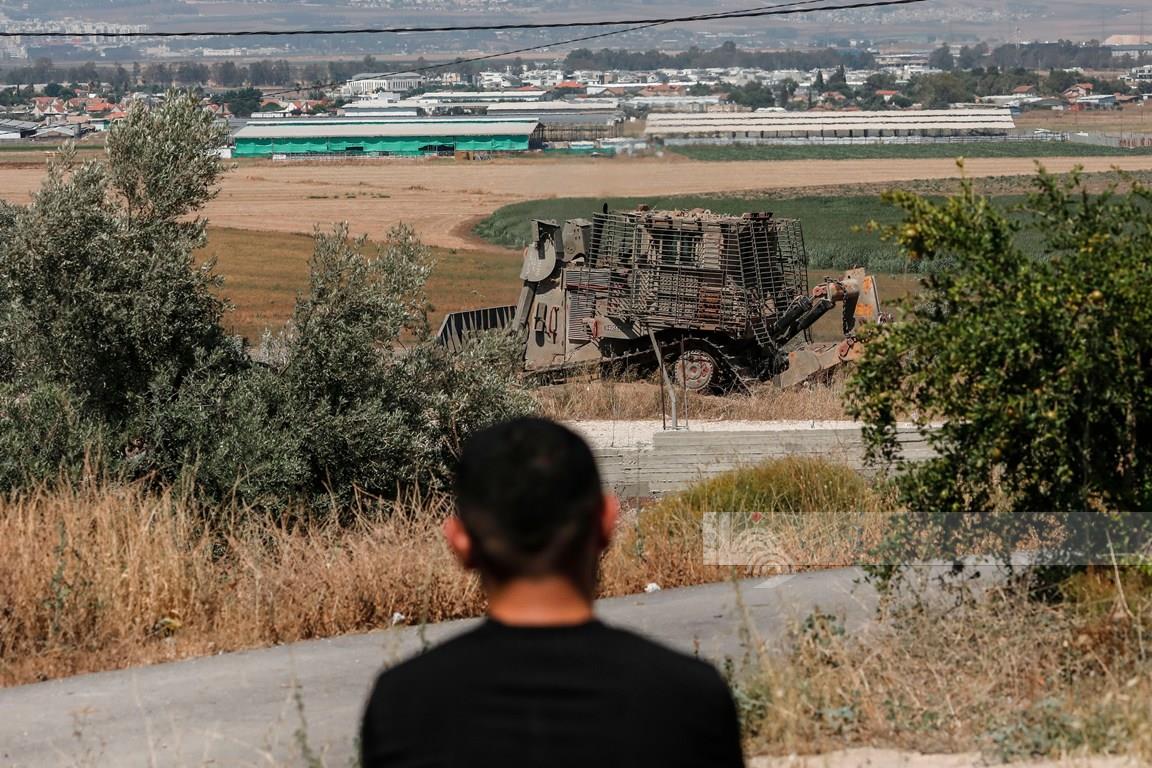
ZABUBA, West Bank – Israeli forces have uprooted approximately 1,200 olive trees and bulldozed more than 120 dunams (30 acres) of agricultural land in the Palestinian village of Zabuba, west of Jenin, over the past three days, dealing a devastating blow to dozens of families who depend on farming for their livelihoods.
The operation follows months of escalating Israeli measures against the village, including repeated military raids, arrests, and road closures before expanding to target agricultural land.
Zabuba Village Council head Zaki Jaradat said Israeli authorities repeatedly sealed the village’s entrances over the past eight months, citing security concerns, before issuing notices ordering the removal of olive trees.
According to Jaradat, the notices initially covered limited plots before expanding to 126 dunams across three locations. He said the latest bulldozing exceeded those orders, destroying more than 120 dunams of farmland and uprooting around 1,200 mature olive trees.
Jaradat warned that another 500 dunams could face similar measures, threatening much of the village’s remaining agricultural land.
The destruction has struck at the heart of Zabuba’s economy. Since the outbreak of the war in Gaza in October 2023, many residents have lost jobs inside Israel and turned to agriculture as their primary source of income.
For many families, the olive groves had become their last means of supporting themselves.
Uprooted Memories
Residents say the village has steadily lost land over the decades. Once spanning nearly 48,000 dunams before 1948, Zabuba now covers only about 1,200 dunams.
For farmers, the losses extend beyond economics.
Munir Jaradat said some of the uprooted olive trees were more than 60 years old and had been planted and cared for by his late mother, who carried water long distances to help them grow.
“These trees are not just olive trees,” he said. “They are my mother’s lifetime and our childhood memories. If she were alive today, she would not have been able to bear watching the bulldozers uproot them.”
Farmer Samer Maqalda said Israeli forces also destroyed a greenhouse, three water wells, and an agricultural reservoir while ordering the removal of another 15-dunam farm.
He said he dismantled one greenhouse himself after receiving the notice, resulting in the loss of his zucchini crop and damages exceeding 30,000 Israeli shekels ($8,900). His total losses have surpassed 300,000 shekels ($89,000).
Maqalda said five families from his extended family depended entirely on the farmland after losing their jobs inside Israel, leaving them with no remaining source of income.
Growing Isolation
The land clearing comes as Zabuba remains largely isolated. Most of the village’s entrances are still closed, while Israeli forces have blocked the road leading to the al-Wa’r area, home to 16 families, with earthen barriers. Residents are now forced to travel along rough, unpaved routes to reach their homes and essential services.
Settlement affairs expert Abdul Hadi Hanatsheh said the events in Zabuba reflect a broader Israeli policy targeting Palestinian communities located near the separation barrier.
He said Israeli authorities use security justifications to clear agricultural land and uproot olive trees while creating buffer zones, expanding control over Palestinian land, and restricting landowners’ future access.
Hanatsheh said olive trees carry significance beyond their economic value, serving as both a symbol of the Palestinian presence and a longstanding marker of land ownership.
He warned that continued land clearing would further shrink agricultural land, deprive dozens of families of their only source of income, and deepen the isolation imposed on Palestinian villages near the separation barrier.
For Zabuba’s residents, the uprooted olive trees represent far more than lost crops. They embody generations of family history and identity. With every tree removed, villagers say another piece of their connection to the land disappears, while fears grow that the bulldozers will soon reach what remains of their farmland.
Shortlink for this post: https://daysofpalestine.ps/?p=76077