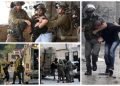
Khan Younis, When Omar Asfour was finally released from Israeli detention after nearly a month, he could barely stand. His frail body bore the scars of beatings, electrocution, and starvation—his crime: trying to get food.
Asfour is one of 10 teenage boys freed on Thursday by the Israeli army after being captured near the al-Shakoush aid distribution area, northwest of Rafah, in southern Gaza.
The teenagers, all malnourished and visibly traumatized, were transferred by the International Committee of the Red Cross (ICRC) to Nasser Hospital in Khan Younis, where medics confirmed signs of prolonged abuse, malnutrition, and psychological trauma.
“They electrocuted us and threw stun grenades at us,” Asfour said in a weak voice, as doctors monitored his condition. “We were under torture for a whole month.”
His testimony, along with others released this week, paints a grim picture of the treatment of Palestinian detainees in Israeli military prisons, particularly children.
“Beatings and Humiliation Every Day”
Another released teen, Karam Hamdi Hussein, echoed the same nightmare. “We spent an entire month under constant beatings and daily humiliation,” he said. The boys were reportedly held in the notorious Sde Teiman prison, a detention facility increasingly criticized for the abuse of Palestinian prisoners.
A reporter from Turkey’s Anadolu Agency, who saw the teenagers upon arrival at Nasser Hospital, described them as “hollowed out by exhaustion,” some too weak to speak. “These are children,” the reporter said. “You could see that on their faces, even beneath the bruises and trauma.”
Hunger as a Weapon
The ordeal of these teens is not isolated but deeply tied to a broader, slow-motion catastrophe engulfing Gaza: starvation as collective punishment.
Since Israel’s war on Gaza began on October 7, 2023, more than 12,000 Palestinians have been detained, according to the Palestinian Prisoners’ Media Office. Many, like these teens, were arrested while trying to access desperately needed aid.
At least 44 prisoners have died in Israeli custody since the war began, the office said, amid mounting evidence of systematic torture and denial of food and medical care.
Their stories now resurface against a harrowing backdrop: a famine sweeping Gaza. With markets empty, clean water scarce, and aid deliveries sporadic and dangerous to access, thousands of families are surviving on little more than water and salt. Dizziness, fatigue, and people collapsing from hunger are now daily scenes on Gaza’s streets.
“A Crime Against Humanity”
The Palestinian Prisoner Society and human rights advocates have called the detentions and abuse of civilians—particularly children—a violation of international law and a crime against humanity.
“These boys were not fighters. They were hungry. They were trying to survive,” a medical official at Nasser Hospital said. “They returned broken—not just in body, but in spirit.”
Despite Thursday’s releases, thousands more Palestinians from Gaza remain in detention—many without charge, many without access to lawyers or contact with families. Their fate, like Gaza’s, hangs in the balance.
As Asfour and the other teens begin the long journey to recovery, their voices are a painful reminder of the cost of this war, not just in bombs and destruction, but in the quiet, brutal erasure of childhood, dignity, and hope.
Shortlink for this post: https://daysofpalestine.ps/?p=66065