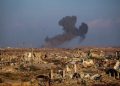
DaysofPal- The widespread destruction of homes, shattered infrastructure, and the collapse of basic services reflect only part of the reality facing residents of the Gaza Strip. Beneath the visible devastation, bigger demographic changes are taking shape, affecting population size, age structure, fertility rates, and the long-term future of the territory.
Before the outbreak of the war, the demographic balance between Palestinians and Israelis was relatively even, with projections suggesting that Palestinians could outnumber Jews in the years following 2023. That trajectory has shifted dramatically. More than 160,000 Palestinians have been lost through death or disappearance, while birth rates have declined and migration and displacement have increased, altering the demographic equation.
A Growing Demographic Gap
According to Mohammad Daridi, director of population and social statistics at the Palestinian Central Bureau of Statistics, the demographic balance had begun to tilt in favor of Palestinians prior to the war. He said earlier projections indicated that Palestinians could surpass the Jewish population in the years after 2023. He added that the recent war fundamentally changed that equation, bringing population ratios closer again.
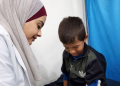
Daridi noted that about 70 percent of those killed were under the age of 30, highlighting the youthful nature of Gaza’s population. This loss has created a gap in the age group expected to sustain population growth in the coming years. He explained that declining rates of marriage and childbirth during the war have reduced the number of young children. Within the next two years, a noticeable gap is expected in the age group from newborns to four-year-olds, projected to shrink by around 10 percent, while other age groups may decline by about 2.5 percent.
Displacement has further reshaped the population. Estimates suggest that about 110,000 Palestinians, roughly 5 percent of Gaza’s population, left the territory before the closure of the Rafah crossing during the war. This adds to the overall population loss.
The United Nations High Commissioner for Human Rights, Volker Türk, warned that Israeli measures in both Gaza and the West Bank, including military operations that drive displacement, appear aimed at creating a lasting demographic shift. Speaking before the United Nations Human Rights Council in Geneva in early March, he said such actions raise serious concerns about ethnic cleansing.
He also pointed to ongoing Israeli military operations in the northern West Bank, which have displaced around 36,000 Palestinians over the past year.
Warnings of Systematic Demographic Change
Population analysts say Gaza’s population has experienced an unprecedented decline in modern history, falling from about 2.23 million to roughly 2.01 million. This drop reflects heavy losses, including tens of thousands of deaths, along with a sharp decline in births. Data from the Palestinian Central Bureau of Statistics indicates that the birth rate fell to 30 percent in 2025.
Dr. Salah Abdul Ati, head of the International Commission to Support Palestinian Rights, said recent developments go beyond conventional warfare and reflect systematic policies aimed at long-term demographic change. He said the warning issued by the UN human rights chief provides an accurate legal description of a situation shaped by military operations, forced displacement, and widespread destruction of infrastructure.
He noted that displacement in the West Bank, estimated at around 36,000 people, signals a gradual emptying of Palestinian areas, particularly refugee camps and frontline communities. He argued that this process differs from mass expulsions seen in 1948, instead unfolding through repeated military incursions, destruction of homes, and the creation of conditions that push residents to leave.
Abdul Ati described the current situation as a form of “silent forced displacement,” aimed at reducing the Palestinian presence without formal declaration. He said this represents a serious violation of international humanitarian law.
He also stressed that demographic indicators reveal deep and troubling changes. Birth rates have dropped due to the collapse of the healthcare system, malnutrition, and instability, threatening natural population growth. At the same time, the high proportion of young people among the casualties reflects the loss of the segment most capable of rebuilding society.
A significant age gap is emerging, particularly among children aged one to five, which is expected to have long-term consequences for the structure of society. Large-scale internal displacement has also led to overcrowded population clusters lacking basic living conditions.
Abdul Ati warned that these trends should not be seen as incidental effects of war but as part of a broader process of forced demographic transformation. He described the situation as a complex form of demographic warfare that targets not only population size but also age structure and the ability of society to sustain itself.
He cautioned that continued policies of this kind could lead to lasting consequences, including demographic gaps that are difficult to repair, weakening of social structures, and the imposition of a new population reality that serves territorial and political objectives.
He called on the international community, particularly the United Nations Human Rights Council, to take urgent and effective action. This includes supporting international investigations, holding those responsible accountable, and taking serious steps to halt policies of displacement, destruction, and mass violence.
He concluded that international silence or limited responses are no longer sufficient in the face of a systematic attempt to reshape Palestinian existence on its own land, targeting not only geography but also the people themselves, their structure, and their future.
Shortlink for this post: https://daysofpalestine.ps/?p=73174