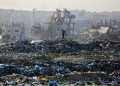
DaysofPal – The United Nations has warned that rebuilding the Gaza Strip will require $70 billion over the coming decades, cautioning that the occupied Palestinian territories are on the brink of total economic collapse after years of siege, military assaults, and expanding settlement activity.
A new report by the UN Conference on Trade and Development (UNCTAD) describes Gaza’s economic reality as a “human-made abyss,” noting that Israel’s bombardment and blockade have caused the enclave’s economy to contract by 87 percent between 2023 and 2024. The destruction has pushed Gaza’s GDP per capita down to just $161, among the lowest in the world.
The devastation in Gaza is compounded by intensifying Israeli military raids and settler attacks in the occupied West Bank, deepening the crisis across the Palestinian territories.
According to the report, decades of economic progress have been wiped out, leaving Palestine facing one of the ten worst economic collapses globally since 1960. Gaza’s situation, UNCTAD said, is “the most severe economic crisis on record.”
Gaza’s Humanitarian Catastrophe Deepens
On Monday, Ramiz Alakbarov, the UN deputy special coordinator for the Middle East peace process, warned that conditions in Gaza remain “bleak” and are deteriorating rapidly. He called for an urgent scale-up of international humanitarian aid as more than 1.7 million displaced Palestinians continue to live in overcrowded shelters with limited access to water, food, and medical care.
“The UN and its partners are still facing major challenges in providing shelter materials such as tents and blankets,” he said. “As we enter the winter months, these delays must be urgently resolved.”
Hospitals, already crippled by fuel shortages and repeated attacks, are struggling without reliable electricity and water supplies. Alakbarov urged Israel to expand crossing capacity and speed up the clearance of humanitarian shipments, including vital UN aid.
Gaza’s Government Media Office reported that Israel is currently allowing only 200 aid trucks per day, far below the 600 trucks agreed under the ceasefire. The World Food Programme (WFP) says the vast majority of households in Gaza cannot afford basic food items, with widespread hunger now a daily reality.
West Bank Restrictions Compound Economic Decline
The UN also warned that Israel’s ongoing raids, movement restrictions, and settlement expansion in the West Bank are severely damaging the Palestinian economy. Restrictions now affect more than 3.3 million people, increasing transportation costs, prolonging travel times, and obstructing access to markets, jobs, education, and health services.
Settlement construction continues to intensify, and settler violence has surged, further destabilizing Palestinian communities and tightening economic constraints across the territory.
UNCTAD’s report concludes with an urgent appeal for a “comprehensive recovery plan” for the occupied Palestinian territory. The plan calls for coordinated international assistance, the restoration of withheld fiscal transfers, and immediate measures to ease restrictions on trade, movement, and investment.
“UNCTAD’s report calls for immediate and substantial intervention by the international community to halt the economic freefall, address the humanitarian crisis, and lay the groundwork for lasting peace and development,” the UN said.
With Gaza facing the costliest reconstruction effort in its history and the West Bank locked in a deepening crisis, the UN warns that without decisive global action, the economic collapse of the Palestinian territories could become irreversible.
Shortlink for this post: https://daysofpalestine.ps/?p=69766