In a sharp rebuke to the International Criminal Court (ICC), President Donald Trump issued an executive order imposing sanctions on ICC officials, accusing the tribunal of unfairly targeting the United States and its ally, “Israel”.
The order, signed late Thursday, enforces financial and visa restrictions on ICC personnel and any individuals assisting the court’s investigations against the U.S. or Israel.
The White House condemned the ICC’s actions as “illegitimate and baseless,” asserting that the court was overstepping its mandate.
The move comes amid heightened tensions following the ICC’s issuance of arrest warrants in November for Israeli Prime Minister Benjamin Netanyahu, former Israeli Defense Minister Yoav Gallant, and a senior Hamas official over alleged war crimes committed during the war in Gaza.
The Trump administration denounced the warrants, claiming the court had “abused its power” and describing Israel as “a democratic state whose military strictly adheres to the laws of war.”
“The actions taken by the International Criminal Court against Israel and the United States set a dangerous precedent,” the White House said in a statement, accusing the tribunal of threatening American sovereignty and undermining national security.
While the administration did not immediately disclose the names of the individuals affected by the sanctions, past measures under Trump’s presidency targeted ICC officials leading an investigation into alleged U.S. war crimes in Afghanistan.
The ICC swiftly condemned the sanctions, stating they were an attempt to obstruct its “independent and impartial judicial work.” In a statement, the court urged its 125 member states and civil society groups to unite in defense of justice and human rights.
International criticism poured in following Trump’s announcement. European Council President Antonio Costa warned that the sanctions “undermine the international criminal justice system as a whole.”
Meanwhile, the Netherlands, which hosts the ICC, expressed “regret” over the decision, emphasizing the court’s role in holding perpetrators of war crimes accountable. Amnesty International slammed the sanctions as “reckless.”
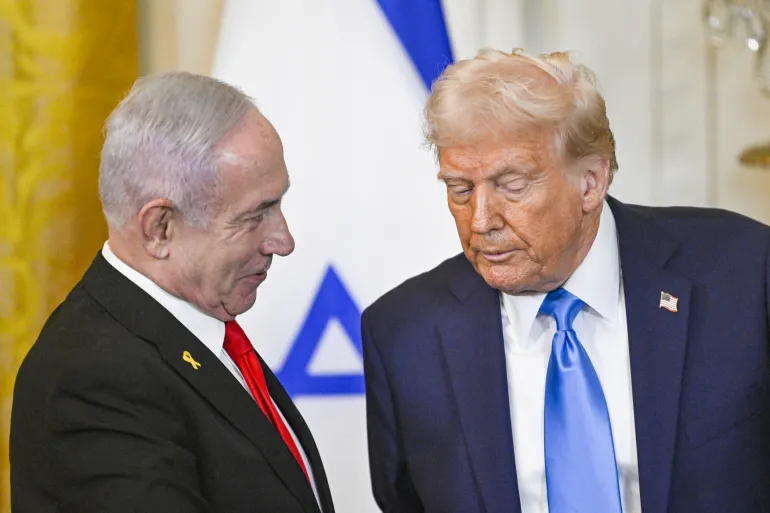
The decision also coincided with Netanyahu’s visit to Washington, where Trump publicly reaffirmed his support for Israel. During the visit, he announced a controversial plan for the U.S. to “take over” Gaza and relocate Palestinians to other countries in the region—an initiative widely condemned as illegal under international law.
The United Nations and legal experts have warned that forced displacement violates the Rome Statute, the very treaty governing the ICC.
The ICC, established as a permanent tribunal to prosecute war crimes, crimes against humanity, genocide, and acts of aggression, has long been a point of contention for the U.S. and Israel, neither of which are members. China and Russia also abstain from the court’s jurisdiction.
Israel welcomed the sanctions, with Foreign Minister Gideon Saar dismissing the ICC as a “so-called international criminal court” and labeling its actions “immoral and legally baseless.”
As tensions escalate, the showdown between the ICC and world powers underscores the deep divisions over international justice, with the Trump administration positioning itself as a staunch opponent of the court’s authority.
Shortlink for this post: https://daysofpalestine.ps/?p=60456