On September 6, 2021, Mohammed al-Arda, a 43-year-old Palestinian prisoner from Arraba, south of Jenin in the occupied West Bank, carved his name into history.
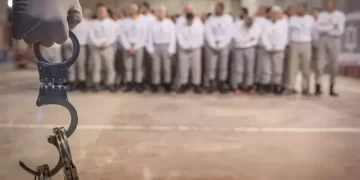
Along with five fellow prisoners, he dug a tunnel beneath the high-security Israeli Gilboa Prison with nothing but his bare hands, seeking freedom—even if just for five days.
Their escape was more than a physical act of defiance; it was a resounding declaration that the Palestinian spirit cannot be crushed, no matter how heavy the chains.
“The five days I spent free were worth more than all the years I spent in prison,” Mohammed later said, recalling the moment he first breathed the fresh air of freedom in the Marj Ibn Amer valley after 23 years behind bars. As he savored his first bite of a prickly pear fruit, he felt an unshakable belief that victory was inevitable.
But just as it had always done, the occupation struck back. After five fleeting days, Israeli forces recaptured him. Yet, Mohammed al-Arida’s will remained unbroken.
And when the “Flood of the Free” prisoner exchange deal finally materialized, the promise of freedom became reality. On January 25, 2025, he returned home, shining like the sun after a long eclipse.
Resistance and Captivity
Mohammed al-Arda was first arrested on May 16, 2002, after Israeli forces besieged his hideout in Ramallah. He was sentenced to three life terms plus 20 years, accused of being a member of the Al-Quds Brigades and engaging in armed resistance against the occupation.
Even behind bars, he never stopped fighting. In 2014, he attempted to escape from Shata Prison by digging a tunnel, but the plan was foiled, and he was thrown into solitary confinement.
Then, in 2021, he and five others achieved the impossible: they tunneled out of Gilboa Prison, an escape that sent shockwaves through the Israeli establishment.
Though they were recaptured, Mohammed endured solitary confinement and relentless punishment, yet he remained steadfast—turning to writing, publishing several books on jihad and Islam.
His final liberation came in 2025, as part of the second phase of a prisoner exchange deal between Hamas and Israeli occupation. The deal secured the release of 121 prisoners serving life sentences and 79 others with long-term sentences.
Tunnel of Hope
As he recounts the story, Mohammed’s voice is firm with conviction:
“The tunnel wasn’t just an escape route—it was a passage to hope. We dug it because we wanted to reach our mothers before death took them from us. We wanted to see their faces after all those years of separation.”
For him, freedom—even if brief—was priceless. “To live a single moment as a free man is worth a lifetime of suffering,” he says. “The days I spent outside erased the years of captivity.”
The moment he stepped onto Palestinian soil again, it was as if he had been reborn. “I still can’t believe how I went from a cell that barely fit my body to a vast, open sky. I ate my first almond in years. It was small and out of season, but it was the sweetest thing I’ve ever tasted.”
But his time in solitary was brutal. “It wasn’t just imprisonment; it was psychological warfare. They beat us, deprived us of sleep, denied us medical care. Even in the final days before our release, they tried to break us.”
Yet, he stands unwavering: “I always knew I would return—to my land, my people, my dreams.”
“All I wanted was to sleep beside her.”
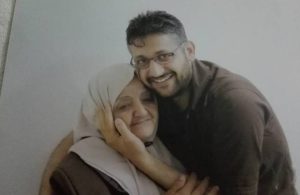
Amid the cold prison walls, one lifeline kept Mohammed connected to the world—his mother. She was the anchor that held him steady, the source of his resilience.
“My mother was everything to me. She planted hope in my heart. She made me believe I would survive no matter how long it took.”
The reunion was bittersweet. “That first night, she made my bed carefully, thinking I needed comfort. But all I wanted was to sleep beside her.”
His journey wasn’t his alone—his closest friend, fellow prisoner Mahmoud al-Arda, had been by his side through it all. “Despite our endless debates, Mahmoud was always the closest to me. He loved me, and I loved him. We endured joy and suffering together, in silence and in struggle.”
And then there was Zakaria Zubeidi, another legend of the Palestinian resistance, whom Mohammed describes with deep admiration. “Zakaria was not just a comrade; he was family. Our bond was forged through years of struggle. I knew his family well, and they sacrificed so much for Palestine.”
The moment they learned about the prisoner exchange deal, hope surged within them. “When we first heard rumors about a deal that could release 3,000 prisoners, we clung to that hope. But the joy was short-lived—soon after, we were told we would be moved to an unknown location.”
Then, the storm came. Israeli forces stormed their prison, dragging them away in a brutal raid. “They tortured us mercilessly. They set attack dogs on us. They tried to crush us. But we knew, in that moment, that the end of our captivity was near.”
A Freedom Fighter
Even in prison, Mohammed refused to waste a single moment. He immersed himself in reading and writing, obtaining a master’s degree in Israeli affairs and history. “Freedom fighters don’t just fight with weapons,” he says. “Our battle is also intellectual, cultural, and political.”
The moment he was freed, he was thrust into an overwhelming wave of love and celebration. His nephew, Taha Shahada, was the first to greet him. “At first, I didn’t even recognize him. I was too exhausted, my body still aching from years of torture. But when he pointed at me again, I knew it was him. He hugged me tight, and I felt home again.”
As word spread, a flood of people rushed to celebrate him. But after years of isolation, the overwhelming embrace of freedom felt almost suffocating. “The crowd was too much. I just needed space to breathe.”
At last, he reached his family. The moment he saw his sister, his brother Ahmed, and his brother-in-law, the years of suffering collapsed into that one embrace. It was a moment of joy, yet also one of exhaustion. He needed to escape—not from prison this time, but from the overwhelming rush of emotions.
A Message to the Resistance
In his final words, Mohammed al-Arida sends a powerful message to the Palestinian resistance:
“I owe my freedom to the men who honored their promise. I pray for them, that God grants them strength and wisdom. Despite the torture, the chains, and the pain, I have never lost hope. Because only those who have been deprived of life know its true value.”
He reminds the world that Palestinians do not fight because they love war, but because they love life. “We resist for freedom. For our land. For our people. My dream is simple—to walk freely on my land, to touch its soil without barriers, to live as a human being.”
And he knows that day will come.
Shortlink for this post: https://daysofpalestine.ps/?p=60448