DaysofPal — Under the blazing summer sun, plastic tents in the displaced areas across the Gaza Strip are turning into stifling enclosures, intensifying the hardship of hundreds of thousands of displaced Palestinians after nearly 1,000 days of Israeli genocidal war in Gaza and ongoing suffocating siege.
From the early hours of daylight, rising temperatures transform the makeshift shelters into closed ovens, trapping heat and leaving families with little relief.
For many, the tents, originally intended as temporary solutions, have become a long-term reality amid widespread destruction and displacement.
Humanitarian estimates indicate that the vast majority of Gaza’s population has been displaced at least once during the Israeli war, with large numbers now living in overcrowded camps lacking basic services, including clean water, electricity, and healthcare.
Inside the tents, the heat is relentless. Thin plastic sheeting absorbs and retains heat, creating suffocating conditions.
Children often flee outside in search of a breeze, while elderly residents sit under direct sunlight, finding it less oppressive than the air trapped inside.
For families like that of Maha Al-Hassi, the crisis is both personal and ongoing. A mother of five daughters, she has been raising her children alone since her husband was killed about a year ago while heading to a humanitarian aid distribution point in southern Gaza.
Today, she lives with her children in a fragile shelter built from metal rods salvaged from their destroyed home and covered with nylon sheets that offer little protection from heat or cold.
Neighbors say the family struggles with severe shortages of food, income, and basic necessities, relying sporadically on limited humanitarian assistance.
“We live in a very small tent, and with every sunrise the suffering begins,” said Mohammed Zaarab, 32, a father of five also living in Mawasi Khan Younis.
“The children sweat all day, and there is nowhere to escape the heat, not even outside.” He added.
Residents say the lack of electricity and cooling options has worsened conditions, with children among the most affected.
Mahmoud Al-Hamaida, 65, who was displaced from Rafah, described the tents as “unfit for living,” adding that families wait for nightfall just to breathe more easily as the heat lingers for hours.
In the Al-Attar area west of Khan Younis, another displaced resident, Saeed Abu Shaar, said daily life has become “a constant battle with the heat,” noting that children struggle to sleep due to high temperatures and the spread of insects.
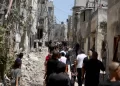
The Mawasi area now hosts hundreds of thousands of displaced people who fled from Rafah, eastern Khan Younis, and other areas.
What was once open coastal land has turned into a dense stretch of tents, lacking infrastructure and facing mounting humanitarian pressure.
As the war enters its 1,000th day, the crisis continues to deepen. Food and water shortages are worsening, purchasing power is declining, and poverty and unemployment rates have reached unprecedented levels, according to international reports.
For many families, the loss of homes has turned into a prolonged state of displacement, where tents are no longer temporary shelters but permanent dwellings.
In this reality, stories like that of Maha Al-Hassi reflect the broader suffering of thousands, where loss becomes routine, heat becomes part of daily life, and the hope for an end to the Israeli war remains uncertain.
Shortlink for this post: https://daysofpalestine.ps/?p=75974