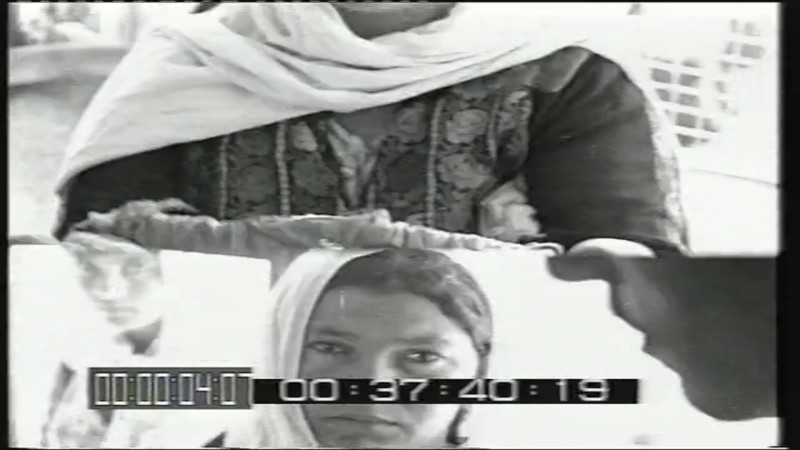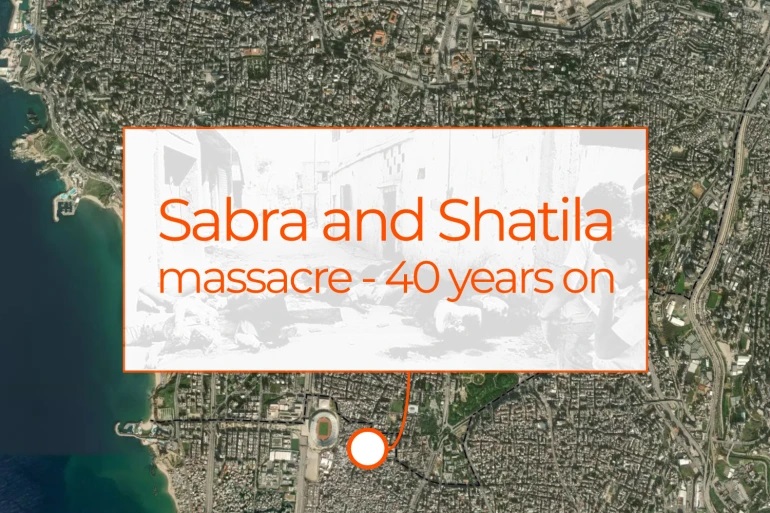
It was one of the most harrowing massacres committed in the Lebanese civil war, a conflict known for its brutality.
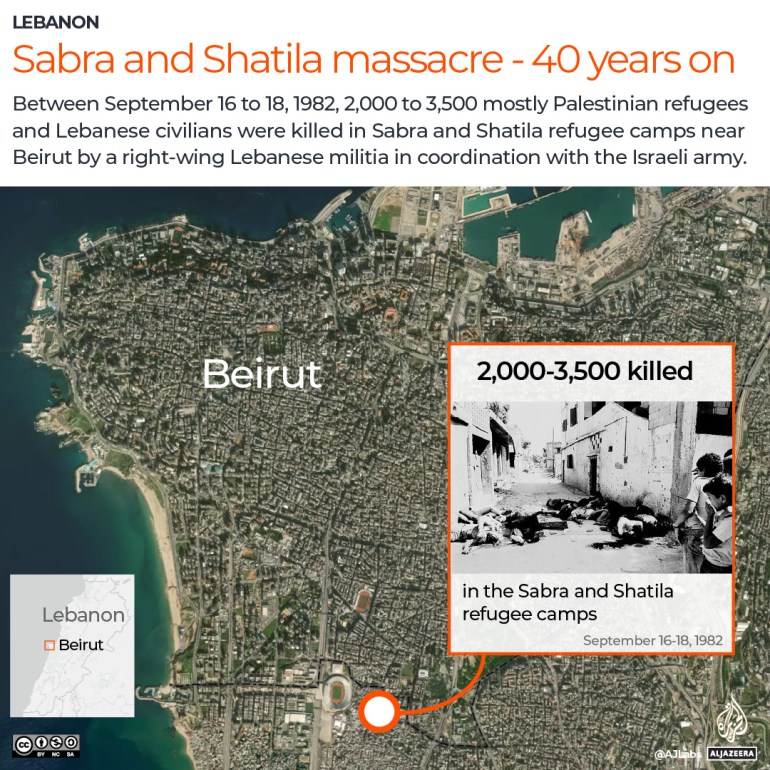
Shatila, a Palestinian refugee camp, and the adjacent neighbourhood of Sabra are located southwest of Lebanon’s capital city Beirut.
The refugees were victims of the 1948 Nakba, or “catastrophe” in Arabic, fleeing the violent ethnic cleansing of Palestine by Zionist militias as Israel was formed.
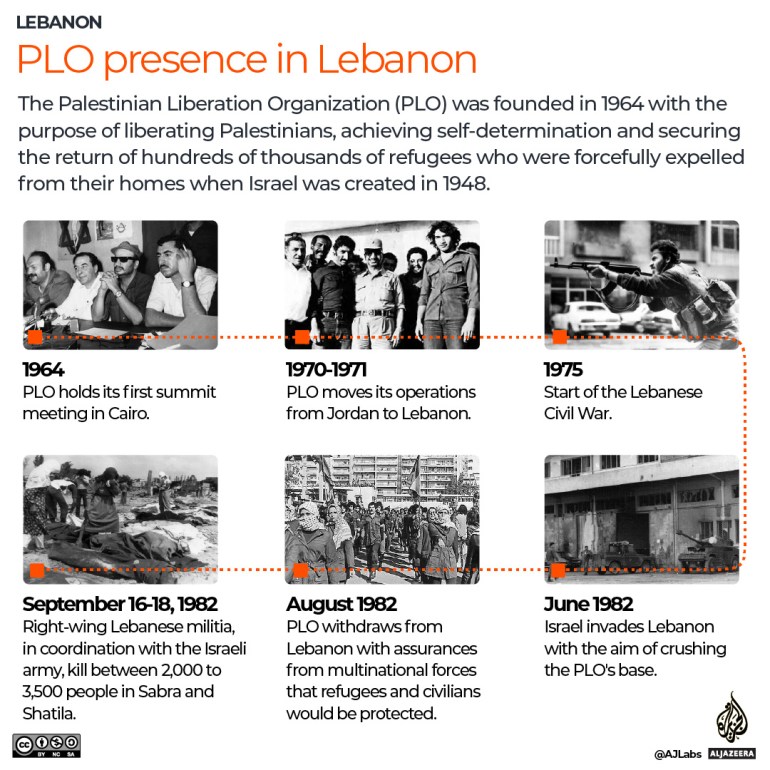
But between September 16 and 18, 1982, the refugees, now living in Shatila and Sabra, along with Lebanese civilians, were attacked by a right-wing Lebanese militia, in coordination with the Israeli army.
Between 2,000 and 3,500 people were killed.
What happened?
- In June 1982, Israel invaded Lebanon during the country’s 15-year civil war (1975-1990), with the stated aim of destroying the Palestine Liberation Organization (PLO), which had been based in Beirut and was launching attacks on Israel from southern Lebanon.
- The PLO withdrew from Lebanon by September 1, 1982. Assurances were provided by the United States and a multi-national force that the remaining Palestinian refugees and civilians would be protected.
- Two weeks later, the Israeli military besieged Sabra and Shatila and provided cover for their allies, a right-wing Lebanese militia called the Phalange, to carry out the mass killings.
- The killing continued for 43 hours, from 6pm on Thursday, 16 September, until 1pm on Saturday, 18 September.
- While accurate figures on the number of people killed are difficult to ascertain, estimates have put the death toll at between 2,000-3,500 civilians.
- Testimonies from the mass killing describe horrific acts of slaughter, mutilation, rape and mass graves. Images from the aftermath were aired on television worldwide and caused global outrage.
What led to this?
- More than 100,000 Palestinians, mostly from the northern areas of historic Palestine, were expelled and fled to Lebanon during the 1948 Nakba.
- The PLO, an umbrella of Palestinian political parties created in 1964 with the aim of liberating Palestine through armed struggle, moved its base of operations to Beirut after it was pushed out of Jordan in 1970.
- In 1969, an Egyptian-brokered agreement between the PLO and the Lebanese army, the PLO’s Armed Struggle Command assumed control over the 16 Palestinian refugee camps in Lebanon, enabling it to carry out operations on Israel from southern Lebanon.
- The Lebanese civil war broke out in 1975 mainly between the Lebanese Front (LF) – a coalition of right-wing Christian Maronite parties backed by Israel and the United States – and the Lebanese National Movement (LNM), a coalition of secular leftists, pan-Arab Sunni and Shia Muslims, and the PLO. Syria also invaded.
- Israeli forces, led by then-Defence Minister Ariel Sharon, invaded Lebanon in June 1982, laid siege to Beirut and heavily bombarded the city, where the PLO headquarters were located.
- The multinational force that arrived after the PLO’s withdrawal from Beirut on September 1 was supposed to stay for 30 days. However, they pulled out early, on September 10.
- On September 14, 1982, Bachir Gemayel, the Lebanese president-elect and leader of the Lebanese Forces, was assassinated in Beirut.
- The next morning, Israel invaded west Beirut and prevented anyone from exiting the refugee camps. Israeli forces then allowed the Phalange, who blamed the PLO for Gemayel’s death, to enter Sabra and Shatila and carry out the massacre.
What followed?
- The United Nations General Assembly passed a resolution declaring the massacre an “act of genocide”.
- The PLO moved its headquarters to Tunisia before the 1993 Oslo Accords were signed with Israel and the Palestinian Authority (PA) was created.
- The Sabra and Shatila massacre is remembered as one of the most traumatic events in Palestinian history and its memory is commemorated annually by Palestinians in Lebanon and in Palestine.
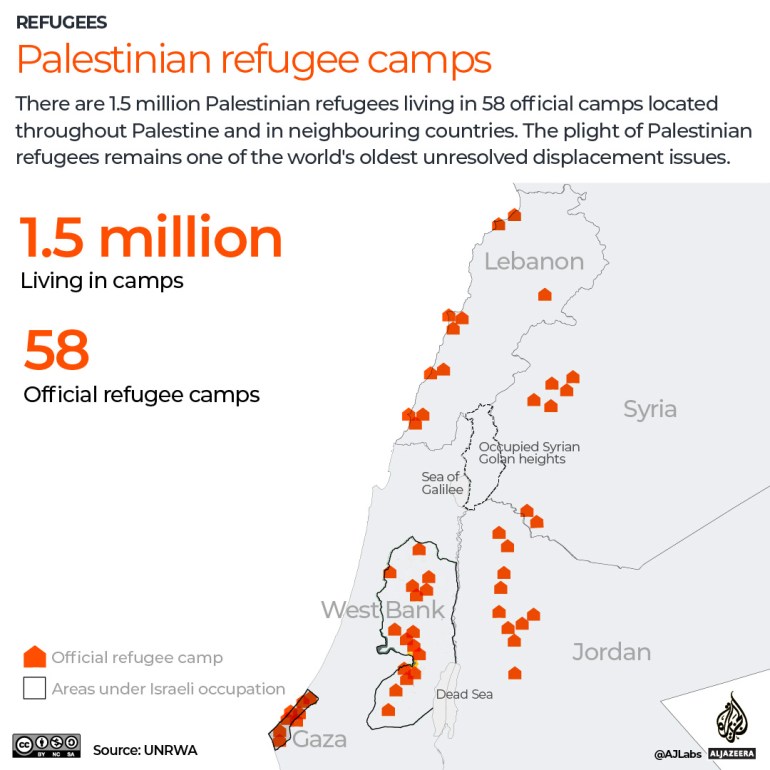
- The event continues to highlight the plight of Palestinian refugees in Lebanon today, who now number 479,000, according to the UN.
- About 45 percent of them live in the country’s 12 refugee camps, which suffer from overcrowding, poor housing conditions, unemployment, poverty and lack of access to basic services and legal aid.
- Palestinians in Lebanon are banned from working in as many as 39 professions, cannot own property, and face numerous other restrictions.
Who was held accountable?
- Not one single Lebanese or Israeli fighter or official was punished for the crimes committed.
- An Israeli investigation said the Lebanese Forces militia was directly responsible for the massacre but also held Sharon “personally responsible for ignoring the danger of bloodshed and revenge” and recommended his resignation. Sharon resigned from his post on February 14, 1983, but was elected prime minister in 2001.
- In February 1983, the UN commission found that “Israeli authorities or forces were involved, directly or indirectly in the [Sabra and Shatila] massacres”.
- In 2002, a Belgian court dismissed a case filed by dozens of survivors of Sabra and Shatila against Sharon on the basis that he was not present in court, despite a 1993 law which allowed Belgium to try foreigners for war crimes committed abroad.
Shortlink for this post: https://daysofpalestine.ps/?p=25731