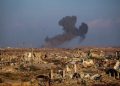
DaysofPal – Residents of the Gaza Strip are once again rushing to local markets to buy whatever food they can afford after the widening regional confrontation involving the United States, Israel, and Iran disrupted the fragile supply lines that sustain daily life in the enclave.
Traders and residents report that prices have surged within days, while several basic goods have become scarce or disappeared from shelves entirely.
Local sources said the latest escalation is already visible in shrinking supplies and tighter access at border crossings. In crowded markets, shoppers move quickly between stalls in search of affordable food, worried that products available today may vanish tomorrow.
The anxiety reflects Gaza’s deep dependence on border crossings with Israel and Egypt. Nearly all food, fuel, medicine, and essential goods reach the territory by truck. When crossings close or operate at reduced capacity, the impact spreads rapidly through markets, hospitals, and water systems.
Israeli occupation forces closed Gaza’s crossings on February 28 after the outbreak of hostilities involving Israel, the United States, and Iran. The measure halted humanitarian access and stopped the movement of patients awaiting medical evacuation. Authorities later reopened the Kerem Shalom Crossing for the gradual entry of humanitarian aid, though access remains tightly restricted.
The Rafah Border Crossing with Egypt continues to remain closed, leaving aid agencies warning that current aid deliveries fall far below the level required to meet the needs of Gaza’s population.
Hanan Balkhy, regional director for the Eastern Mediterranean at the World Health Organization, told Reuters that roughly 200 aid trucks are entering Gaza each day, while the territory requires about 600 trucks daily. She added that nearly 18,000 people, including wounded children and patients suffering from chronic illnesses, remain on waiting lists for medical evacuation.
Prices surge across markets
The effect of the closures has quickly appeared in the price of fresh produce. A kilogram of tomatoes that sold for about $1.50 a month ago now costs nearly $4. Cucumbers and potatoes have also become far more expensive, placing fresh food beyond the reach of many families already struggling after months of war and displacement.
One shopper in Gaza told Al Jazeera that rising prices linked to the regional conflict have made vegetables and fruit unaffordable for many households.
Traders, shop owners, and residents describe the same pattern: fewer goods entering the territory, rapid sellouts, and steady price increases. Essential items such as cooking oil, flour, and certain canned foods have largely disappeared from shelves in parts of Gaza City.
According to the United Nations Office for the Coordination of Humanitarian Affairs (OCHA), the closure of crossings during the regional escalation has pushed up prices of both food and non-food goods throughout Gaza. The agency warned that the current rate of truck deliveries remains too low to replenish stocks, leaving many products sold out within days.
The situation marks a sharp reversal from the conditions recorded only weeks earlier. Monitoring by the World Food Programme in February showed improved availability of several staple foods and a temporary drop in prices after a ceasefire brought increased aid access.
The agency now reports that the latest closures have triggered another wave of food price increases. Some crossings have reopened, yet market prices remain elevated.
Aid system under mounting pressure
Humanitarian organizations warn that the strain extends well beyond food markets. OCHA reported that fuel shortages forced aid agencies to ration limited supplies. Several humanitarian partners have suspended vehicle-based solid waste collection and reduced water production.
Hospitals and primary healthcare centers have also activated emergency contingency plans in response to the shortage of fuel and supplies.
The broader food security situation remains extremely fragile. The global hunger-monitoring system known as the Integrated Food Security Phase Classification reported in December that Gaza was no longer experiencing famine conditions following improved aid flows during the ceasefire between Israel and Hamas. The assessment warned that renewed conflict or disruptions to humanitarian access could rapidly reverse those gains.
The World Food Programme echoed the concern, stating that Gaza’s fragile improvement could collapse again if reliable humanitarian corridors are not maintained. The agency said the limited reopening of the Kerem Shalom crossing may offer temporary relief. Without sustained access for aid deliveries, food rations for large numbers of people may have to be reduced.
Shortlink for this post: https://daysofpalestine.ps/?p=72915