Source: Middle East Eye
Over the years, Palestinians have found various ways to depict and preserve their heritage, as a form of resistance.
This has been done through the art of tatreez, a traditional folk embroidery, and through songs and folklore, as well as through food and art, among other things. For many Palestinians, symbols are important in uniting and solidifying their identity.
Around Palestine’s diverse and lush green cities, plants and flowers have become representative of the struggle under occupation, and are seen as a symbol of hope for a better future and a return to their homeland.
Here, Middle East Eye explores some of the plants that bloom around Palestine, and what they have come to symbolise to people there.
1. Zaytoun (Olive tree)
Palestine holds some of the world’s oldest olive trees, some of them tracing back almost 5,000 years. It is customary for families to pass down olive trees to their children and grandchildren, entrusting future generations to look after them.
The trees have become deeply important for Palestinian heritage, mirroring the history of the country, with their strong roots symbolising the Palestinian connection to their homeland.
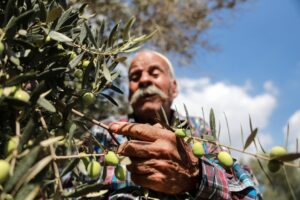
The trees are frequently depicted in artwork, with their roots and branches illustrating the pain of being displaced and uprooted from their land due to occupation and settler colonialism.
At the same time, the olives and leaves represent hope and Palestinian heritage. Every year, particularly during October and November, families and farmers gather for the olive-picking season, a practice which has been carried out for generations. The process is called “al Ouna”, which means helping each other to harvest the same trees as their ancestors.
Although tiring, the olive-harvesting season is enjoyed by Palestinians as it brings together people in the community and is a source of income.
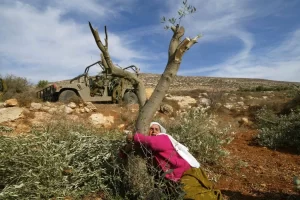
Olives and olive oil can be found in almost every Palestinian household, as well as other products made from the tree, such as cosmetics and natural soaps.
During periods of tensions, Palestinians will gather to protect their olive trees from burning, vandalism or uprooting, demonstrating how essential they are to the life and livelihoods of Palestinians.
2. Sabar (Opuntia cactus)
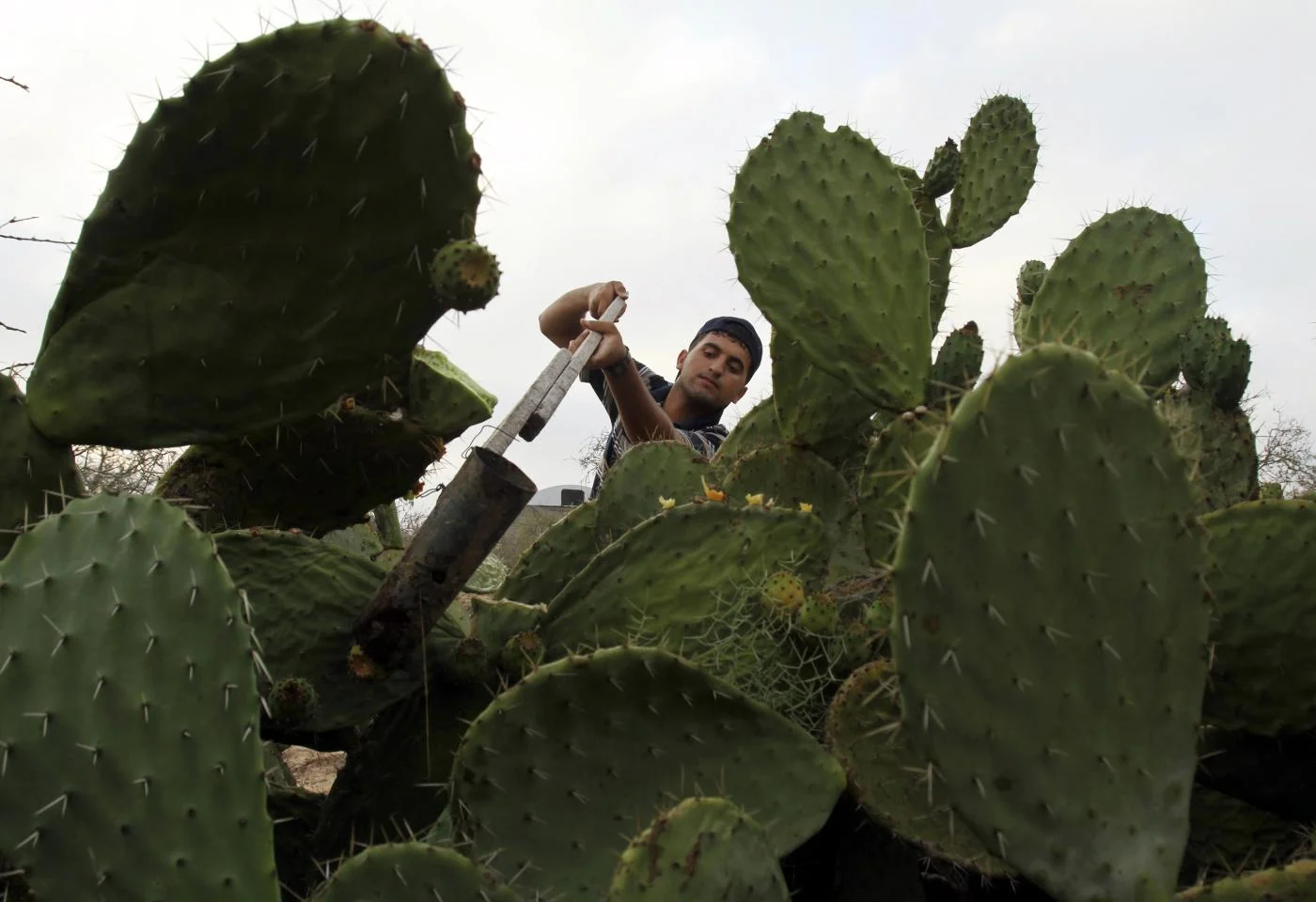
Despite its thorny outside, the cactus is much loved in Palestine. The plant can flourish in dry, harsh conditions, and is renowned for its ability to survive droughts.
For Palestinians, the cactus symbolises patience and resilience. The word “sabar” in Arabic means “patience”, and during the aftermath of the Nakba, or catastrophe, of 1948, where hundreds of thousands of Palestinians were forcibly displaced and exiled from their homes, people encouraged each other to remain patient, resilient and steadfast.
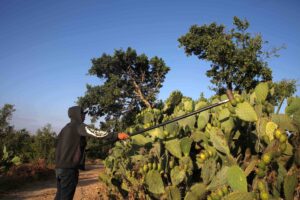
The fruit that comes from the cactus is also highly valued among Palestinians for its sweet taste. Prickly pears, which grow in bunches, are sold in markets and from street vendors across the country, with many saying their ripeness and sweet taste are worth the time spent plucking away the sharp thorns and peeling away the thick skin.
Many believe the fruit is highly political, as it grows in areas that have now been occupied, coming to symbolise Palestinian dispossession.
3. Za’atar (Thyme)
Za’atar, officially known as thymus vulgaris, is a wild plant which grows in the mountains and is usually found in the cracks of stone slabs. It is grown all around Palestine, and is often referred to as “green gold” because of how much it is loved and used.
The prickly plant is also renowned for its ability to thrive anywhere, something many Palestinians say they can relate to, after being forced into exile around the world.
Today, the cactus is depicted in Palestinian art, poetry and literature, for its qualities to which Palestinians are compared.
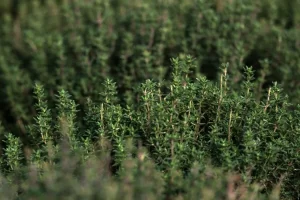
Historically, thyme has been highly political because of where it grows on occupied land, with Palestinians stating that Israeli authorities block access to their crops and their land. For Palestinians, this remains a huge problem as it impacts their livelihood and the long-held tradition of picking wild thyme, as well as their relationship with their land which they have come to know so closely over generations.
This wild herb also holds historical significance for Palestinians and is a common staple in every household. Every morning for breakfast, Palestinians will traditionally eat za’atar with fresh bread soaked in olive oil.
The herb can also be used as a spread for pastries and as a seasoning for meat, vegetables and salads.
For generations, Palestinians have used thyme as a remedy for colds and flu, with many often speaking highly of its benefits, including its ability to fight illnesses. The plant is a desirable crop for farmers because of its resistance to disease and insects and because it requires less labour and fertiliser compared to other crops.
For Palestinian refugees, the plant has come to represent the land they hail from, and has also become a symbol of hope of returning to their homes.
In Palestine, a popular slogan is “we will stay on our land as long as there is thyme and olives”, referencing how connected they are to their land and the plants that grow there.
Many Palestinians liken themselves to the za’atar plant because of its defiant nature, and the fact that it can survive in a range of different climates.
4. Jaffa orange
The iconic Jaffa orange, which has come to be known around the world, originated in the city of Yafa in the 19th century. At the time, Palestinian farmers had developed an orange from a mutation near the city, and the fruit became incredibly popular due to how sweet it was and because it had few seeds.
The orange was named “Yaffa” after the city, but was originally known as the Shamouti, a variation of a variety known as Baladi. What made the oranges so groundbreaking at the time was their thick skin, which made them both easy to peel and perfect for export.
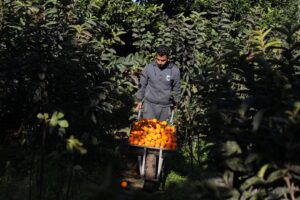
Since Yafa was already a well-established and strategically located trading port, it was easy to distribute and export the oranges around the world. The city quickly became synonymous with the orange because of how busy the port became in exporting the fruit.
Soon, the oranges and other citrus fruits from Yafa were found on shelves around Europe.
Despite many larger corporations profiting from the variation of orange, Palestinians remain proud of it, and remember the farmers who spent decades cultivating it.
For Palestinians, the orange has come to symbolise national identity, and is proof of the country’s vast and fertile agricultural land.
The fruit also sheds light on the long and successful agricultural history of Palestine, which many say has long been denied. Today, the Yaffa orange can be seen represented in Palestinian art and murals.
Shortlink for this post: https://daysofpalestine.ps/?p=25993