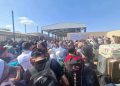
DaysofPal – Despite a ceasefire meant to bring relief, Palestinians in the Gaza Strip say life remains unbearable. The much-publicized agreement promised the entry of 600 humanitarian aid trucks daily, carrying food, medicine, shelter items, fuel, and cooking gas. Yet, according to United Nations partners, not a single day has met that target since the truce began.
Across Gaza, hunger and deprivation persist. Residents report receiving no tents, tarps, or medicine, while shortages of virtually everything continue to define daily life. With more than two million Palestinians displaced, impoverished, and entirely dependent on aid, the crossings remain the only lifeline, one that continues to be obstructed.
While some commercial trucks for the private sector have been allowed entry, the goods they carry remain far beyond the reach of most families. “Who can afford them?” Gazans ask. With jobs destroyed and savings depleted during the war, even basic goods are now luxuries.
A Ceasefire in Name Only
Humanitarian agencies accuse Israel of systematically blocking aid in violation of its legal and moral obligations. The continued restrictions, they say, expose Israel’s disregard for international appeals and maintain Gaza’s humanitarian crisis. “The ceasefire has not stopped the suffering,” one observer noted. “It has only changed its form.”
Residents describe an economy on the brink: poverty, malnutrition, and rising prices are deepening the despair. According to informed sources, Israel’s obstruction of aid under “vague security criteria” serves as a political pressure tool, designed to impose new realities on the ground while civilians bear the cost.
Maha al-Husseini, spokesperson for the Euro-Mediterranean Human Rights Monitor, condemned the ongoing restrictions:
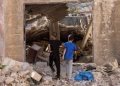
“The mass killing of civilians may have slowed, but the occupation continues to implement a policy of genocide with less fanfare, by restricting aid, rationing goods, preventing reconstruction, and blocking heavy equipment needed to remove rubble.”
The UN Relief and Works Agency (UNRWA) has reported that although it has enough food supplies for three months, it is barred from bringing them into Gaza. Civil Defense authorities also confirmed that the few trucks entering “do not meet the needs of the affected population.”
Amjad al-Shawa, head of the Palestinian NGO Network, told Al Jazeera that the aid entering Gaza “does not in any way meet the scale of the worsening humanitarian catastrophe.” He accused Israel of defying international law and the recent advisory opinion of the International Court of Justice, which affirmed the right to unimpeded humanitarian access.
According to Shawa, only about 200 trucks enter Gaza each day, one-third of what was promised. Half of them carry flour for bakeries, while the rest fall far short of meeting the population’s basic needs. He also warned that medical supplies entering the Strip cover barely 10% of actual requirements, leaving thousands of children and pregnant women at risk.
Shelter remains another acute concern. Humanitarian groups estimate that 300,000 tents are needed to house displaced families, but only a few thousand have entered Gaza so far. Many of those are torn and unsuitable for the coming winter rains.
Shortlink for this post: https://daysofpalestine.ps/?p=68811