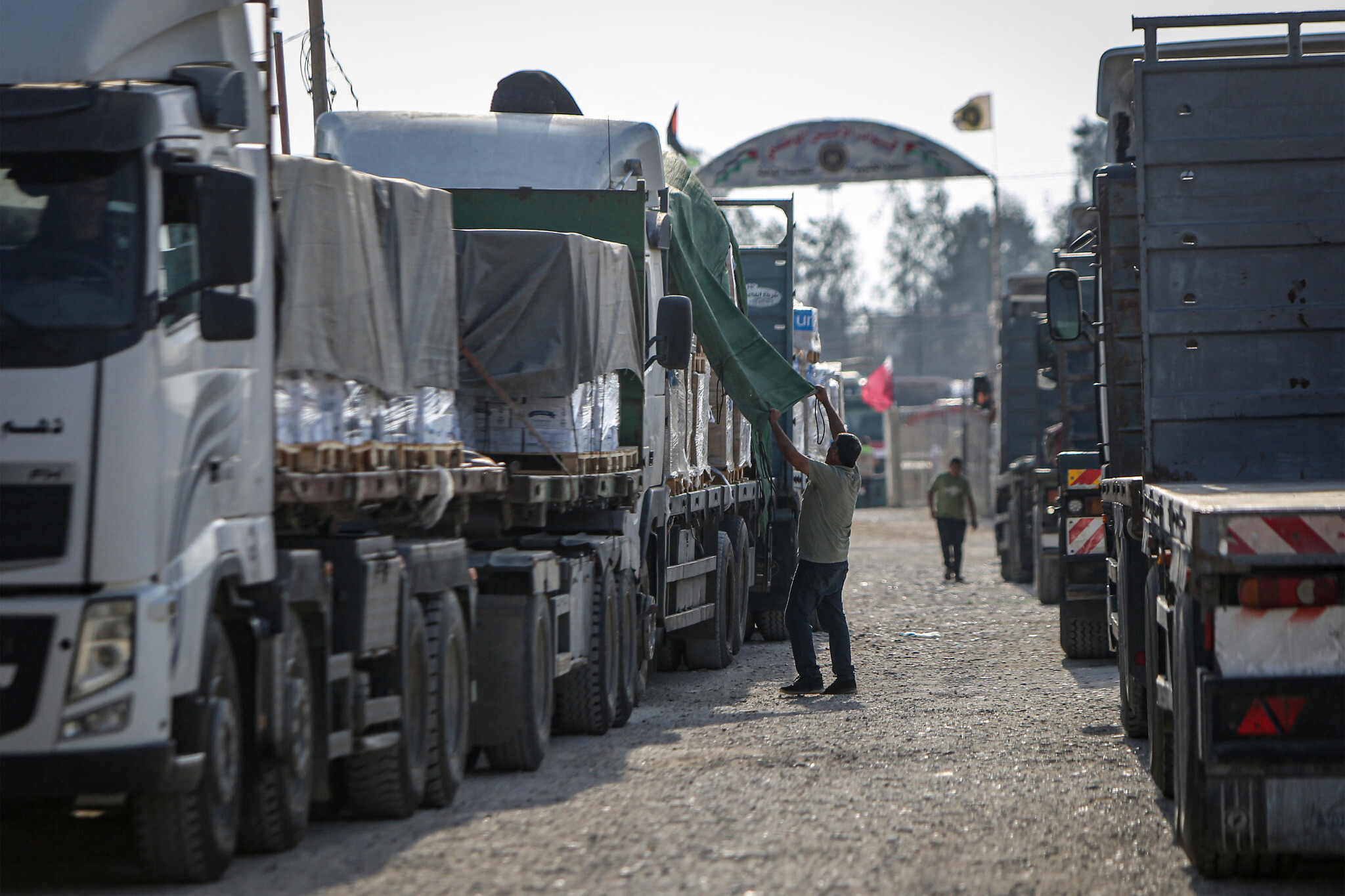
GAZA – Israel’s blockade of the Gaza Strip cannot be measured solely by the number of aid trucks allowed to enter or the few hours of electricity restored to parts of the enclave. Its true impact lies in a reality where every basic necessity—food, water, medicine, fuel, healthcare, education, and freedom of movement—depends on the decisions of the occupying power.
For more than 18 years, Israel has maintained a comprehensive siege on Gaza, controlling the movement of people and goods, restricting imports and exports, limiting access to fuel and raw materials, and denying thousands of Palestinians the ability to travel for work, education, or life-saving medical treatment.
Since the start of Israel’s war on Gaza in October 2023, the blockade has evolved from a long-term policy of economic isolation into what humanitarian organizations describe as the systematic use of starvation, deprivation, and the destruction of civilian infrastructure as tools of war.
A blockade designed to dismantle Palestinian life
Unlike temporary sieges imposed during conventional armed conflicts, Gaza’s blockade has become a permanent system of political, economic, and military control.
Repeated Israeli military offensives have destroyed homes, factories, farmland, hospitals, schools, and essential infrastructure. Yet reconstruction has remained largely impossible due to Israeli restrictions on construction materials and the continued closure of crossings.
For Palestinians, every destroyed home, school, or hospital represents not only physical devastation but years of recovery made impossible under the blockade.
Unlike other conflict zones where governments retain sovereignty over borders or external trade, Gaza’s land crossings, airspace, and territorial waters remain under Israeli control, leaving more than two million Palestinians unable to determine the basic conditions of their own lives.
The blockade is therefore not merely a shortage of supplies—it is a system that controls nearly every aspect of civilian existence.
The collapse of Gaza’s economy
Before the siege, Gaza possessed productive agricultural, industrial, and commercial sectors linked to markets across historic Palestine and abroad.
Years of restrictions on exports, imports, fishing, farming, and movement gradually dismantled those economic foundations.
Thousands of Palestinian farmers lost access to agricultural land. Fishermen faced severe restrictions on access to Gaza’s coastal waters. Factories closed because of shortages of raw materials, electricity, and fuel. Businesses collapsed as trade routes disappeared.
Unlike ordinary economic crises, Gaza’s economy cannot recover through investment alone.
Any meaningful development remains impossible while Israel controls border crossings, fuel supplies, trade routes, and the entry of construction materials.
Even humanitarian assistance cannot restore farmland made inaccessible, revive destroyed factories, or replace sustainable employment lost under years of blockade.
Hunger extends far beyond food shortages
The humanitarian crisis in Gaza cannot be understood simply through the number of food parcels delivered.
Food security depends on functioning bakeries, clean water, electricity, fuel, healthcare, markets, and families’ ability to earn an income.
Israeli restrictions have disrupted every link in that chain.
Repeated displacement has forced Palestinian families to abandon their homes, food supplies, livelihoods, and support networks.
Humanitarian organizations increasingly warn that hunger in Gaza is not merely a consequence of war but the direct result of restrictions on humanitarian access, the destruction of civilian infrastructure, and the continued blockade.
Healthcare pushed to the brink
Hospitals require electricity, fuel, medicine, sterilization equipment, functioning medical devices, ambulances, and healthcare workers able to move safely.
When these essentials disappear, healthcare collapses—not only for those injured in Israeli attacks but also for cancer patients, dialysis patients, pregnant women, newborns, and people living with chronic illnesses.
Unlike many humanitarian emergencies, Gaza’s medical system has faced simultaneous bombardment, shortages of medical supplies, restrictions on aid deliveries, and an ever-growing number of casualties requiring treatment.
The result is a healthcare system struggling to function under conditions humanitarian organizations have repeatedly described as catastrophic.
Education under siege
The impact of the blockade extends beyond physical destruction.
Children displaced by repeated Israeli military operations have lost years of education while living in overcrowded shelters under constant fear of bombardment.
Universities have suspended academic life, schools have been destroyed or converted into shelters, and an entire generation faces long-term educational and psychological consequences.
Education cannot simply resume once classrooms reopen.
Recovery requires stability, reconstruction, freedom of movement, and sustained investment—conditions that remain largely absent under the ongoing blockade.
More than a humanitarian emergency
Reducing Gaza’s suffering to a humanitarian crisis alone obscures the political reality that has produced it.
The blockade exists within the broader context of Israel’s military occupation of Palestinian territory, repeated military offensives, settlement expansion, forced displacement, and restrictions on Palestinian movement.
Palestinians argue that the siege has transformed ordinary civilian life into a daily struggle in which access to food, healthcare, education, employment, and even clean drinking water depends on Israeli military decisions.
Ending the siege, not managing the crisis
Humanitarian aid remains essential for saving lives, but relief organizations stress that emergency assistance cannot resolve the structural causes of Gaza’s humanitarian catastrophe while the blockade continues.
Meaningful recovery requires the lifting of the siege, sustained humanitarian access, protection of civilians, reconstruction under Palestinian administration, freedom of movement, unrestricted trade, and accountability for violations committed against the Palestinian people.
Behind every statistic on hunger, displacement, and destruction stands a Palestinian family whose home, livelihood, and future have been shattered.
For Gaza’s more than two million residents, the blockade is not simply a humanitarian issue—it is the defining reality of daily life under Israeli occupation, where survival itself has become an ongoing struggle for dignity, freedom, and the fundamental right to live.
Shortlink for this post: https://daysofpalestine.ps/?p=76765