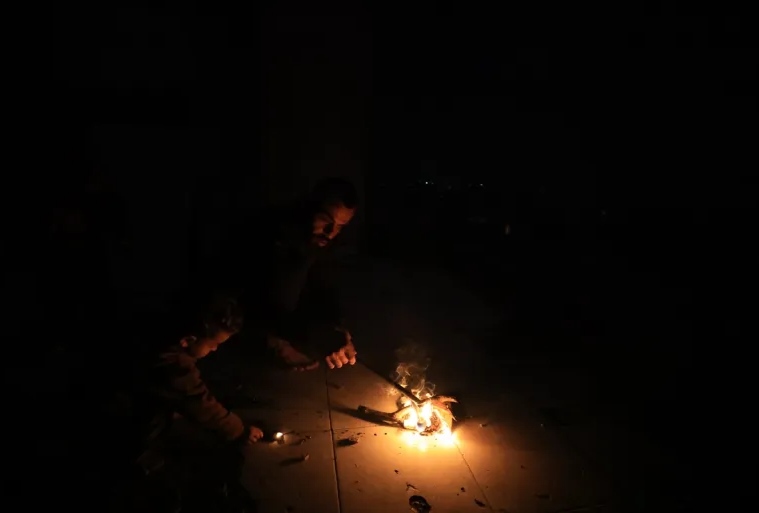
DayofPal– The Gaza enclave is cloaked in darkness as homes remain without light, their residents struggling to survive a crisis that has deepened with each passing day. Hospitals teeter on the edge of collapse, water supplies have dwindled, and food is growing scarcer.
The reason is a deliberate and devastating electricity blockade being imposed by Israel on the war-torn strip.
Israel has recently spread misinformation that it has provided free electricity to Gaza as a humanitarian effort, the truth is starkly different.
Before the war, Gaza was monthly purchasing around 120 megawatts of electricity from Israel, paid for through deductions from Palestinian tax revenues. The Palestinian Authority (PA) paid approximately $11 million for this electricity, with Israel deducting the amount from Palestinian tax revenues it collects on the PA’s behalf.
Before Israel’s blockade, Gaza needed and used to pay for around 500 megawatts of electricity daily. Only 212 megawatts were available: 120 megawatts purchased from Israel, 32 megawatts purchased from Egypt, 60 megawatts generated by Gaza’s sole power plant.
In October 2023, Israel cut off all power to Gaza as part of its genocide. By December 2024, Israel restored one power line to supply a desalination and wastewater treatment plant. This was done due to sanitation concerns and fears that worsening conditions could impact Israeli prisoners held in Gaza.
Despite already cutting off Gaza’s power, Israel announced in March 2025 that it would stop supplying electricity to the strip. Analysts believe this statement was meant for internal Israeli audiences, suggesting pressure on Hamas in negotiations.
“There is currently no electrical line transmitting power from Israel to Gaza, and we do not maintain the electricity network there at all,” stated Doron Arbel, head of the Israeli Electric Corporation.
Most remaining electricity now comes from rooftop solar panels or private generators, though fuel shortages have rendered many useless.
The destruction of Gaza’s power infrastructure has been staggering. According to Gaza Electricity Company spokesperson Mohamed Thabet, 3,680 kilometers of power lines, 70% of the network, have been destroyed, with damages exceeding $450 million. In addition, 51 workers have been killed while attempting to restore power.
90% of the company’s storage facilities and 80% of its vehicles and equipment have been wiped out with no spare parts or repair equipment having been allowed in. The result is an energy crisis unlike anything Gaza has ever seen.
The consequences of Gaza’s blackout have been dire. For hospitals, intensive care units, neonatal wards, and surgical theaters depend on fuel-powered generators. With Israel blocking fuel, hospitals are shutting down, and rising numbers of preventable deaths recorded.
With no electricity, water pumps and desalination plants cannot function, leaving most of Gaza without clean drinking water. Further, sewage treatment has collapsed, allowing wastewater to flood streets and spread disease.
Bakeries have also ceased operations due to power and fuel shortages. Famine is now an imminent threat combined with Israel’s continued blockade of humanitarian aid.
Schools have shut down, and virtual learning is impossible due to the lack of power lines. A generation of Palestinian children is being deprived of education, their futures stolen before they can begin.
On January 19, 2025, a ceasefire brokered by Qatar, Egypt, and the United States momentarily paused the war. However, Israel has not fully honored the agreement, continuing to block critical supplies, including electricity, water, and fuel.
With international pressure mounting, the humanitarian crisis in Gaza worsens. Yet, for those trapped inside, survival has become a daily battle against the dark, a fight not just for light, but for life itself.
Shortlink for this post: https://daysofpalestine.ps/?p=61287