Israel’s assault on the northern West Bank have devastated several refugee camps, rendering them uninhabitable. These attacks, which began months ago and escalated since January 2024, have resulted in the complete or partial destruction and burning of the camps.
7 Camps Under Fire
The region is home to seven refugee camps, with the most significant being Jenin Refugee Camp, where 12,000 people live.
The other camps include Nur Shams (9,000 residents), Tulkarm (16,000 residents), and Al-Far’a (16,000 residents), as well as Askar (31,000 residents) and Ein (5,000 residents).
All of these camps have been severely impacted by Israel’s ongoing military actions, which began on August 28, 2023, and intensified in January.
The violence has led to the destruction of homes and infrastructure, forcing residents to flee their camps and seek shelter in nearby cities and villages.
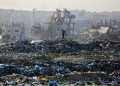
According to Jenin’s mayor, Mohammed Jarrar, the Jenin Refugee Camp has been completely destroyed, with 3,250 housing units reduced to rubble, displacing around 21,000 people.
The attack also targeted entire neighborhoods and their surrounding areas, eliminating the camp’s infrastructure.
Jarrar stated that the Israeli forces remain in the camp, preventing any access, and although no official statement has been made, the ongoing destruction indicates the intention to permanently displace the residents.
The total losses in Jenin and its camp due to the military operation since January are estimated at approximately $310 million.
Tulkarm
In Tulkarm and Nur Shams, the assault continues, with the military operation entering its 60th and 47th days, respectively. As of now, the violence has led to the deaths of 13 people, including a child and two women.
In addition, more than 4,000 families have been forcibly displaced from these camps, with many families also fleeing the northern neighborhood of Tulkarm city.
The destruction has been widespread, with 396 homes completely destroyed and 2,573 partially damaged in the Tulkarm and Nur Shams camps.
The entrances and streets of these camps have been barricaded by dirt mounds, further isolating the residents.
In Nur Shams, approximately 2,200 housing units, home to about 13,000 people, have been entirely destroyed. The destruction has left no viable living conditions, as it includes the demolition of infrastructure and vital facilities such as healthcare and public services.
In Al-Far’a camp, around 1,000 people have been displaced, and the damage to infrastructure has been extensive, including the destruction of roads, water, electricity, and sewage systems. Initial damage assessments place the cost of infrastructure repairs at approximately $1.5 million.
Ethnic Cleansing
Observers have called the situation in northern West Bank camps “ethnic cleansing,” as these camps are symbolic of the Palestinian Nakba of 1948, and they represent the right of return for refugees. The Israeli attacks aim to erase these symbols and further suppress the Palestinian cause.
Alongside the attacks on the refugee camps, Israel has escalated its offensive against UNRWA, the UN agency that assists Palestinian refugees, viewing it as a reminder of the Nakba and a challenge to Israel’s legitimacy in Palestine.
There are growing fears that if these attacks continue unchecked, they will spread to the remaining 22 camps in the West Bank. If such a scenario unfolds, the camps could be turned into wide streets for easier Israeli military access.
Experts are calling for a coordinated response to protect the refugees and preserve the integrity of the camps. It is crucial to maintain the Palestinian people’s resilience and to take decisive action to prevent further displacement and destruction.
Shortlink for this post: https://daysofpalestine.ps/?p=61705