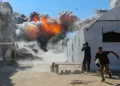
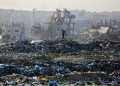
DaysofPal- A new report highlights the devastating and lasting impact of the ongoing Israeli genocidal war on children in Gaza, describing a reality in which survival does not mean safety but rather the beginning of a prolonged humanitarian crisis marked by fear, trauma, and loss.
According to the report by the Palestinian Information Center, children who survive airstrikes often emerge into a shattered world where homes, schools, and daily routines have been destroyed.
What remains is not recovery, but a continuing cycle of pain, displacement, and uncertainty.
The report stresses that the impact of the war goes far beyond physical destruction. For children in Gaza, the sense of security itself has been fundamentally shaken.
Nights are no longer associated with rest but with the constant possibility of death, as the sound of aircraft becomes a source of fear.
Many children in Gaza have grown up under blockade and repeated cycles of conflict, making the effects cumulative.
The report notes that childhood itself has become constrained by ongoing violence, infrastructure collapse, and lack of basic services.
Among more than 72,000 people killed since October 2023, over 21,500 are children, with more than 41,000 injured. Additionally, over 8,100 people, including women and children, remain missing under rubble or in inaccessible areas.
The report emphasizes that the most dangerous wounds are often psychological. Children may appear quiet but internally experience constant fear and distress.
Symptoms include bedwetting, temporary loss of speech, panic attacks, insomnia, and fear of separation from family members.
A study conducted by a Gaza-based mental health center found that 96% of children feel that death is imminent, 87% experience severe fear, and 79% suffer from nightmares.
The study, based on interviews with 504 families, including children with disabilities, injuries, or separation from relatives, found that prolonged displacement and continuous bombardment have pushed many families to the brink of collapse.
Experts warn that psychological support services are severely limited, as healthcare systems are overwhelmed and many facilities have been damaged or destroyed. Ongoing attacks also undermine any attempt to provide consistent mental health care.
The report notes that the war’s impact is not limited to mental health. Many children have been killed, while others suffer permanent disabilities due to injuries or lack of access to medical treatment.
Official figures indicate that an average of 15 children per day suffer permanent disabilities, with 864 children undergoing amputations and 1,268 cases involving brain or spinal injuries.
Severe malnutrition is also spreading, as children lack access to sufficient and balanced nutrition.
This leads not only to hunger but also to delayed growth, weakened immunity, and learning difficulties.
The ongoing blockade and repeated displacement make it increasingly difficult for families to secure essentials such as milk, medicine, and clean water, particularly for infants and young children.
The destruction or closure of schools has had profound consequences. Schools in Gaza are not only places of learning but also spaces of stability and routine. Their loss removes a critical structure that helps children cope with chaos.
Since 2023, formal education has largely been interrupted. Although alternative methods such as online and temporary schooling have been introduced, many students have been unable to access them due to lack of electricity, internet, or safe environments.
As a result, an entire generation faces a widening educational gap, with some children losing years of learning or being forced into adult responsibilities prematurely.
The report also highlights the strain on families, many of whom have lost loved ones, homes, or livelihoods.
Children are growing up in deeply stressed environments, where even parents struggle with trauma and loss.
In some cases, children are forced to take on adult roles, caring for siblings or helping secure food and water. This forced maturity is described not as resilience, but as another form of deprivation.
Estimates suggest that around 18,000 children are unaccompanied or separated from their families, while more than 55,000 have been orphaned during the conflict.
The report concludes that the war on children in Gaza is not only a humanitarian crisis but a long-term societal threat. A generation exposed to trauma, disrupted education, malnutrition, and family loss will require years, if not decades, of recovery.
It stresses that reconstruction efforts must go beyond rebuilding infrastructure to include psychological healing, education, and protection for children.
Ultimately, the report argues that Gaza’s children need more than sympathy; they require an end to the violence, sustained humanitarian support, and recognition of their rights as children, not just statistics in recurring reports.
The situation, it concludes, is not an unavoidable tragedy but a man-made crisis, in which childhood itself is under attack, leaving deep scars on memory, identity, and the future.
Shortlink for this post: https://daysofpalestine.ps/?p=74457