DaysofPal – The Committee to Protect Journalists (CPJ) has condemned Israel’s September 10 airstrikes on two newspaper offices in Sana’a, Yemen, which killed 31 media workers, calling the attacks part of a growing “war on journalism” that extends beyond Gaza.
According to CPJ, the attacks on the offices of Yemen’s September 26 and Al-Yemen newspapers, both located within the government’s Moral Guidance Directorate, represent the deadliest attack on journalists in over a decade, surpassing the 2009 Maguindanao massacre in the Philippines.
“Since October 7, 2023, Israel has emerged as a regional killer of journalists, with repeated incidents in Gaza, Lebanon, Iran, and now Yemen,” said CPJ Regional Program Director Sara Qudah.
“This latest killing spree is not only a grave violation of international law but also a terrifying warning to journalists across the region: no place is safe.”
Journalists killed in Yemen were mostly staff of the targeted newspapers, with only one child among the casualties. Eyewitnesses described “massive explosions unlike anything Sana’a had seen since 2015,” and survivors said that multiple strikes reduced the headquarters to rubble, burying some journalists under debris.
Pattern of Attacks Across the Region
CPJ highlighted that the Yemen strikes mirror earlier Israeli attacks in Gaza, Lebanon, and Iran, where journalists have been repeatedly killed after being labeled as militants or propagandists. According to CPJ research, since the Gaza war began, Israel has killed 193 journalists and media workers in Gaza, six in Lebanon, three in Iran, and 31 in Yemen.
Targeting journalists is a clear violation of international humanitarian law. Civilian journalists, including those working for state-run or armed group-affiliated outlets, are protected unless they directly participate in hostilities. Yet Israel’s strikes have systematically aimed to silence the press.
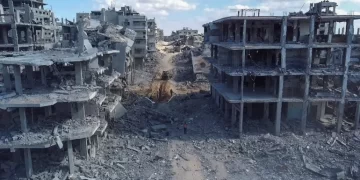
The attacks in Gaza have been particularly severe. Since October 7, 2023, Israeli bombardments have destroyed more than 143 media outlets, including 12 print newspapers, 23 online newspapers, 11 radio stations, and four satellite channels. Twelve Arab and international satellite channel headquarters were also destroyed, along with printing presses, broadcast equipment, cameras, live broadcast vehicles, and dozens of journalists’ homes. The Government Media Office in Gaza estimated losses to the media sector at over $400 million.
Journalists in Gaza: Under Fire, Under Arrest, Under Siege
Journalists in Gaza face an unprecedented campaign of intimidation, harassment, and violence. Families of media professionals, including Wael al-Dahdouh and Anas al-Sharif, have been targeted.
Many journalists have been detained, beaten, or tortured in Israeli prisons. Reporters Without Borders reports that Israel has become the third largest prison for journalists in the world, detaining more journalists since October 2023 than any country except two others.
Communications infrastructure has been deliberately damaged, leaving journalists with limited access to the internet or phone networks. Media professionals have been forced to find alternative ways to report, often at great personal risk, to ensure the voices of Gaza’s population continue to reach the world.
According to United Nations experts, the Israeli operation in Gaza has become “the bloodiest and most dangerous conflict for journalists in modern history.” Over 200 journalists and media workers have been killed, many more injured, and dozens remain detained. Journalists have also been killed in Lebanon due to Israeli shelling near the border.
Despite these dangers, journalists in Gaza persist in reporting, determined to document the atrocities and counter the occupation’s attempts to obscure the reality on the ground.
A Regional Warning: Yemen, Gaza, and Beyond
The CPJ emphasized that the attacks in Yemen should be viewed in the context of Israel’s broader campaign to intimidate journalists across the Middle East. Nasser Al-Khadri, editor-in-chief of 26 September, called the Yemen strike an “unprecedented massacre of journalists” and described the destruction of historical archives as a profound cultural loss.
“Targeting journalists aims to silence the truth,” said Nabil Al-Asidi, a Yemeni Journalists Syndicate board member. The same pattern has been replicated in Gaza, where journalists, media facilities, and their families have been systematically targeted to prevent the documentation of the ongoing humanitarian catastrophe.
The increase highlights the sobering fact that reporters are increasingly being criticized for their presence in occupied areas as well as for covering the news. Israel’s campaign reflects a deliberate effort to suppress independent reporting and control the narrative, leaving the public with partial or distorted accounts of ongoing atrocities.
From Gaza to Yemen, journalists are facing unprecedented threats, attacks, and intimidation. The CPJ warns that Israel’s expansion of violence against media workers marks a dangerous escalation in a pattern of regional suppression. Yet, even under siege, journalists continue to report, risking their lives to bear witness to conflict and ensure that the world sees the human cost of war.
Shortlink for this post: https://daysofpalestine.ps/?p=67650