DayofPal—Israeli forces and settlers have carried out more than 250 attacks on Palestinian water sources over the past five years, marking one of the most sustained assaults on civilian water infrastructure in recent history, according to new research by the Pacific Institute, a California-based nonpartisan think tank that tracks global water conflicts.
The data shows that between January 2024 and mid-2025, at least 90 attacks targeted drinking water, irrigation, and sanitation sites across the occupied West Bank and Gaza Strip, often using bombs, dogs, poison, and heavy machinery.
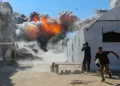
In February 2024, Israeli snipers reportedly killed eight Palestinians collecting water near Naser Hospital in Gaza. Two months later, airstrikes on Gaza City schools killed or injured around 100 people, also destroying mobile latrines and a solar-powered desalination unit installed under an EU-funded project.
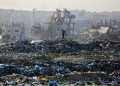
According to the UN, around 90% of Gaza’s water and sanitation facilities have been destroyed, damaged, or rendered inaccessible. The UN Special Rapporteur on the human right to safe drinking water and sanitation, Pedro Arrojo-Agudo, said these actions contribute to “a public health catastrophe” and may constitute war crimes and crimes against humanity.
“Such practices in Gaza, but also in other armed conflicts such as Sudan, constitute violations of international law,” Arrojo said. “In Gaza, in particular, they form part of a genocidal strategy.”
Arrojo accused Israel of systematically weaponizing water to “displace and segregate” Palestinians in territories occupied since 1967, a strategy he described as part of an “apartheid and colonization” policy.
In the West Bank, attacks have also escalated. In April 2025, settlers destroyed irrigation pipelines in Bardalah and damaged a water line in Khirbat on the same day.
In July, at least 10 Palestinians, including six children, were killed at a water distribution point in Gaza’s Nuseirat refugee camp, where extreme shortages have forced civilians to travel long distances for water and food.
That same month, UN experts accused Israel of using “thirst as a weapon” against Palestinians.
The Pacific Institute recorded 420 water-related conflicts in 2024, a 20% rise from the previous year and a 78% increase from 2022. Over 160 incidents were documented in the first half of 2025 alone.
These include attacks on dams, pipelines, treatment plants, and workers, as well as cyberattacks on water systems and violent protests over access to clean water.
The report highlights similar crises worldwide. In Madagascar, security forces used tanks, tear gas, and rubber bullets to crush protests over power and water shortages before a coup ousted the president in October.
In South Africa, worsening shortages have led to violence; in September 2024, two siblings were shot dead fetching water at night in Matswale.
In Pakistan, protests in Karachi over new canal construction left scores injured.
The UN recognizes access to safe and affordable drinking water as a fundamental human right. Denying civilians access to water violates international humanitarian law and the Geneva Conventions, constituting a war crime.
According to the Water Conflict Chronology, global water-related violence has risen sharply over the past two decades — from 24 incidents in 2000 to more than 160 in just the first half of 2025.
Wars in Palestine and Ukraine accounted for nearly a third of global water-related assaults last year, with Israel responsible for 12% and Russia for 16% of all recorded incidents in 2024.
Shortlink for this post: https://daysofpalestine.ps/?p=69359